
Most Renault faults in Australia trace back to three areas. The dCi diesel engines wear out injectors and turbochargers. The Koleos uses a CVT gearbox, which has no fixed gears, and it can shudder as it ages. The electrics built around the card key, the park brake and the body control module throw faults that look far worse than they are.
None of that makes a Renault a poor car to own. It does mean a Renault specialist checks different things than a workshop that mostly sees Toyotas. What follows is what goes wrong on the models sold here, and roughly what each repair costs.
Why do Renault dCi diesels have injector and turbo problems?
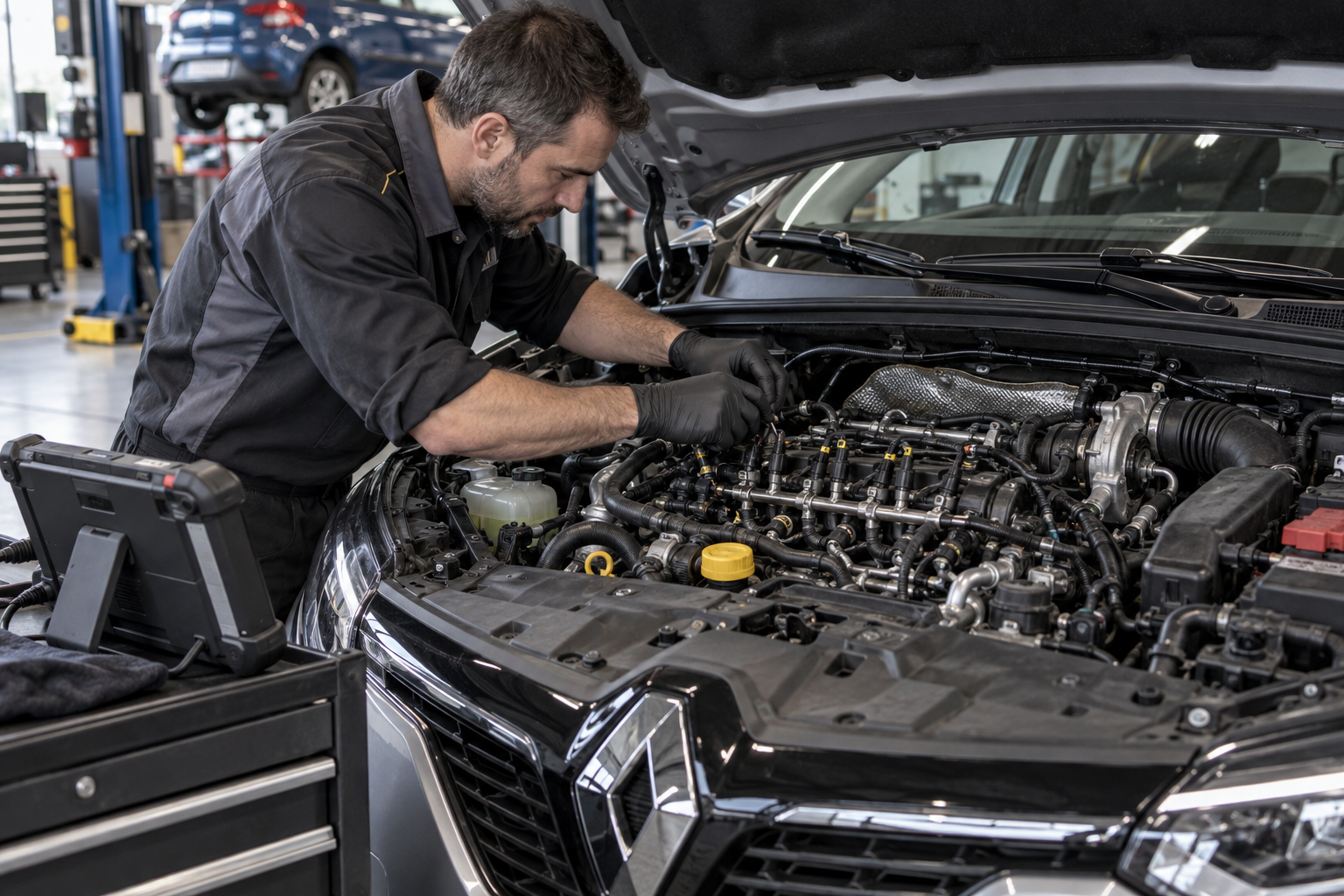
dCi is Renault’s badge for its common-rail turbo diesel engines. Common-rail means the fuel is held at very high pressure and injected in a finely timed spray. In Australia these engines went into the Megane 1.5 dCi, the Kangoo and Trafic vans, and the diesel Koleos.
Injectors are the first part to wear. The symptoms build slowly: a rough idle when cold, longer cranking before it fires, a flat spot under load, and sometimes a diesel smell inside the car. That smell matters. It usually means the copper washer under an injector has failed and combustion gas is leaking past it. Left alone, that leak contaminates the engine oil and can take the turbo with it. Injectors are tested on a bench, then replaced and coded to the engine. One runs about $240 to $445, and a full set is roughly $840 to $1,560. Diesels sit at the top of that band.
Turbochargers are the expensive one. The turbo on a dCi uses vanes that swivel to control how much boost the engine gets. Soot builds up on them and they stick, so the engine either loses boost or overboosts into limp mode. The other killer is the oil feed pipe, a narrow line that clogs when oil changes are stretched, starving the turbo bearing. A whistle rising with the revs, blue smoke, or a sudden loss of power all point the same way. Budget around $1,500 to $5,000 fitted, depending on whether the unit is new or reconditioned.
The EGR valve and the filter behind it. EGR stands for exhaust gas recirculation. The valve feeds a little exhaust back into the engine to cut emissions. Soot cakes it up and it sticks, which gives rough running, poor economy and a warning light. Cleaning sometimes works, and a new valve is commonly $300 to $1,000 before fitting. Behind it sits the DPF, or diesel particulate filter, which traps soot and needs a hot run to burn it away. Vans doing short suburban drops are the ones that block.
Most Renaults sold here also run a timing belt rather than a chain, so belt replacement is a scheduled part of owning one.
What causes the shudder in a Renault Koleos CVT?
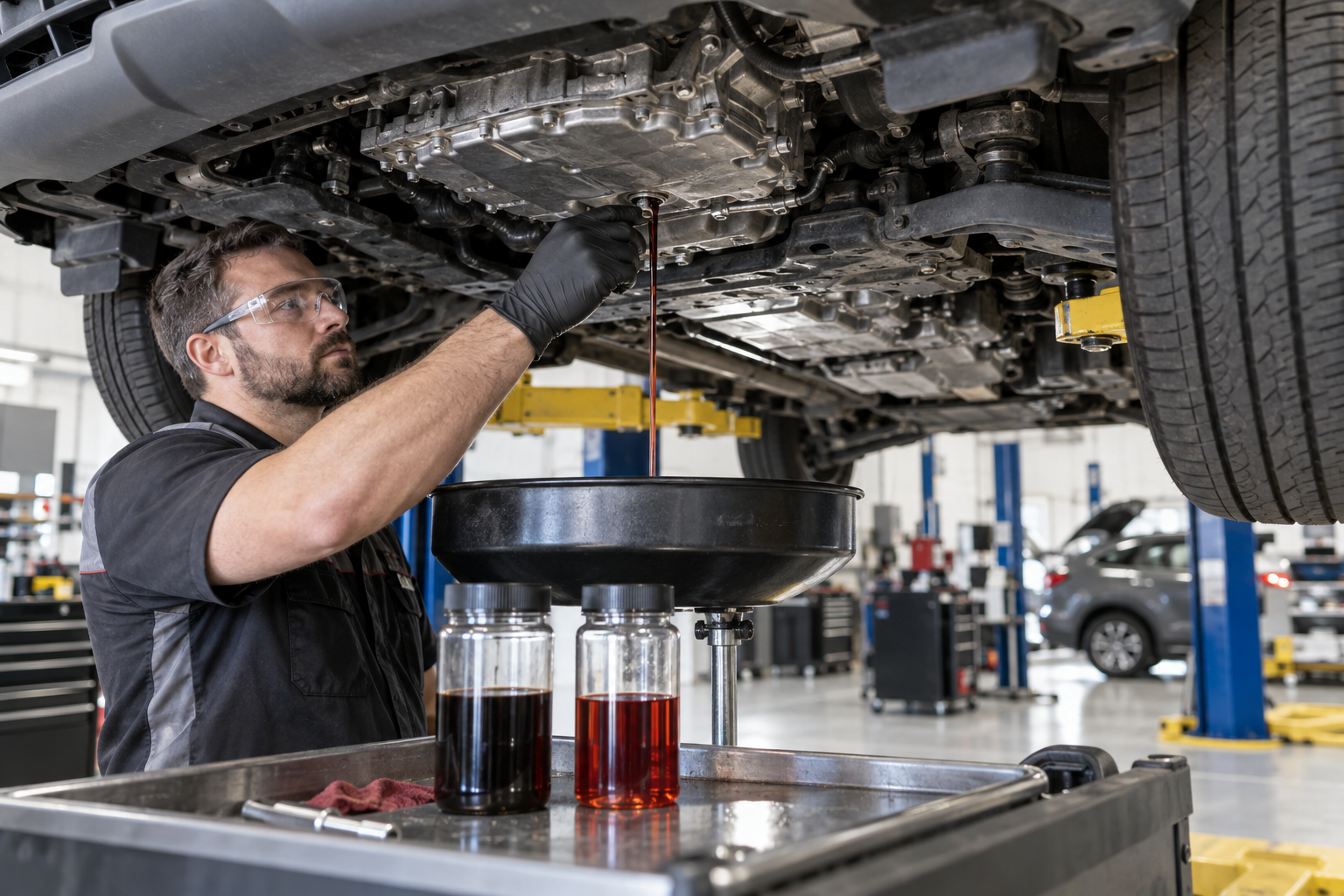
A CVT is a continuously variable transmission. Instead of fixed gears it uses a steel belt running between two cone-shaped pulleys that change width. The ratio slides rather than steps. Renault calls its version X-Tronic and fits it to the Koleos.
The classic symptom is a shudder at light throttle, felt at town speeds as the gearbox settles into its tallest ratio. Some owners feel it through the steering wheel rather than the seat. Others get revs that climb without the car gaining speed, which is the belt slipping across the pulleys. It shows up well into the car’s life rather than early.
Three things drive it. The fluid degrades and loses the grip the belt depends on. The belt and pulley faces wear where they have been slipping. And on some cars the gearbox oil cooler lets engine coolant into the gearbox fluid, which ruins it quickly. On the ones that shudder, fluid that has never been changed is the common thread.
Diagnosis comes first, and a software update on its own rarely settles a mechanical shudder. A fluid and filter service is the cheap end, at roughly $200 to $500. If the belt has marked the pulley faces, the gearbox has to come apart or be replaced. That is a job to price after inspection. No reliable Australian figure exists for a replacement X-Tronic, so treat any number quoted online with caution.
Is Renault’s EDC gearbox the same as the CVT?
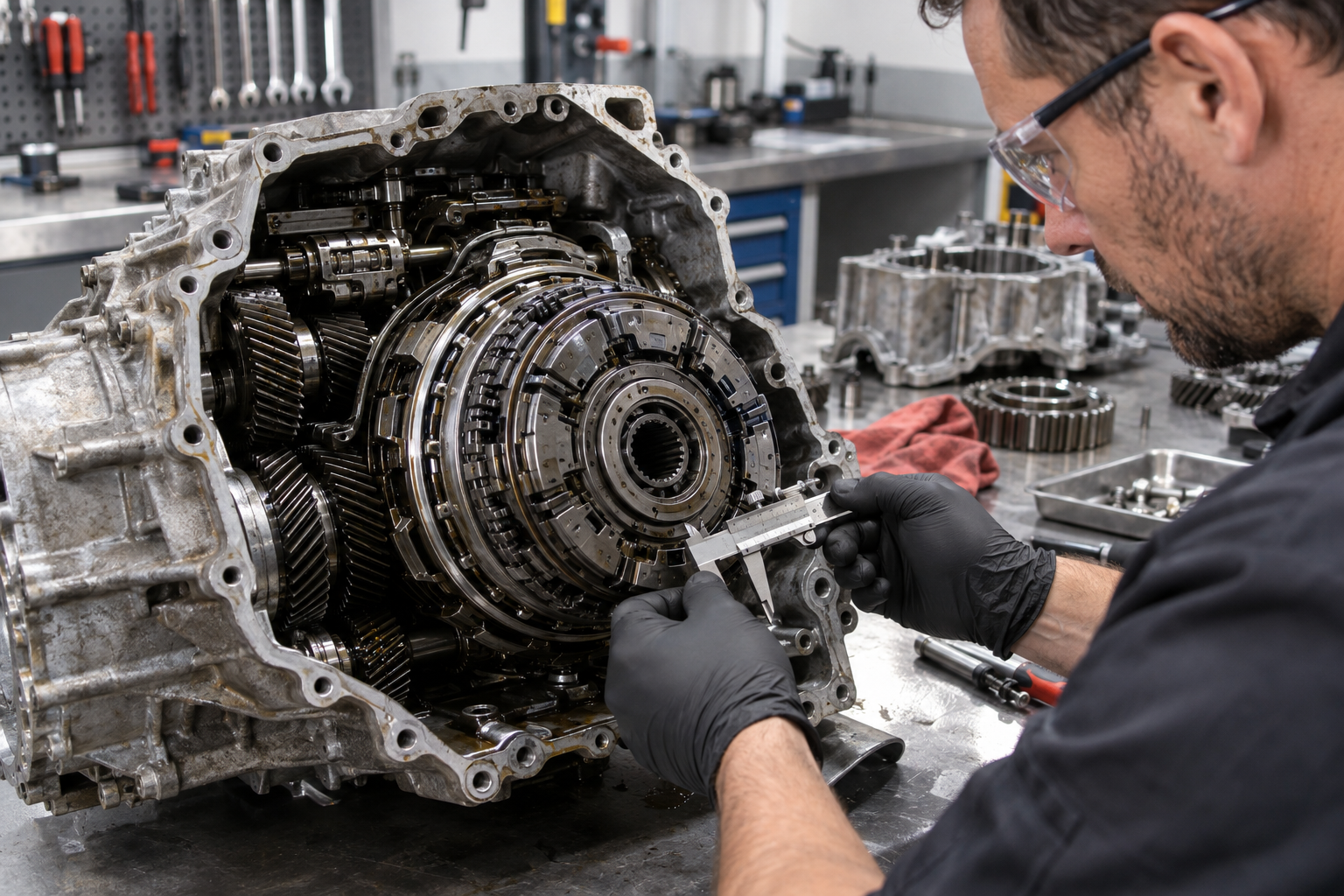
No, and owners mix the two up constantly. EDC stands for Efficient Dual Clutch: real gears, with two clutches sharing them, one handling the odd gears and one the even. A CVT has no gears at all, so the two fail in different ways and get diagnosed differently. EDC arrived in Australia in the Megane dCi, and the petrol Captur uses it as well.
The signs of trouble are a shudder pulling away from a standstill, hesitation in stop-start traffic, jerky changes, or a gearbox warning message on the dash. Before assuming the worst, know that many EDC failures turn out to be software or a clutch needing recalibration rather than worn parts. The way dual-clutch gearboxes fail is much the same story across the European brands.
Why won’t my Renault start with the card key?
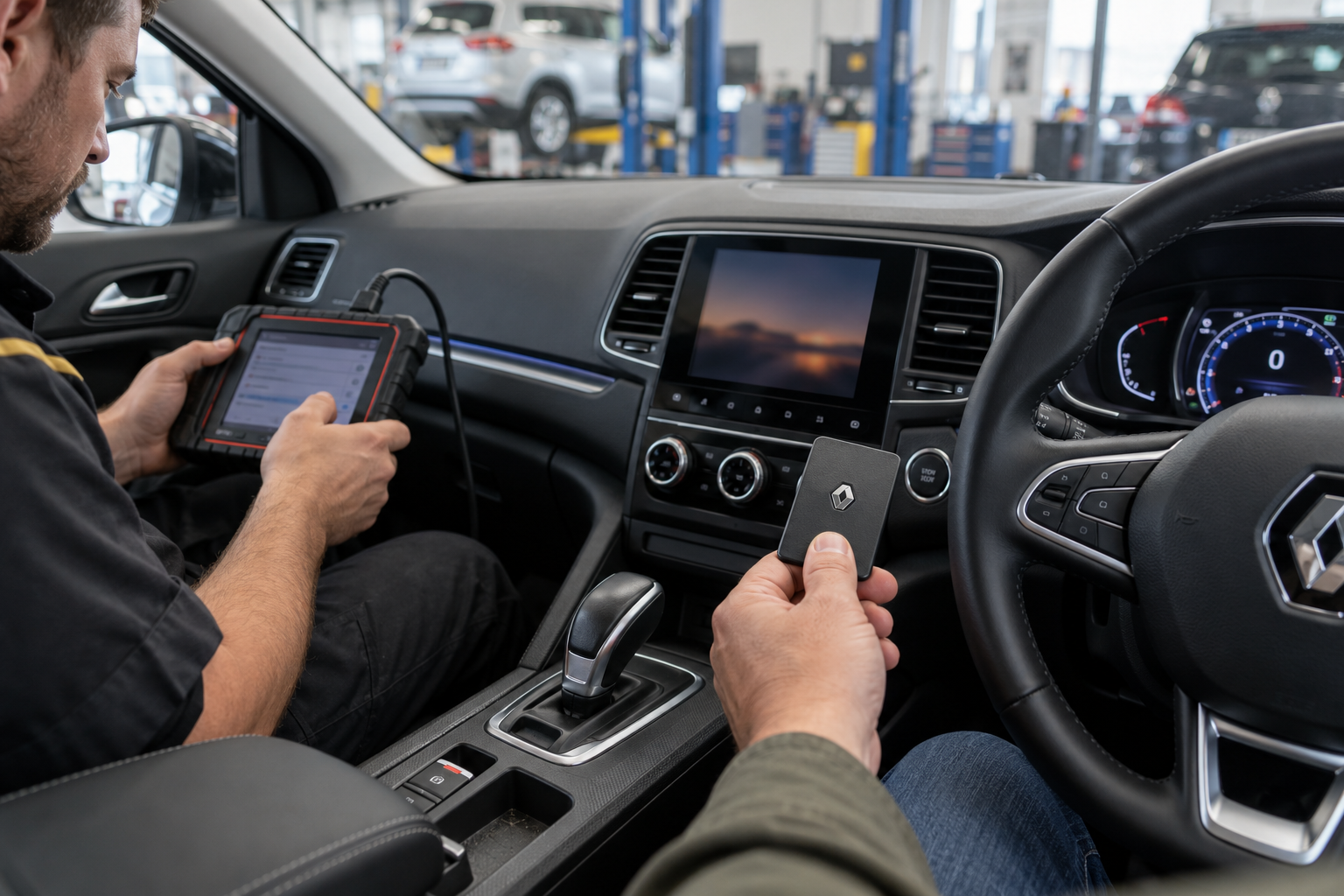
Renault replaced the traditional key with a credit-card style key on many models. A reader in the dash detects the card, and the car will not start until it sees one. When the dash says the card is not detected, the card itself is the usual culprit. Cards wear out gradually, so it fails once a fortnight, then once a week, then for good. A flat battery inside the card gives the same message. Readers do fail, but far less often.
The other cause is water, and it is the one that catches people out. Renault runs the locking, lights, wipers and immobiliser through a body control module it calls the UCH. Water gets into the boot past a perished seal or the grommet behind the high-level brake light. From there it works its way to that module. The result looks catastrophic: no start, central locking dead, several warning lights at once, gauges sitting at zero. Sealing the leak comes first, because a repaired module in a wet car fails again.
Water and wear reach other body parts too. A window that drops into the door and will not come back up is usually the regulator, the scissor mechanism carrying the glass. Enough failed on the Megane that Renault extended the warranty on the part. Replacement typically runs $300 to $600. General European electrical faults follow a pattern of their own, and the battery is behind more of them than any other part.
What does a park brake fault message mean on a Renault?
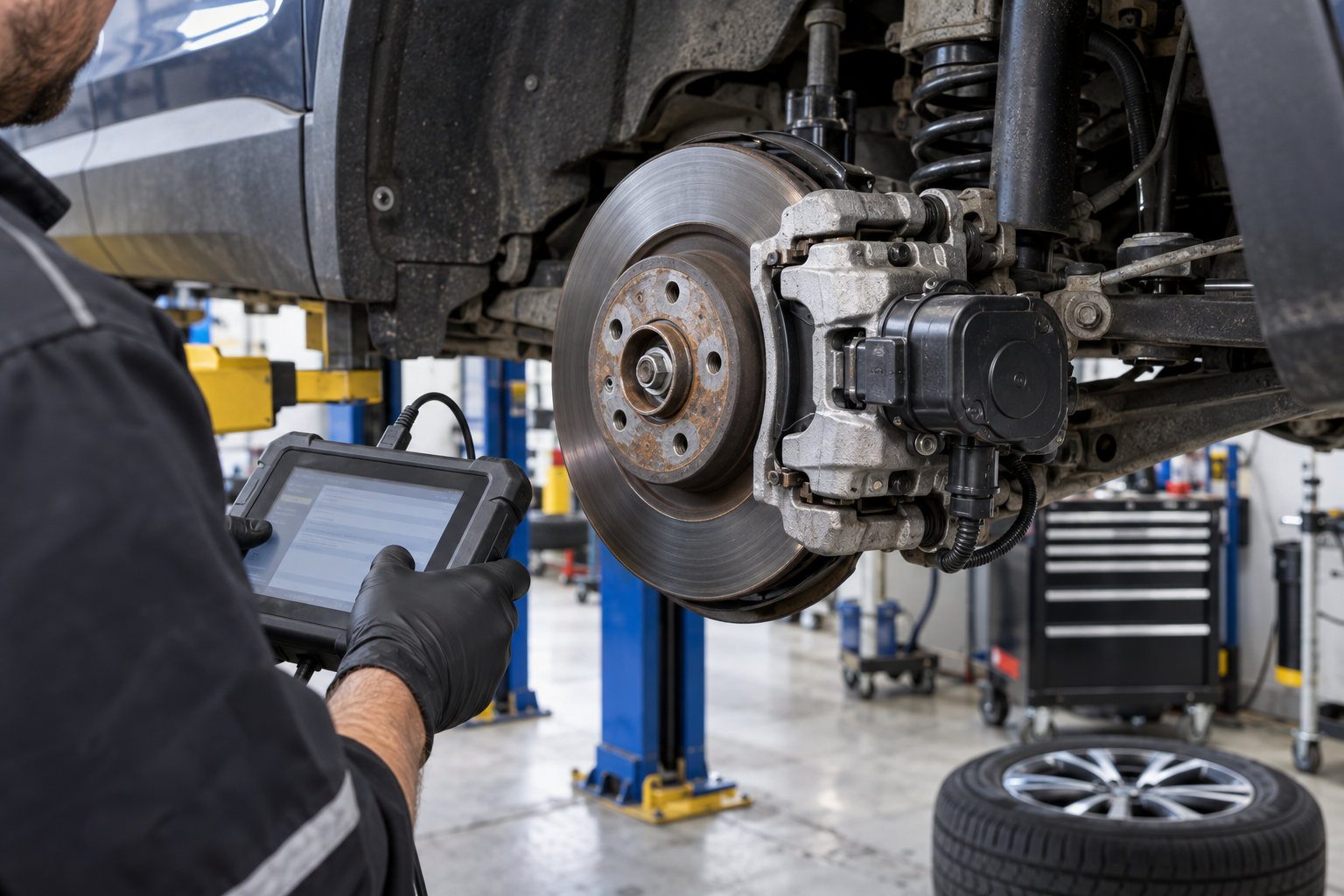
The electronic park brake does away with the handbrake lever. A small motor on each rear caliper winds the pads onto the disc, and a switch on the console works it. Renault fits one to the Koleos among other models.
When the dash shows a park brake fault, there are three usual causes. The motor on the caliper can fail or seize. The control module can fault. Or low battery voltage triggers the warning with nothing mechanically wrong. Check the battery first. It is the cheapest possibility and a common one.
A rear wheel that drags, or a brake that will not let go, points at the caliper end. That job needs a scan tool to wind the motor back before the caliper comes off. It is not a driveway repair. A caliper with the motor built in commonly costs $650 to $920 as a part. The fitted price depends on what the scan finds. A car that still rolls freely can be driven in. A binding wheel should not be driven on at all, because a dragging brake builds heat fast.
Which Renault problems cost the most to fix?
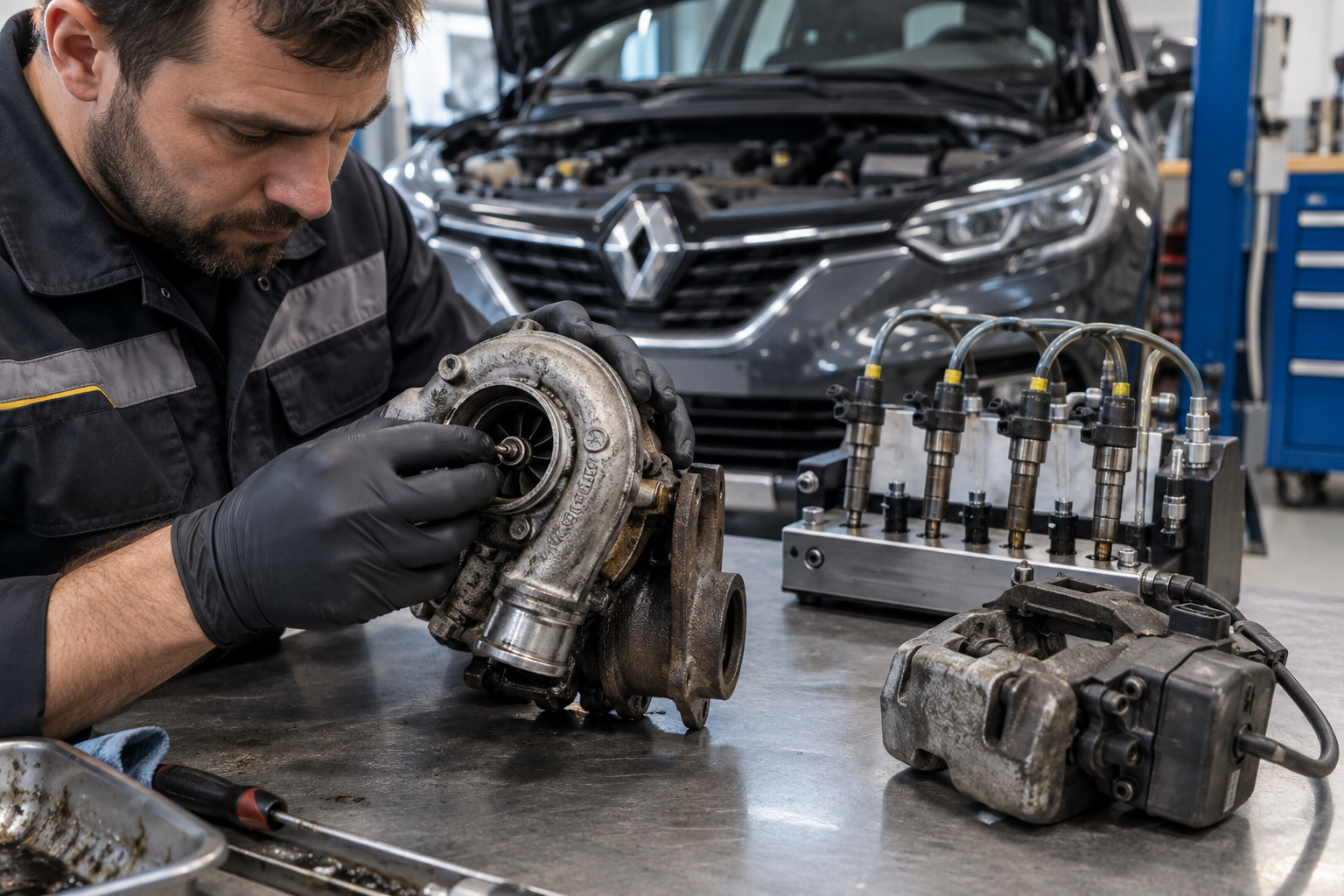
Here is how the common faults compare, both on price and on how much warning you get.
These are general Australian market ranges for 2026. They vary by model, engine and parts choice, and they exclude diagnosis and any further repairs where something else has been damaged. None of them are quotes. The same rundown exists for the common BMW faults, if there is one of those in the driveway too.
| Problem | Models most affected | Key warning sign | Typical cost |
|---|---|---|---|
| Diesel injectors | Megane dCi, Kangoo, Trafic, diesel Koleos | Rough cold idle, long cranking, diesel smell in the cabin | $240 to $445 each, $840 to $1,560 a set |
| Turbocharger | Megane dCi, Kangoo, Trafic, diesel Koleos | Whistle rising with revs, lost power, limp mode, blue smoke | $1,500 to $5,000 fitted |
| EGR valve | All dCi diesels | Rough running, warning light, economy dropping off | $300 to $1,000 for the valve before fitting |
| CVT shudder | Koleos | Shudder at light throttle, revs climbing without speed | $200 to $500 for fluid and filter, a rebuild needs a quote |
| Electronic park brake | Koleos | Park brake fault message, a rear wheel dragging | $650 to $920 for a caliper with the motor built in |
| Window regulator | Megane in particular | Window drops into the door and will not lift | $300 to $600 |
| Card key or body module | Megane, Clio, Captur | No start, central locking dead, several lights at once | Quote after diagnosis |
How long do Renault parts take to get in Australia?
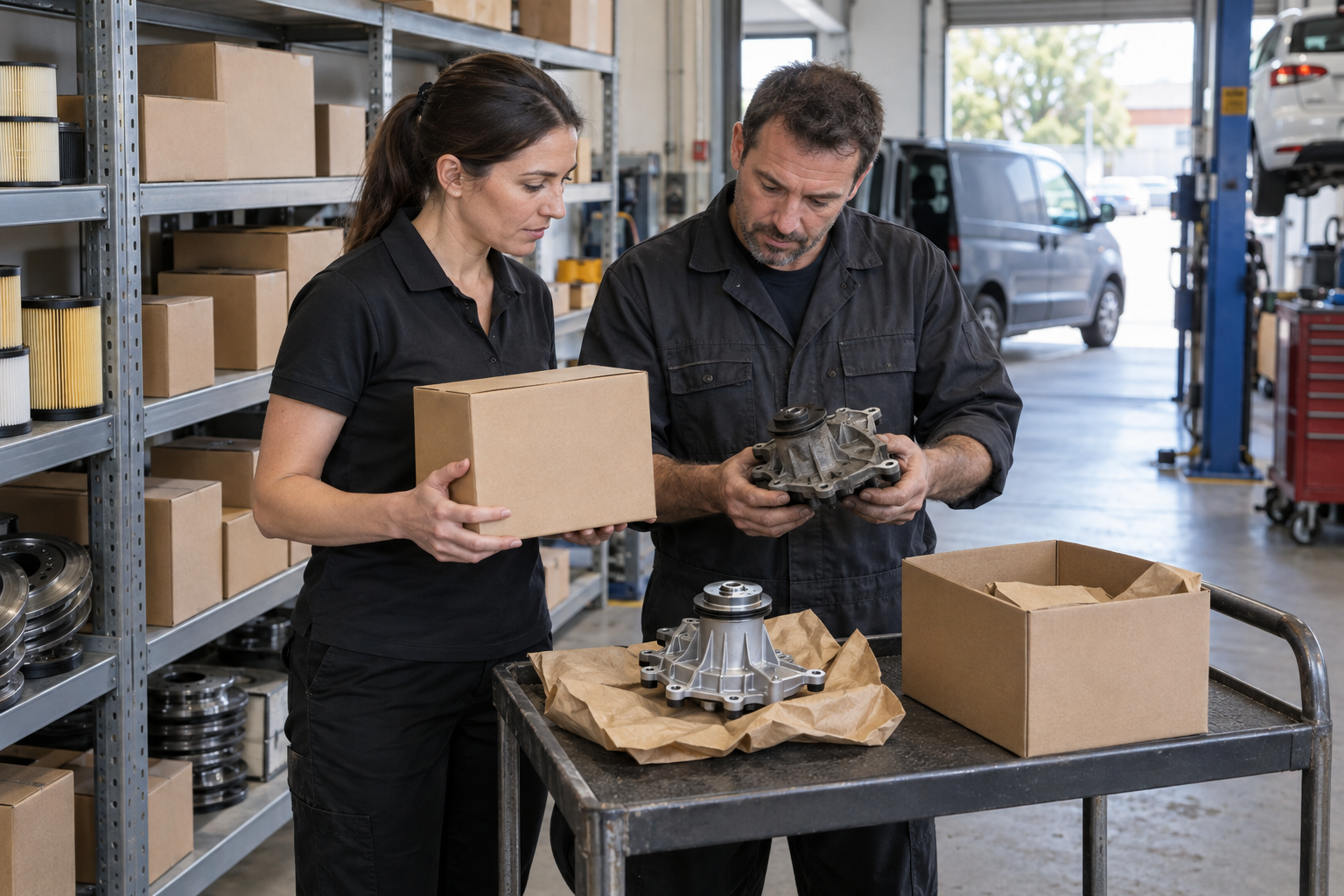
Everyday service parts are held locally. The dealer network stocks fast-moving items. Genuine Renault parts carry a one year unlimited kilometre warranty, or the balance of the new car warranty where that is longer. Aftermarket and reconditioned options exist for most wear items, which is often the difference between waiting and driving.
The wait stretches in three situations. A part specific to one model and one engine sells in small numbers here, so it gets ordered rather than stocked. A model that has left the Australian range goes the same way. The Captur and Clio are no longer sold new here, and Koleos stock is running down. Their slower parts drift off the shelf and onto the order book. And anything travelling from Europe rather than a local warehouse adds shipping on top.
The practical move is to have the part confirmed as available before the car is booked in, rather than after it is on the hoist. That matters most to small-business owners running a Kangoo or a Trafic, where a van off the road is lost income. A workshop doing Renault service and repairs week in and week out will usually know which parts move quickly before it goes looking.
When to see a Renault specialist
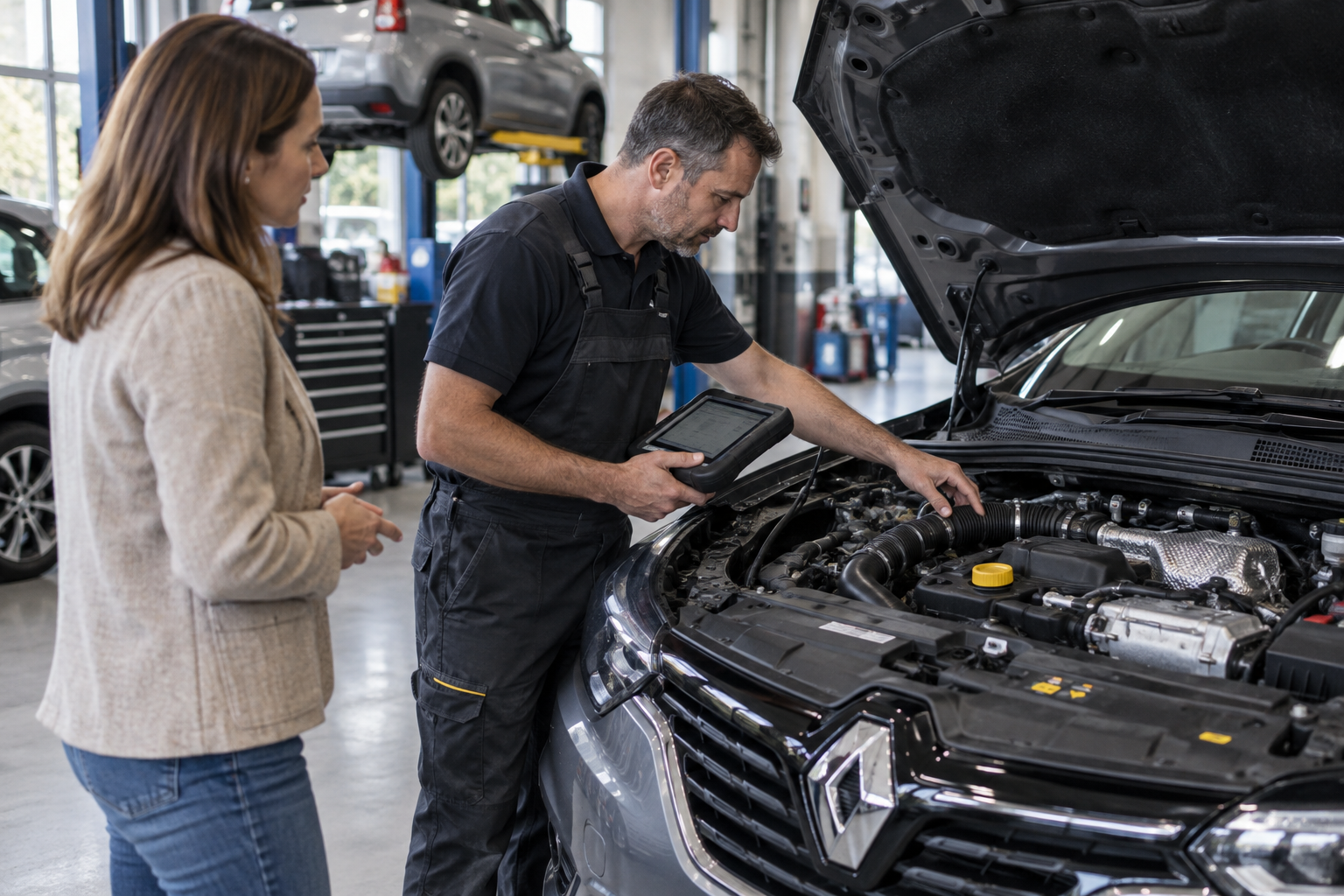
The faults above have something in common. They give warning first, and the warning is cheap to investigate compared with what follows it.
How the car gets driven decides which ones you meet. Short, stop-start trips are the hardest work a Renault diesel does. A crawl down the Pacific Highway, then two kilometres on the school run, never brings the exhaust up to the temperature its filter needs. Soot stays where it should have burnt away. The same pattern is unkind to gearbox fluid.
So when something changes, have it scanned early and ask for the fault codes in writing. A code turns a guess into a starting point, and it costs a fraction of the repair it heads off.
If your Renault is doing any of the things described above, book your Renault in online. Describe what you are hearing or feeling when you do.
Frequently asked questions
What does dCi mean on a Renault?
It marks the car as a diesel rather than a petrol model, which changes what needs watching. Diesel Renaults carry injector, turbo and exhaust filter hardware the petrol cars do not have. That is where most of their repair spending goes.
Does a shuddering Koleos always need a new gearbox?
No. Where the fluid has broken down but the pulley faces are still smooth, a fluid and filter change can settle it down. Where those faces are already scored, it will not, and no additive will change that. An inspection separates the two cases.
Why does my Renault say the card is not detected?
The card is the more likely fault, not the car. Because it fails by degrees, the message shows up once, then more often, until the car stops recognising it at all. Ruling out the battery inside the card costs almost nothing, so that is where diagnosis starts.
Can I keep driving with a park brake fault message?
It depends on whether the brake has let go. Check whether the car rolls without effort, and whether one wheel feels hot or smells after a short drive. Either sign means it should go no further under its own power.
Are Renault parts hard to get in Australia?
Not usually. The gap is between parts a workshop can have the same week and ones that must be brought in. The second group grows as a model gets older. Settling that before the car goes on the hoist avoids the surprise.

