
Your rego renewal notice from Service NSW has just landed in your inbox. Your car is over five years old, which means a pink slip before you can renew. If you're driving an Audi, BMW, Mercedes, VW, Volvo, or any other European car, there are a few things worth knowing before you book the inspection.
Most of the safety check is the same across every vehicle. But European cars have a handful of specific systems that catch out drivers who don't realise an active dashboard warning, a brake wear sensor, or a TPMS fault will fail the test as readily as a worn tyre would. The good news: most of these issues take ten minutes to diagnose and a quick service to clear, if you book ahead.
Here's what gets checked, what's not checked, and what to sort before you turn up.
What a pink slip is
The formal name is e-Safety check. The pink slip name stuck from the days when results were issued on pink paper. Now the report goes electronically to Transport for NSW, and your registration renewal can be processed online once you pass.
Pink slips are required for most light vehicles more than five years old when you renew NSW registration. The inspection is valid for six months. If you renew within that window, you're set.
A few things worth knowing up front:
- The inspection fee is regulated by Transport for NSW and reviewed annually. As of mid-2025, the maximum fee for a light vehicle is around $51. Check the Service NSW fee schedule for the current figure before you book.
- Inspections take roughly 20 to 30 minutes if there's nothing wrong.
- A pink slip is a safety check, not a service. It doesn't tell you your car is running well. It tells you it's safe to be on the road.
What the inspector checks
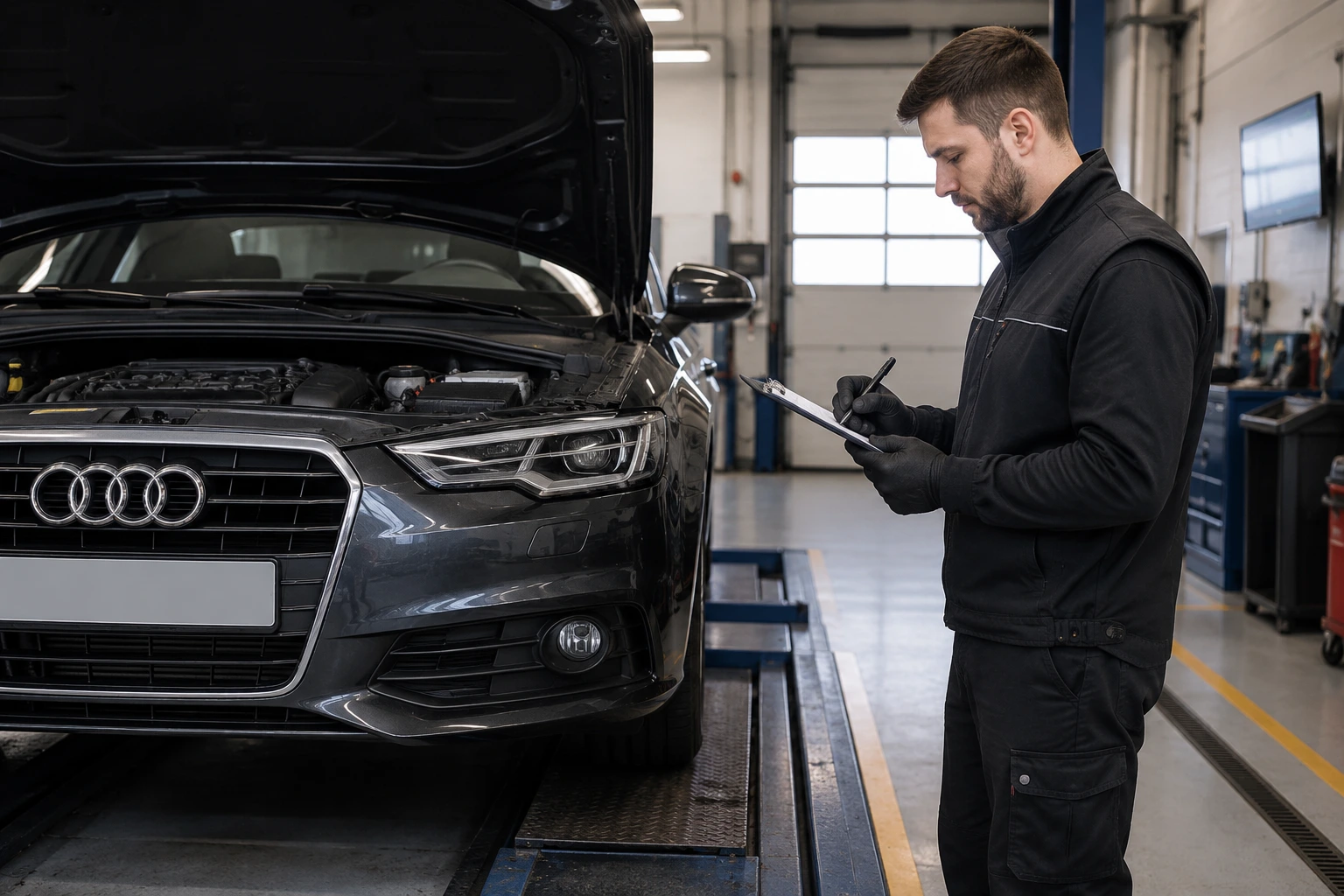
The check follows the Transport for NSW Light Vehicle Safety Check Standards. A licensed Authorised Inspection Station (AIS) tester goes through the following areas:
| Component | What they're looking for |
|---|---|
| Tyres | Minimum 1.5mm tread across the contact surface, no sidewall damage, matching pair on each axle, suitable type for the vehicle |
| Brakes | Pad and disc thickness, fluid level, handbrake function, ABS operation, even braking force on a calibrated test |
| Lights | Headlights, indicators, brake lights, reverse lights, tail lights, parker lights, hazards, number plate light – all working, no cracks or fogging |
| Steering and suspension | No excessive play, no leaking shock absorbers, no worn bushes |
| Windscreen and wipers | No cracks or chips in the driver's line of sight, wipers clearing cleanly |
| Seatbelts | Latch and retract correctly, no fraying or damage |
| Exhaust | No major leaks, no excessive smoke |
| Body and chassis | No structural rust, no accident damage compromising safety |
| Dashboard warning lights | None illuminated for safety-critical systems when the engine is running |
| Battery and electrical | Secure mounting, no obvious faults |
Lights are the single most common failure point, followed by tyres and oil leaks. None of these are uniquely European problems.
What catches European cars out
This is where it gets specific. Most of these systems are common across Audi, BMW, Mercedes, VW, and the wider European range. They don't fail the inspection because the car is unsafe. They fail because a warning light is on, and any active safety-critical warning means an automatic fail.
-
Brake wear sensors
Most European cars have an electrical wire that runs through the brake pad. When the pad wears down to the trigger point, the circuit breaks and a dashboard warning appears. The sensor wire is consumable – it works once. If the pads have been replaced without replacing the sensor, the warning stays on even with fresh pads. Inspector sees the warning, vehicle fails. The fix is a $30 sensor and ten minutes of labour. -
Service indicator and inspection lights
BMWs, Audis, and VWs all have service interval indicators that need to be reset after a service. Some independent workshops without the right diagnostic tools can't reset them, so the light stays on. On its own it's not always a fail, but combined with any other warning it tips the balance, and the inspector has to investigate to rule out a real fault. -
Electronic handbrake faults
Most newer European cars have electronic park brakes rather than mechanical handbrakes. The tester still has to confirm the brake holds the vehicle on an incline. If the electronic handbrake throws a fault code – worn cables on the actuator, a stuck caliper motor – the brake won't engage to spec, and the car fails. -
Tyre pressure monitoring (TPMS)
European cars are required to have TPMS that warns when a tyre is low. If a sensor battery has died, a sensor was damaged during a tyre fitment, or the system hasn't been reset after new tyres, the warning light stays on. Active TPMS warning, automatic fail. Sensor batteries typically last 5 to 10 years and aren't replaceable on their own – the whole sensor is. -
AdBlue and DPF warnings on diesels
If you drive a BMW diesel, VW TDI, Mercedes BlueTec, or Audi TDI, AdBlue and diesel particulate filter (DPF) warnings sit in the same category. An AdBlue warning indicating an empty or near-empty tank is treated as a fault and typically fails. DPF warnings usually fail too. Both are quick to clear if it's a warning rather than a real fault. -
Adaptive headlight modules
Cars with adaptive headlights (AFS, swivelling beam) have a self-test on start-up. If a module fault is logged, you'll see a yellow headlight warning on the dash. The headlights still work, but the system isn't operating to spec. Some inspectors will pass this; others won't. Clear the fault and you don't have to worry about which tester you get.
If any of these warnings are on your dash, get them diagnosed before the inspection. The fix is usually quick. A failed pink slip costs you more time than a 30-minute scan.
What's not checked
A pink slip is a safety check, not a mechanical inspection. The tester is not looking at:
- Engine condition, performance, or fuel economy
- Transmission shifting quality or fluid condition
- Air conditioning performance
- Coolant system condition unless there's an obvious leak
- Service intervals or maintenance history
- Belts, hoses, or auxiliary systems unless visibly failing
- Cosmetic damage that doesn't affect safety
If your car drives fine but the AC is broken, you'll pass. If your car drives fine but the timing belt is overdue, you'll pass. The pink slip won't tell you about a developing fault that hasn't yet become a safety problem. Worth pairing the inspection with a logbook service if your car is overdue for one.
How to pass first time
Five things worth doing before you book:
- Check every light on the car. Walk around with someone in the driver's seat cycling through the indicators, brake lights, reverse, headlights on low and high, hazards. Replace any blown bulbs. This catches the most common failure point.
- Run a hand across each tyre. Feel for uneven wear, bald spots, sidewall bulges. Check tread depth at three points across each tyre. If the wear indicator bars sit flush with the tread surface, the tyre is at or below 1.5mm and needs replacing.
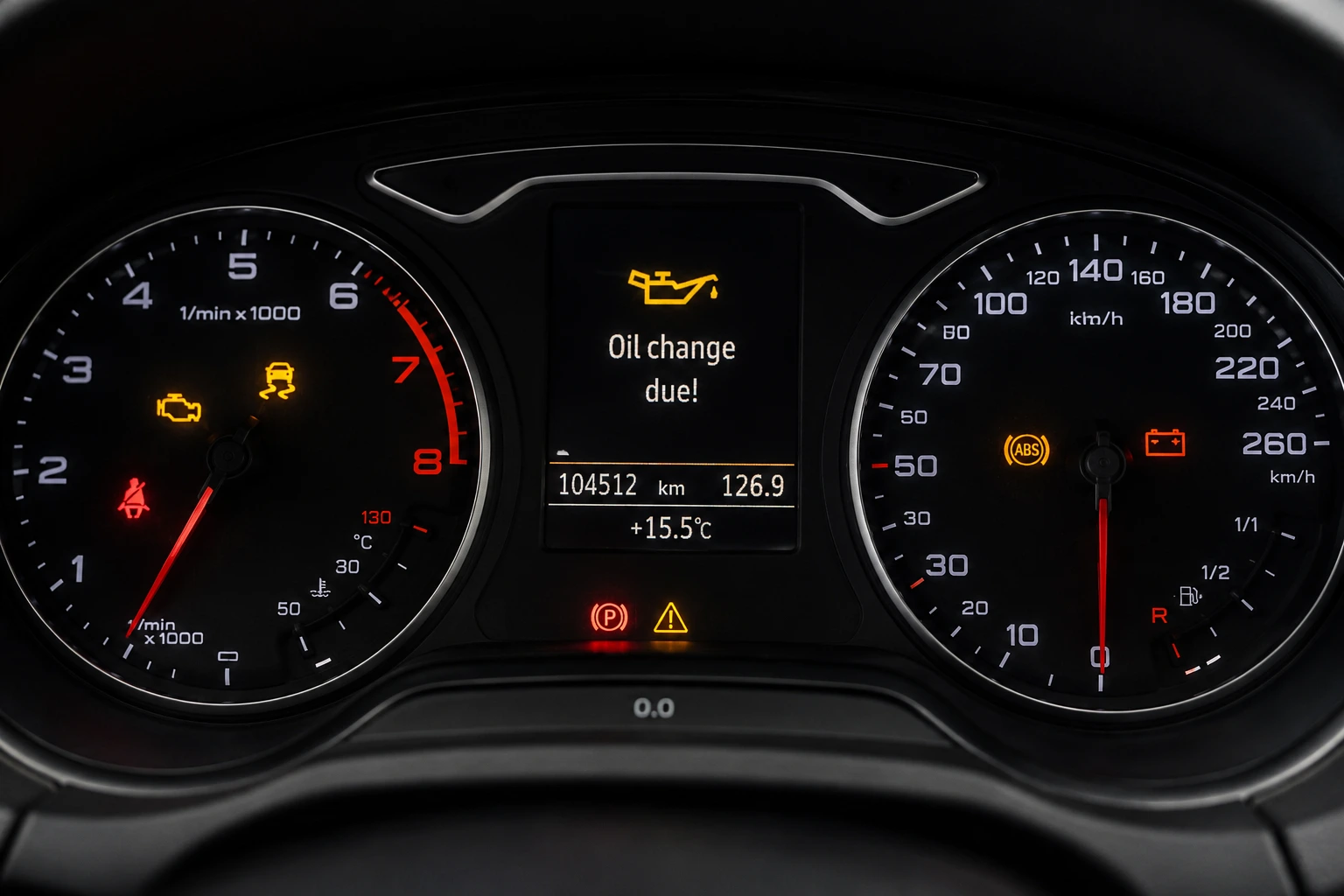
- Take the car for a 15-minute drive and watch the dashboard. Any warning lights that stay on after start-up need clearing. Don't ignore them. They'll fail the inspection.
- Check your windscreen for chips or cracks in the wiper sweep area, particularly in the driver's line of sight. Small chips can often be repaired without replacing the screen.
- Test the washers and wipers. Both wipers should clear cleanly without streaking.
For European cars specifically, if any of the warning lights mentioned above are on, get them diagnosed before the booking. A scan and clear usually takes less time than the inspection itself.
What happens if it fails
If your car fails, the tester issues a defect report listing what needs to be fixed. You have 14 days to make the repairs and bring the car back to the same inspection station. No additional fee applies for the re-check of the failed items.
If you go past 14 days, or take the car to a different station, you pay the full inspection fee again.
What it costs to fix depends on what failed. Some realistic examples for a European car:
- A blown headlight bulb: $30 to $150 depending on the car and whether it's an LED or HID unit
- Two new wiper blades: $40 to $120
- A pair of new tyres: $400 to $900 depending on size and brand
- A brake pad replacement: $400 to $900, depending on whether the wear sensors need replacing too
- A diagnostic scan to clear a fault code: $100 to $200
Most failures are minor and quick to fix. The expensive ones – worn discs, structural rust, suspension damage – are rare and usually obvious before you book.
Book your pink slip at Karl Knudsen
We're an Authorised Inspection Station in Chatswood, and European cars are what we do. If you're driving an Audi, BMW, Mercedes, VW, Volvo, Porsche, Skoda, MINI, or any of the other European makes we service, we'll handle the inspection. If there's a warning light on the dash, we can diagnose and clear it on the same visit using the manufacturer-level diagnostic tools the system actually needs.
Book your pink slip before your rego is due, not the week of. It gives you time to fix anything that needs fixing without scrambling.

