
Your European car’s timing belt has a replacement window, and it’s measured in both kilometres and years. If you don’t know when yours was last changed, or you bought the car secondhand without a clear service history, that’s something worth checking sooner rather than later.
A timing belt replacement is one of the most expensive scheduled maintenance items you’ll face as a European car owner. It typically costs between $500 and $1,500 in Australia, depending on the engine. But skipping it, or forgetting about it, can cost far more.
Here’s what you need to know.
What does a timing belt do?
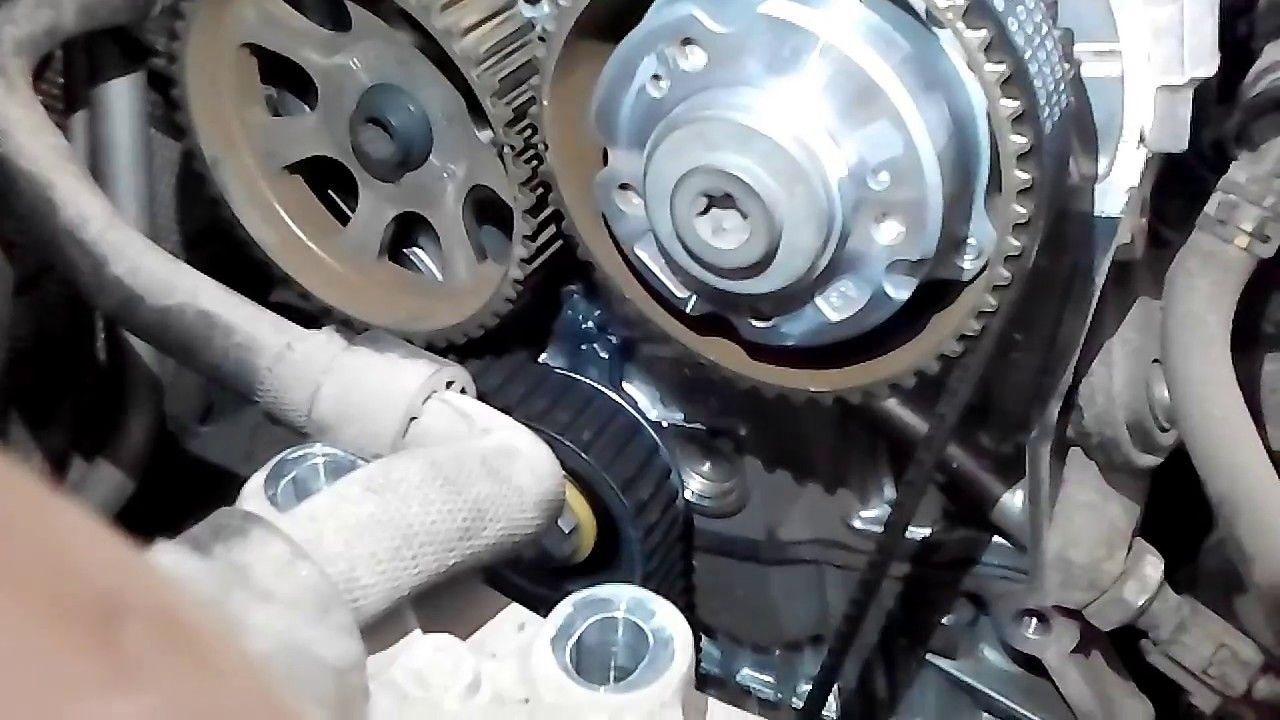
The timing belt is a reinforced rubber belt that keeps your engine’s internal components moving in sync. It connects the crankshaft (the part that turns your wheels) to the camshaft (the part that opens and closes the engine’s valves). If those two fall out of time with each other, the engine stops running properly.
Most European cars have what’s called an interference engine. That means the valves and pistons share the same space inside the cylinder, just at different times. The timing belt keeps them apart. If the belt snaps, the valves and pistons collide. The result is bent valves, damaged pistons, and a repair bill that can run from $3,000 to $7,000 or more. In many cases, the engine is written off entirely.
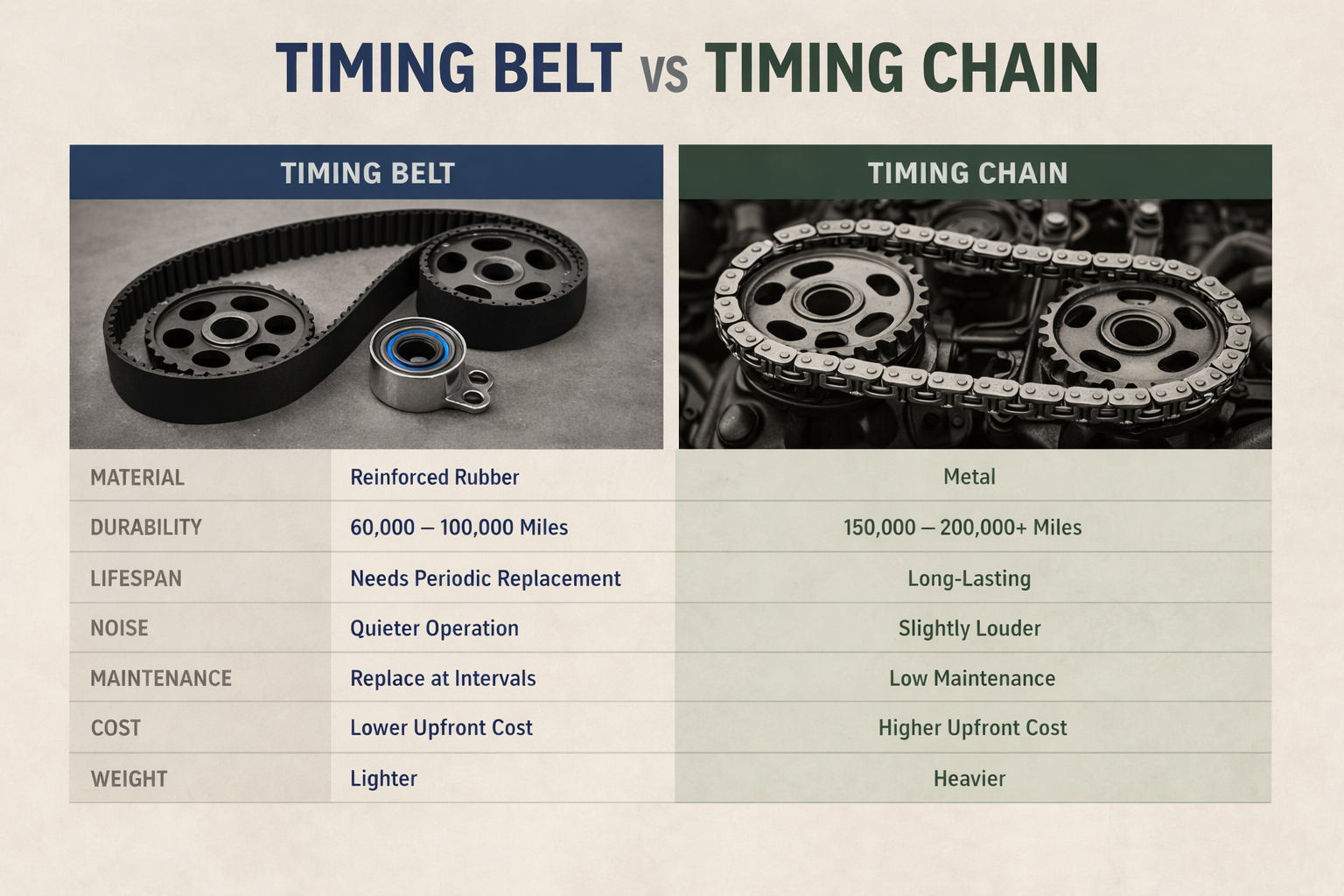
Does your European car have a timing belt or a timing chain?
| Type | Common European engines and brands |
|---|---|
| Timing belt | VW/Audi TDI diesels (1.9, 2.0), older VW/Audi 1.8T petrol, older Volvo five-cylinder, most Peugeot and Citroën, many Renault, Fiat and Alfa Romeo |
| Timing chain | Most modern BMW petrol (N20, B48, N55, B58), most Mercedes-Benz, Porsche, newer VW/Audi TSI/TFSI petrol, MINI (most models from 2011 onward) |
, choose a trusted mechanic.
If you’re not sure which your car has, your mechanic can tell you in a few seconds by checking the front of the engine.
When should you replace a timing belt?
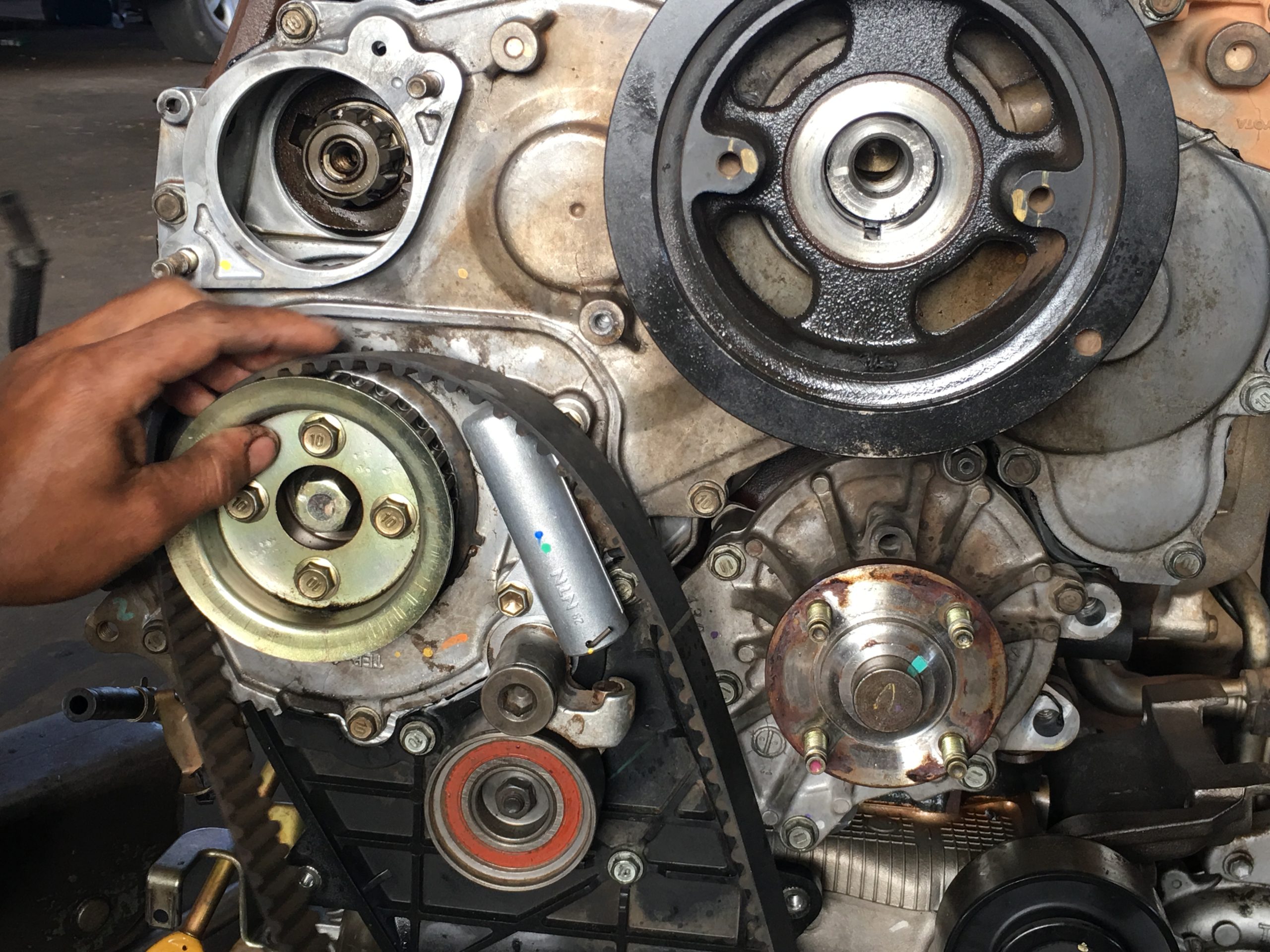
Replacement intervals vary by manufacturer and engine, but for most European cars, the window falls between 100,000 and 160,000 km, or every 5 to 7 years, whichever comes first.
| Brand / engine | Kilometre interval | Time interval |
|---|---|---|
| VW/Audi TDI diesels | 120,000 km | 5 years |
| Older VW/Audi 1.8T petrol | 100,000 km | 5 years |
| Volvo (belt-driven models) | 120,000–180,000 km | Up to 10 years |
| Peugeot and Citroën | 100,000–160,000 km | 5–6 years |
Always check your car’s logbook for the manufacturer’s specific recommendation. If you bought the car secondhand and the service history is incomplete, treat the timing belt as due for replacement.
What does the replacement involve (and why does it cost what it does)?
Most workshops will recommend replacing the water pump, tensioner, and idler pulleys at the same time. This isn’t an upsell. These components spin on bearings that wear at a similar rate to the belt, and they’re all behind the same covers. If a tensioner fails six months after a new belt goes on, the entire job needs to be done again. Replacing them together saves a second round of labour.
A full timing belt kit replacement on a European car in Australia typically costs between $750 and $1,500. Simpler engines (four-cylinder VW or Peugeot) sit toward the lower end. More complex setups (Volvo, some Audi V6 engines) push higher.
What if you don’t know when it was last done?
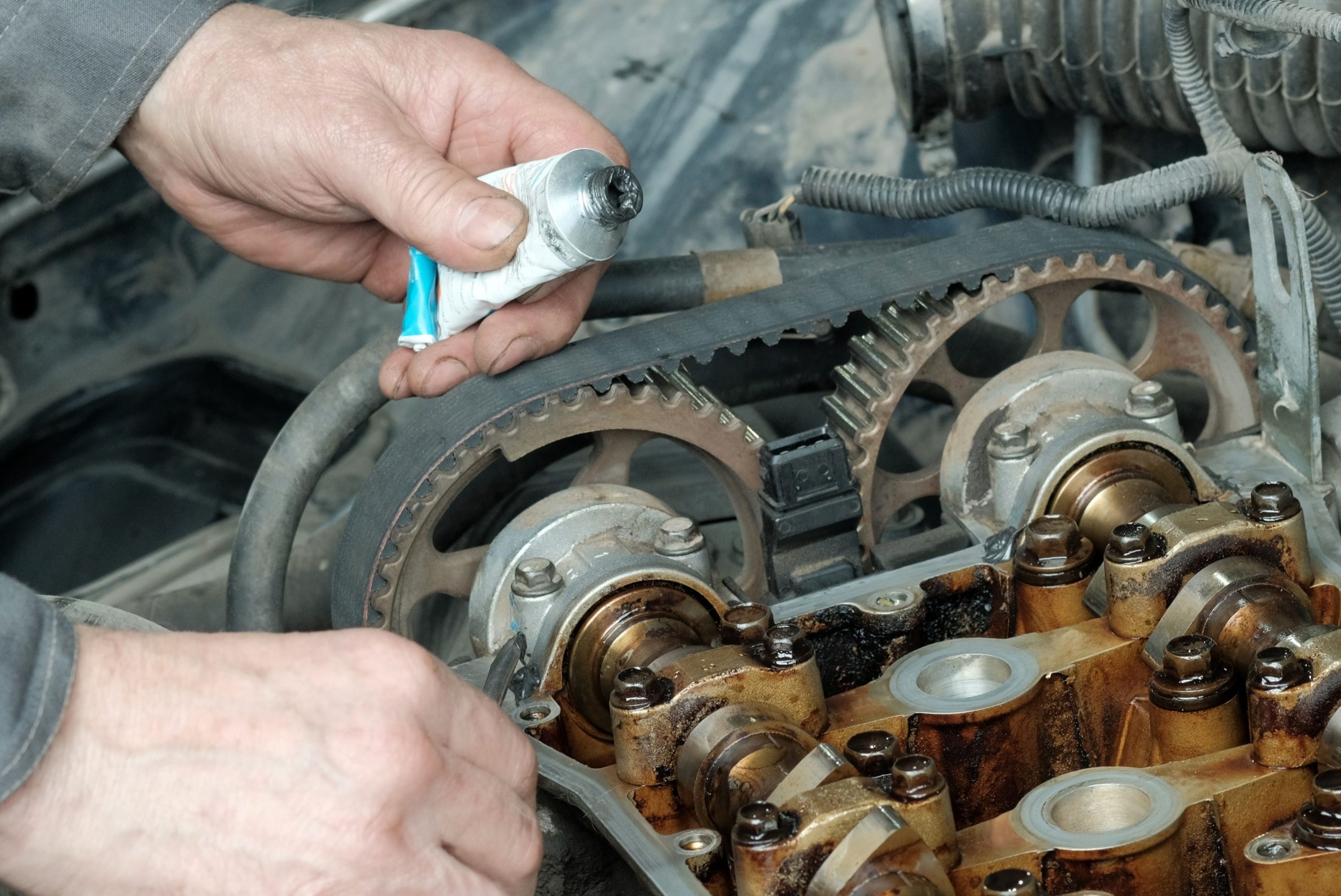
If you’ve bought a secondhand European car and can’t confirm when the timing belt was last replaced, the safest approach is to have it done. The cost of a precautionary replacement is a fraction of what you’d pay for engine damage if the belt fails.
Ask your mechanic to inspect the belt if it’s accessible. Cracking, fraying, or glazing on the belt surface are signs it’s overdue. But a belt can also look fine visually and still be past its service life, so inspection alone isn’t always enough.
Frequently asked questions
For most European cars, expect to pay between $750 and $1,500 for a full timing belt kit replacement, including the belt, tensioner, idler pulleys, and water pump. Simpler four-cylinder engines cost less. Complex or hard-to-access engines cost more. Labour makes up the largest portion of the bill because the job typically takes 3 to 5 hours.
On an interference engine, which includes most European cars, a broken timing belt causes the pistons and valves to collide. This bends valves, damages pistons, and can destroy the cylinder head. Repair costs start at $3,000 and can exceed $7,000. In many cases, the engine needs to be replaced entirely.
It depends on the make, model, and engine. Most modern BMW, Mercedes, and Porsche engines use timing chains. Many VW and Audi diesel engines, older VW/Audi petrol engines, Volvos, Peugeots, Citroëns, and Renaults use timing belts. Your mechanic can confirm which one your car has and whether it’s due for replacement.
The water pump sits behind the same engine covers as the timing belt and runs on the same drive system. Its bearings wear at a similar rate. Replacing it during the timing belt job adds relatively little cost because the labour is already done. If the water pump fails later, the entire disassembly has to happen again, roughly doubling the total labour cost.
You can, but you’re taking a significant risk. A timing belt doesn’t give much warning before it fails. There’s no dashboard light for it. If it snaps while you’re driving, the engine stops immediately and internal damage is likely. If your belt is past its recommended interval, book a replacement rather than waiting for a symptom that may never come.

