
Hybrid car servicing is not lighter than a petrol car’s. It is different. Most of the list is the same: tyres, brakes, suspension and, on any hybrid with a petrol engine, the oil and filter. Four things change: how the brakes wear, the small 12-volt battery, a separate coolant for the electric side, and an engine that hardly runs.
Many people asking this are hybrid owners whose dealer warranty is ending. The included servicing has run out and you are deciding where to go next. Two ideas usually sit in the background. One is that a hybrid barely needs servicing. The other is that only a dealer may touch it. Neither is right.
Does hybrid car servicing cover the same list?
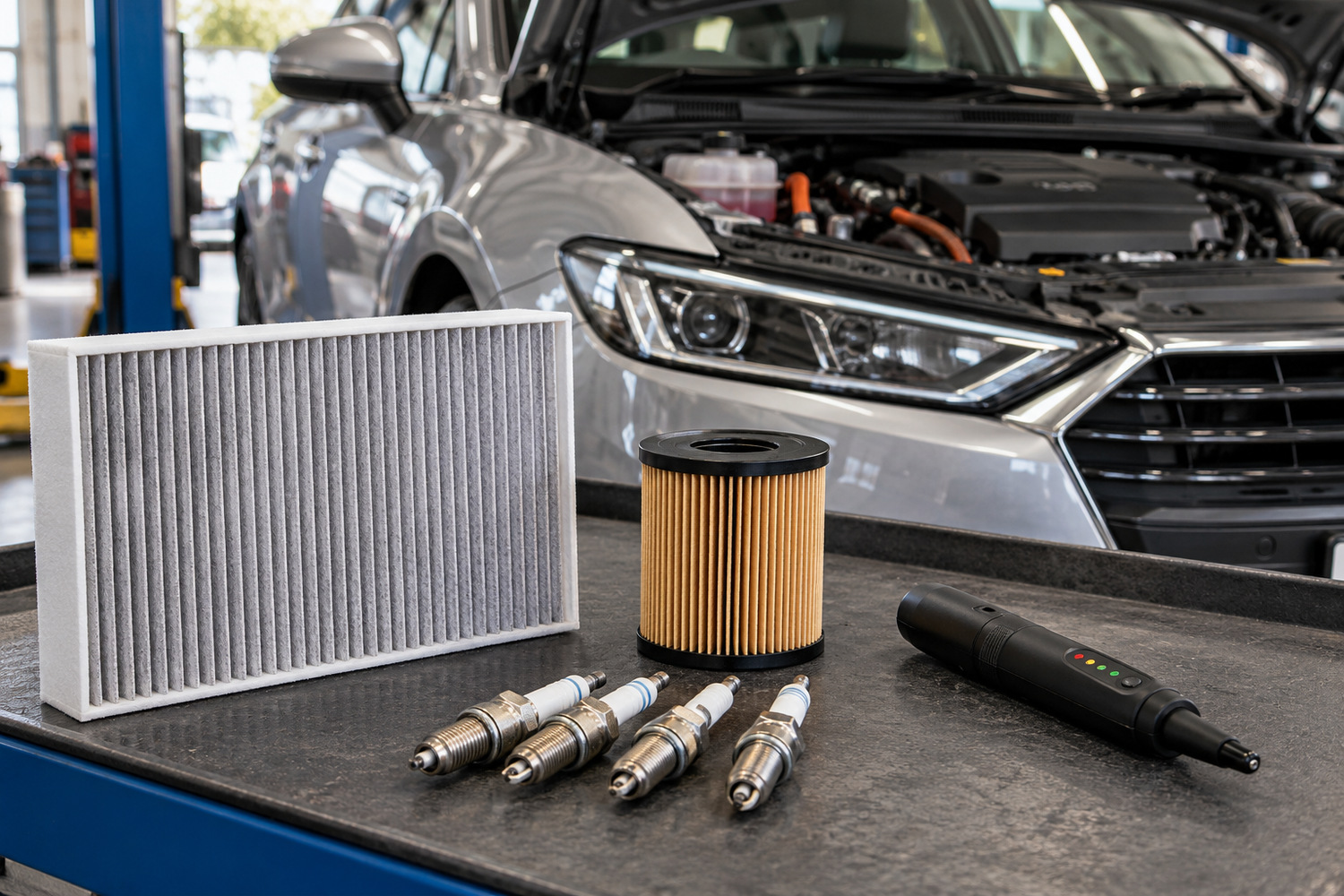
Mostly, yes. A hybrid pairs a petrol engine with an electric motor and a large high-voltage battery. A plug-in hybrid does the same with a bigger battery you charge from a power point, so it runs on electricity alone for a while. Everything else is still a car.
A hybrid’s own maintenance schedule shows that. One current hybrid manual schedules engine oil and filter changes, a cabin filter, brake fluid and spark plugs. It also schedules brake discs and pads, steering and suspension checks, and the condition of the 12-volt battery. None of those are hybrid parts. The full list of what a European car service covers is set out elsewhere on this site. The rest of this article is the handful of things that sit on top.
Why do hybrid brakes wear differently?
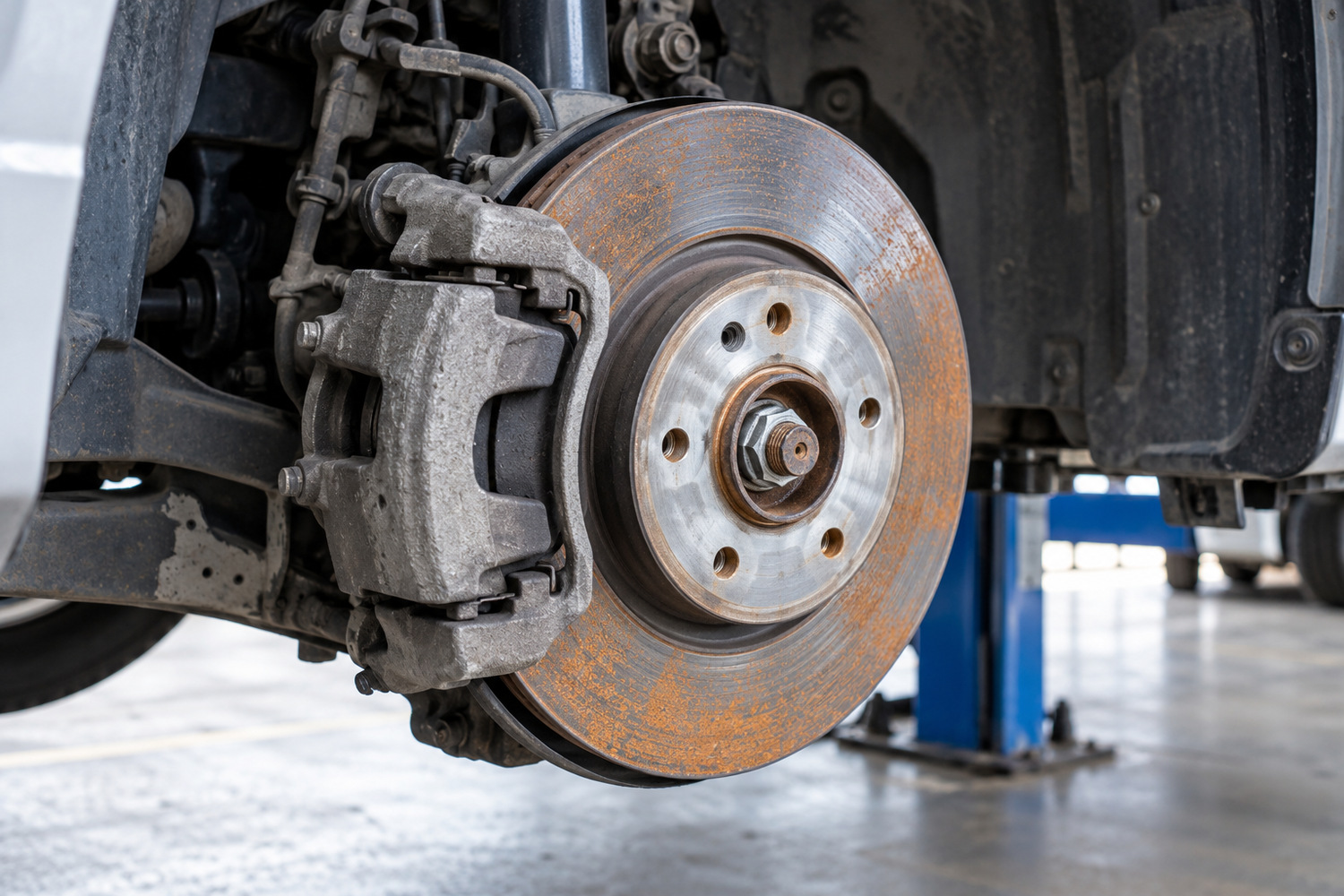
A hybrid does some of its braking with the electric motor, so the ordinary brakes do less work. That changes how they wear, and it is the biggest practical difference in the car.
Renault’s owner’s manual for its full hybrids puts the first part plainly. Lift your foot off the accelerator, or press the brake pedal, and the electric motor and the regenerative braking system do some of the slowing. They turn that energy into electricity. That electricity goes back into the traction battery. Regenerative braking is braking that recovers energy rather than throwing it away as heat.
The friction brakes are the ordinary ones. A pad clamps a metal disc at each wheel. On a hybrid they take a smaller share, because the electric side has already done some of it.
For the pads, that is good news. The disc is the catch. Audi tells its own workshops that corrosion forms on the face of a disc through moisture. Its service bulletin covers Audi cars from 2006 to 2023. It names two situations: a car that stands for long periods, or brakes used only lightly on short journeys. The cast iron in a disc does not resist corrosion, it says, and the face cannot be coated against it. The bulletin is about light brake use, not about hybrids. A hybrid is simply a car that is often used that way.
What you notice is a layer of rust on the disc, or noise or a vibration when you brake. Audi’s own fix is not dramatic. A decent drive with several firm stops, so the pads clean the whole disc face. A check that the pads are contacting all of it. New discs and pads only if that has not cleared it. It is ordinary brake work, and part of what a brake service looks at.
The point is short. Pads that are barely worn do not mean the brakes are fine. The pads on a hybrid can look nearly new while the discs are the parts wanting attention.
Why does a hybrid’s 12-volt battery still matter?
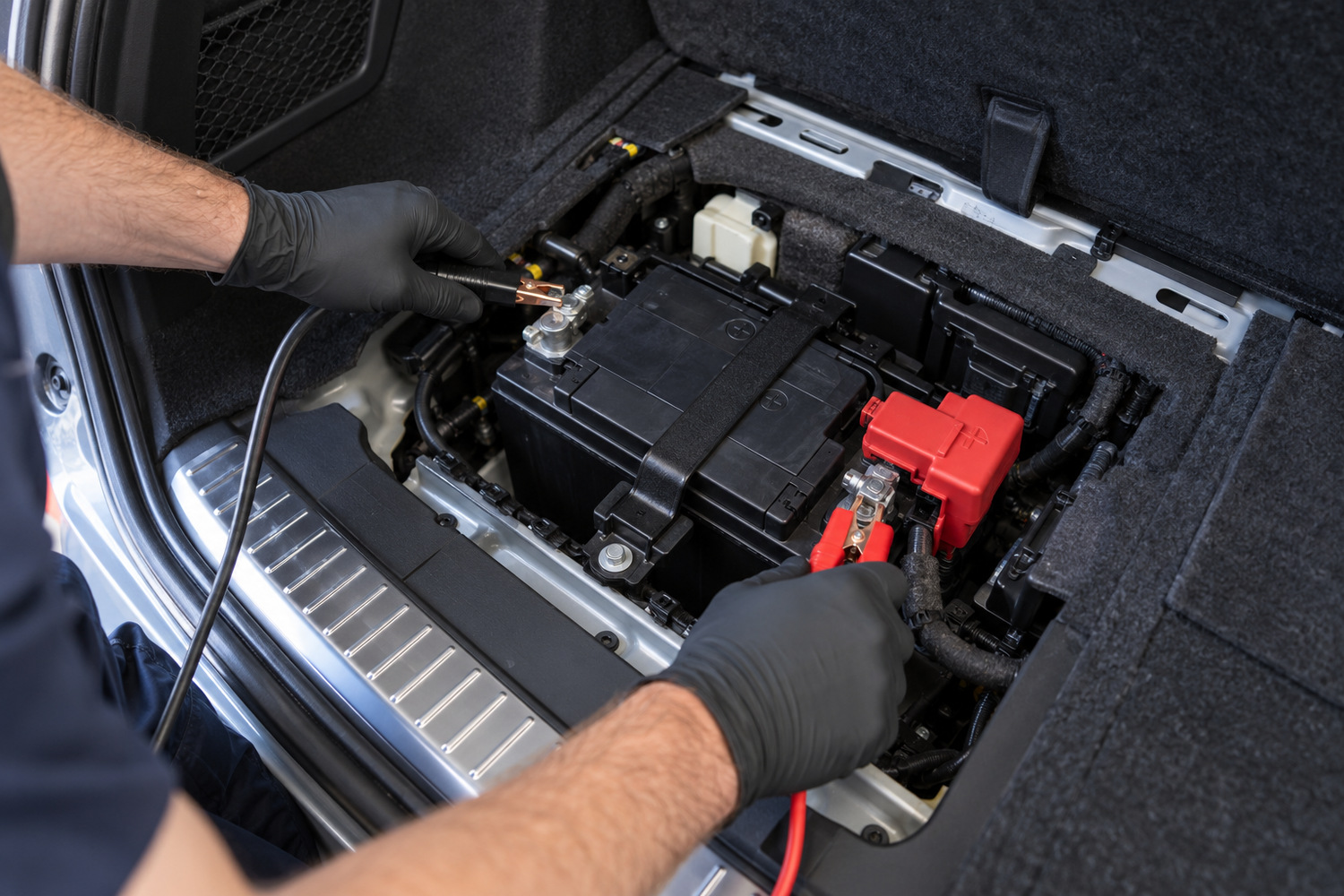
A hybrid carries two batteries, and they do different jobs.
The high-voltage traction battery drives the electric motor. The second is an ordinary 12-volt battery. Renault’s hybrid manuals say it powers the locks and the equipment, naming the lights, the wipers and the braking assistance.
A flat 12-volt battery can stop a hybrid starting, whatever charge the big battery holds. One hybrid manual says that in terms and tells the owner to jump start the car. Another says that on its full hybrid the 12-volt battery does not crank the engine at all. The hybrid system does that job. The detail changes from model to model. What does not change is the job the small battery does: it runs the electronics the car needs to wake up.
Short trips are hard on it. One manual’s remedy for a flat one is an hour of running, or a proper charger. A ten-minute drive to the shops puts back very little.
The high-voltage side is marked out by orange cables, and it is not owner territory. Renault’s manual prohibits any work on the high-voltage system, its cables, connectors or traction battery, and tells owners to call a dealer.
The small battery’s condition belongs on the service list, and on a hybrid schedule that is where it sits. Why batteries fail, and what Sydney conditions do to them, is covered in a separate post here on European car electrical problems.
Does a hybrid have more than one cooling system?
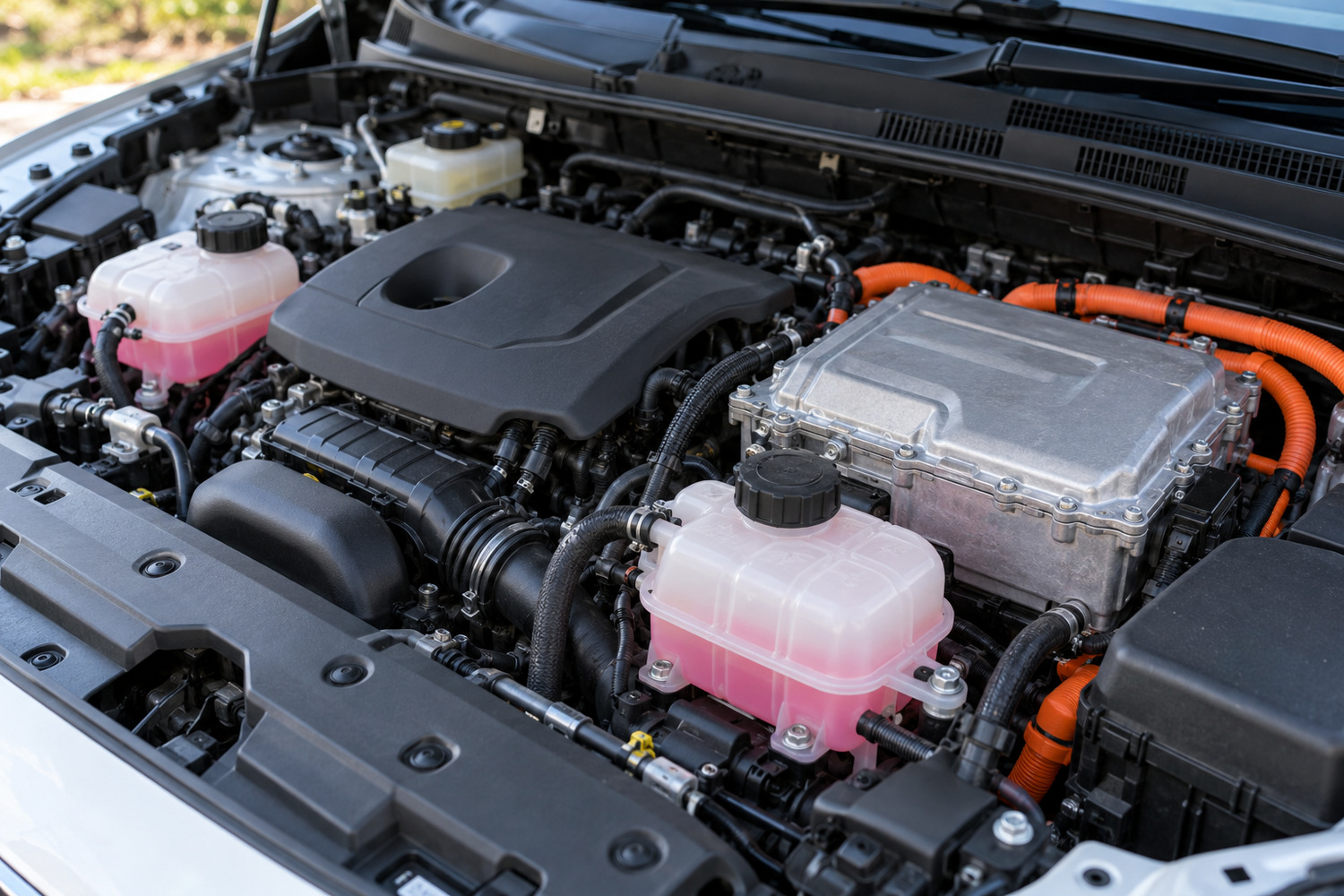
A hybrid often has more than one coolant, because the electric side needs cooling of its own.
On a petrol car, coolant is one circuit and one line on the schedule. Renault’s manual for one of its hybrids lists more than one coolant to check under the bonnet. It calls the electric traction system’s coolant a different system from the engine’s, there to cool the electric motor.
Other manufacturers call that fluid the inverter coolant. The inverter is the unit that converts the traction battery’s power into the form the electric motor uses. On one current hybrid schedule, its coolant is listed as its own item, separate from the engine coolant.
One more thing cools the electric side. Renault says the car’s air conditioning is used to cool the traction battery. It tells owners to have that system checked by a professional to protect the battery’s life, especially if the cooling has weakened.
None of this is hard to look after. It does mean more reservoirs to check, each with its own level marks, and more than one schedule. The maintenance document that came with the car sets those.
What happens to an engine that hardly runs?
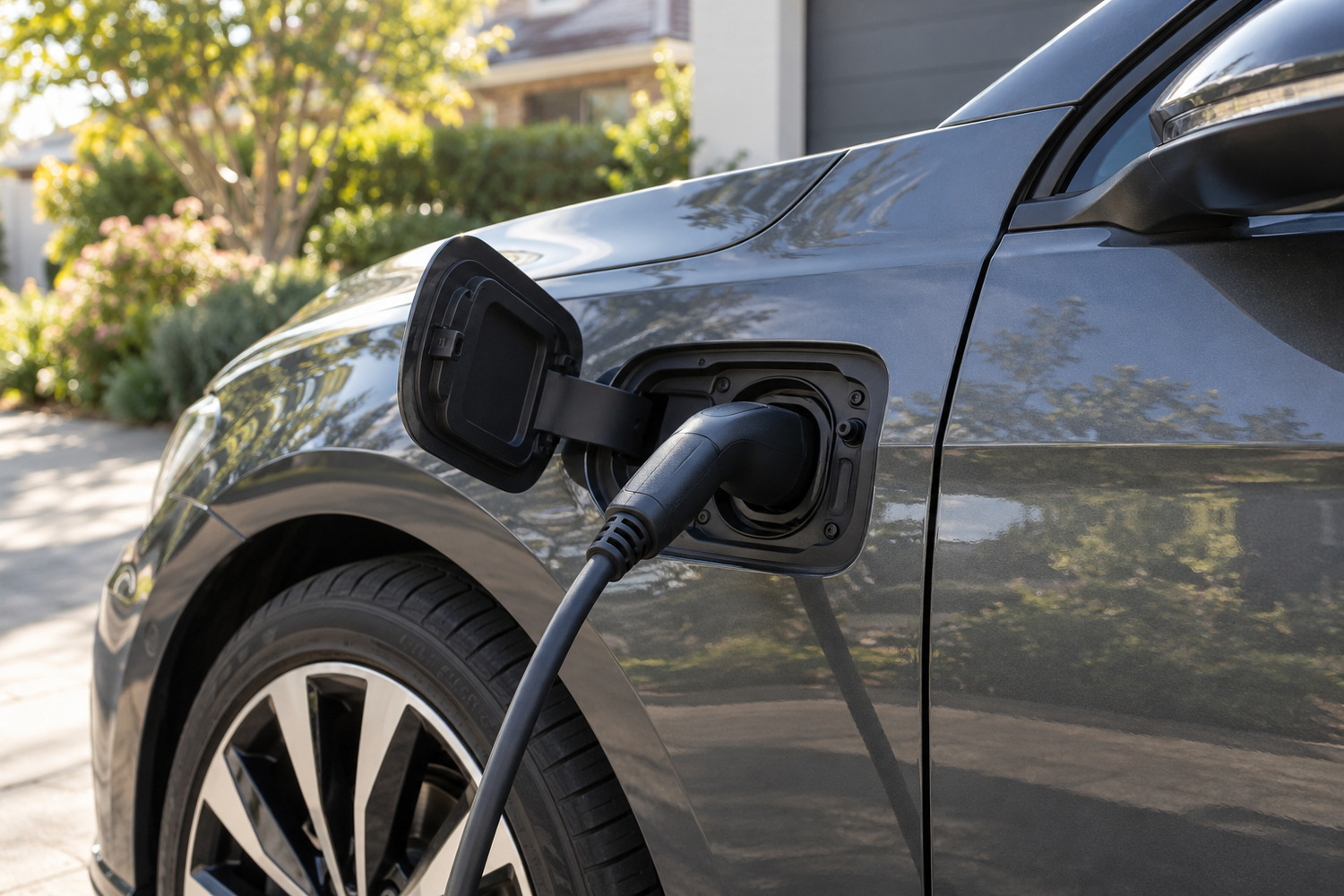
An engine that hardly runs still has a schedule, and light use makes that schedule stricter rather than looser.
A plug-in hybrid driven the way most are driven around Chatswood and the lower North Shore barely troubles its engine. The school run, the station, the shops, home again, nearly all of it on electricity. The engine can go weeks doing very little.
One hybrid maker’s schedule treats that pattern as hard use, and lists it among the severe driving conditions. Repeated trips under eight kilometres, long spells of idling or low speeds, heavy traffic, and stop-start traffic. Under those, it tells owners to inspect, replace parts or top up fluids more often, or move to the severe-use schedule.
Time counts as much as distance. The schedule is set out in months and kilometres together, and the service falls due on whichever comes first. A car covering very few kilometres still reaches the months.
Sitting still has its own cost. Renault tells hybrid owners to start the engine about once a month if the car is parked for a long time. Leave it running until the instrument panel shows the traction battery has charge. Not doing that can damage the traction battery and leave the car unable to start.
So the oil, the filters and the fuel still sit on a schedule that counts months. On a plug-in, that schedule matters more than the odometer. Diesels have their own version of this, because a particulate filter needs a proper run to clear itself.
Does a hybrid have to be serviced at the dealer?

No. A hybrid is still a car with a manufacturer’s schedule. What counts is that the work follows it, with the right parts and the records kept. The rules on servicing rights after the warranty have a separate post on this site, so they are not repeated here.
One thing is worth knowing before you read a warranty booklet. The high-voltage battery can carry warranty terms of its own, and those terms differ between manufacturers. The booklet that came with the car is where to check them.
Frequently asked questions
Does a hybrid need an oil change?
Any hybrid with a petrol engine does. The oil and filter are on the manufacturer’s schedule, exactly as in a car with no electric motor. A plug-in running mostly on electricity is no exception, because the service can fall due on time before it falls due on distance.
Does a hybrid cost more to service?
That depends on the model and its schedule rather than on the car being a hybrid. The base list is the same. The extras are another coolant, the small battery’s condition, and discs that want a closer look than the pads. The book that came with the car sets the work.
What happens at a hybrid’s first service after warranty?
Whatever the schedule calls for at that age, and a closer look at the parts a hybrid treats differently. The electric side and the braking are where it stops resembling the petrol version.
Is it safe to work on a hybrid yourself?
Not the high-voltage part. The manufacturer’s own instruction is that an approved workshop does any work there, and the orange cables mark out which parts that covers. The rest of the car is the same work it would be on a petrol one.
Booking a hybrid in for a service

Karl Knudsen Automotive services hybrids in Chatswood, alongside the petrol and diesel European cars.
Say the car is a hybrid or a plug-in hybrid when you book, because the checks are not the same. Book a service online, and add the model and roughly how far the car travels in a month.

