
A timing belt is one of those parts most owners never see, but the decision around it matters. By the time a European car reaches its scheduled belt interval, the belt is rarely the only part that has aged.
That is where camshaft belt replacement cost can become confusing. The belt itself may look like the main job, but the tensioners, idler pulleys, water pump, coolant, and seals can all change the risk profile of the repair.
The short answer is this: a belt-only replacement can be reasonable in some cases, but the timing belt kit is often the better-value job when related parts are the same age as the belt. The right answer depends on the vehicle, service history, access labour, water pump design, and the condition of the tensioners and pulleys.
Karl Knudsen Automotive in Chatswood sees this most often with European cars where tight engine access makes repeat labour the real cost. The decision is not about choosing the biggest job. It is about deciding which old parts should stay behind the timing cover once the car is back together.
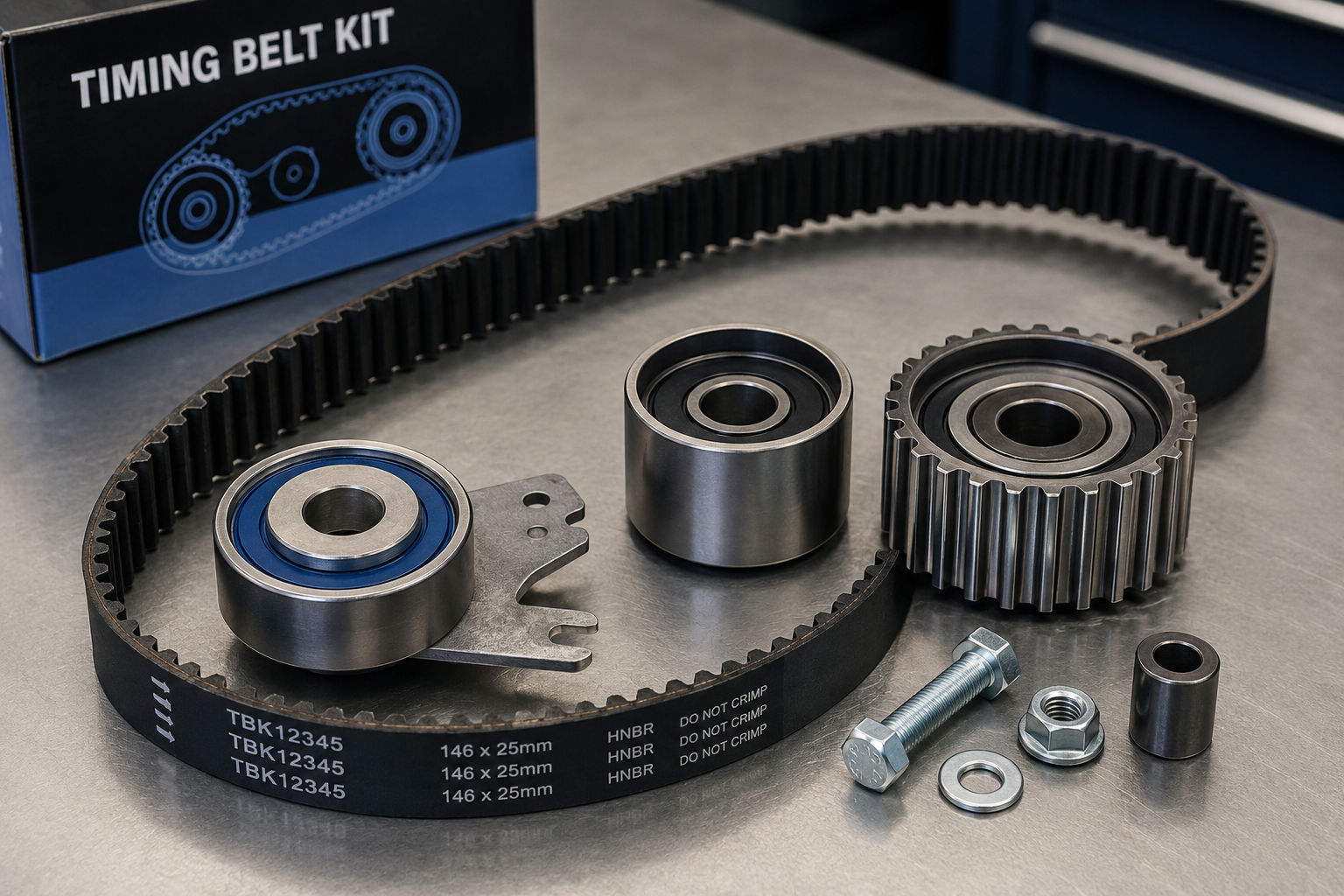
What is included in a timing belt kit?
A timing belt kit is a set of related parts that work with the belt to keep the engine in time. The timing belt, also called a camshaft belt on some cars, keeps the crankshaft and camshafts moving together so the valves and pistons do not meet at the wrong moment.
A proper estimate should make clear which parts are included. A kit may include:
- The timing belt itself
- The tensioner, which keeps the belt tight
- Idler pulleys, which guide the belt
- A water pump, if it is driven by the belt or sits behind the same timing cover
- Oil seals, if there is evidence of seepage
- Coolant, if the cooling system is opened
- Single-use bolts, where the manufacturer requires them
- The auxiliary belt, if it has to come off and is due for replacement
Not every car needs every item on that list. The point of an itemised estimate is to show what is being replaced, what is being reused, and why.
How does the kit change camshaft belt replacement cost?
A timing belt job is often expensive because of access labour, not because the belt itself is costly. On many European engines, the mechanic may need to remove covers, engine mounts, drive belts, guards, and other parts before the timing area can be reached.
That labour changes the decision. If an old pulley, tensioner, or water pump fails later, the workshop may need to remove many of the same parts again. That is where the cheapest repair can become more expensive over time.
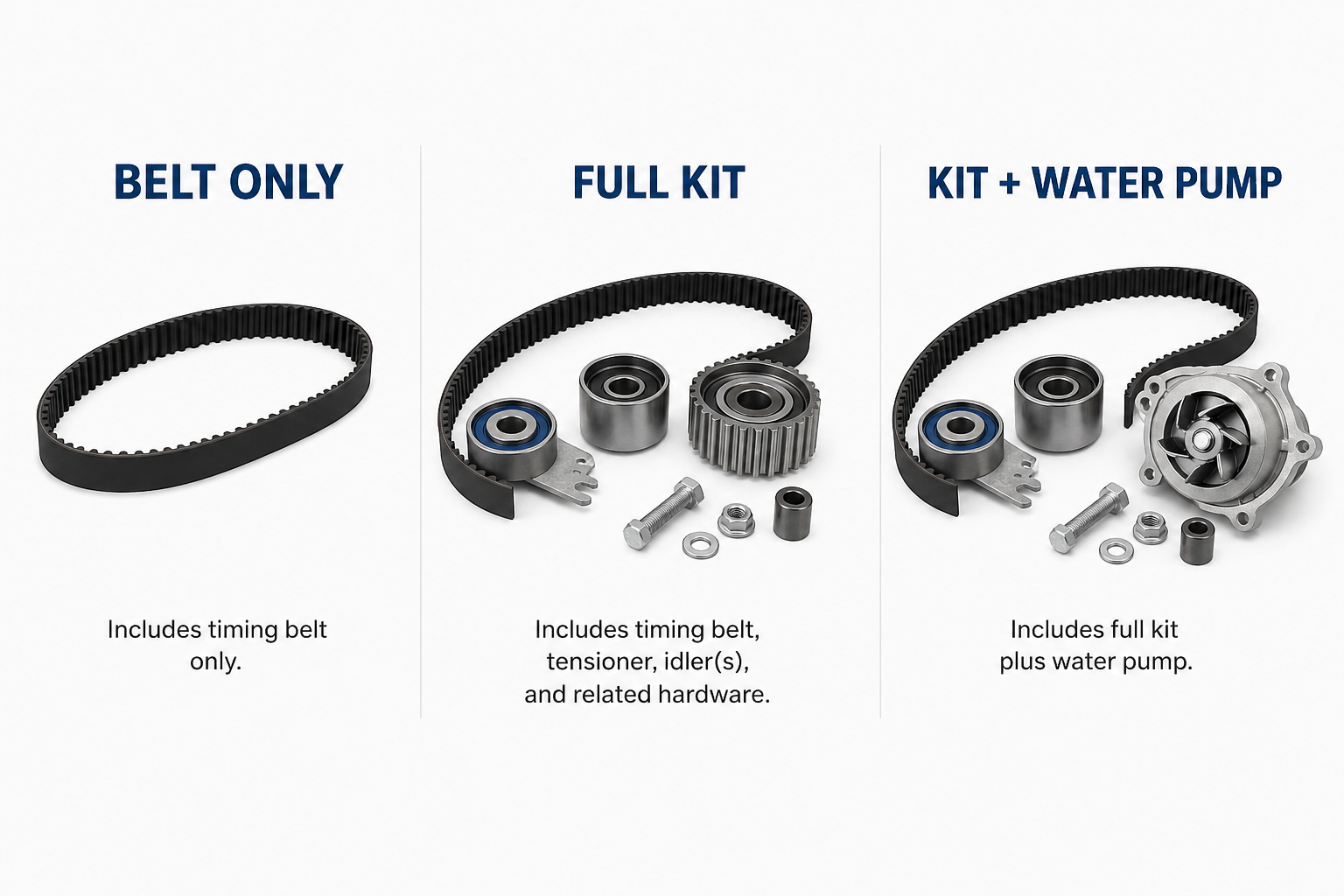
| Job type | What is usually replaced | When it can make sense | Risk if skipped | Cost impact |
|---|---|---|---|---|
| Belt only | Timing belt only | Recent documented kit replacement, low-risk engine layout, or related parts already replaced | Old tensioners or pulleys may still fail | Lowest upfront cost |
| Full timing belt kit | Belt, tensioner, idlers, and related kit parts | Unknown history, higher kilometres, or parts at the same age as the belt | Lower risk than belt only, but water pump may still be separate | Higher parts cost, same main access labour |
| Kit plus water pump | Full kit, water pump, coolant, and related seals where needed | Pump is belt-driven or sits behind the timing cover | Skipping it may mean paying access labour again | Highest upfront cost, often best long-term value where applicable |
When is belt only reasonable?
A belt-only repair is not always a bad repair. It can be a fair option when the surrounding parts have already been dealt with and the workshop can prove it from the service history.
Belt only may be reasonable when:
- The water pump was replaced recently and there is a clear invoice.
- The tensioner and pulleys were changed at a previous service.
- The water pump is not driven by the timing belt.
- The vehicle has low kilometres and a clear service record.
- The car is being sold soon and the buyer only needs the scheduled belt done.
- The mechanic has inspected the related parts and found no wear, noise, leak, or play.
The weak point is documentation. 'The previous owner said it was done' is not the same as an invoice, logbook entry, or workshop record.
When is a full kit the smarter choice?
A full timing belt kit is often the safer choice when the history is incomplete or the related parts are close to the same age as the belt. A new belt running over old pulleys is not the same as a complete timing belt service.
A full kit usually makes more sense when:
- The service history is missing or unclear.
- The vehicle is near or past its scheduled interval.
- The car has high kilometres for its age.
- The tensioner or idler pulleys are noisy.
- There is visible coolant staining near the timing area.
- There is oil seepage near seals that can contaminate the belt.
- The owner plans to keep the vehicle for several more years.
- The engine has tight access, so repeated labour would be costly.
On interference engines, a failed belt can cause internal engine damage. An interference engine is one where the pistons and valves share the same space at different times. If the belt breaks, they can collide.
Why European cars need model-specific advice
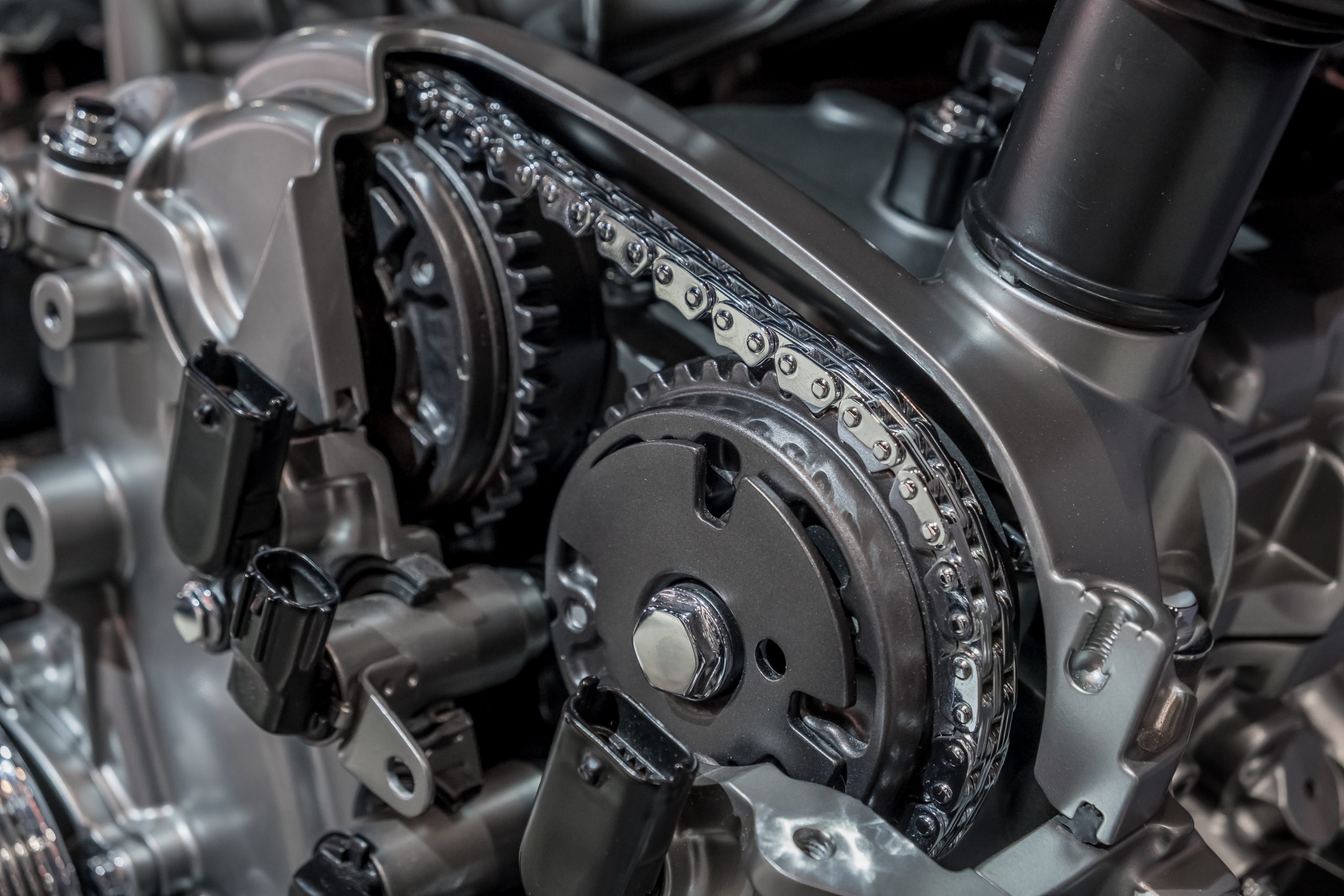
European cars need model-specific timing belt advice because brand alone does not tell the full story. Some BMW and Mercedes engines use timing chains. Some Audi, Volkswagen, Peugeot, Citroen, Renault and Volvo engines use timing belts. Even within one brand, the answer can change by engine code, year, fuel type, and service schedule.
There are three reasons this matters.
- Access varies. Some engines leave reasonable working room. Others are tightly packaged, which lifts labour time.
- Parts vary. Some kits include more than the belt and tensioner. Others require specific bolts, seals, coolant, or auxiliary belts.
- Fluids and procedures vary. European cooling systems can require specific coolant types and bleeding procedures. Guessing can create new problems.
This is why a vague line saying 'replace timing belt' is not enough. The estimate should reflect the exact engine, not just the badge on the bonnet.
What should an itemised timing belt estimate show?
An itemised estimate lets you compare belt-only and full-kit pricing fairly. Without the detail, two estimates may look comparable when they cover different jobs.
Ask for the estimate to show:
- The belt, kit, and water pump lines separately
- Whether the water pump is included, excluded, or not relevant for that engine
- Tensioners, idler pulleys, seals, coolant, and single-use bolts
- Labour as a clear line, not hidden inside a lump sum
- Parts quality, such as genuine, OEM, or equivalent-quality parts
- What is excluded from the estimate
- Whether the auxiliary belt is being removed and reused
- How the work will be recorded in the service history
- Warranty terms for parts and labour
- Any optional work that can be done while access is open
For a newer car still under manufacturer warranty, the estimate should also make clear that the work follows the manufacturer schedule and uses parts and fluids that meet the required standard.
Is the cheapest timing belt job a problem?
The cheapest timing belt job is a problem only if it hides what is being left out. A belt-only job can be fine if the mechanic has a good reason and the service record backs it up.
The better question is not 'why is this cheaper?' It is 'what will still be old when this job is finished?'
If the answer is an old water pump behind the timing cover, old pulleys, old tensioners, or missing coolant work, the price difference needs closer attention. If the answer is 'nothing important, because those parts were already replaced', the belt-only option may be perfectly sensible.
Quick questions before approving the job
Before approving a timing belt or camshaft belt replacement, ask these questions:
- Is this a belt or chain engine?
- What is the manufacturer interval for this exact engine?
- Does the water pump run off the timing belt?
- Are the tensioner and idler pulleys included?
- Will coolant need to be replaced?
- Are there oil or coolant leaks near the timing area?
- What parts are being reused?
- Will the job be recorded in the service history?
Those questions are not about pushing the repair higher. They are about understanding whether the work matches the risk.
Timing belt kit or belt only : the practical answer
For many European cars, the full timing belt kit is the more sensible job because the labour overlap is already there. For some cars, belt only is reasonable if the service history is clean and the related parts are not due.
The practical answer is to ask for an itemised timing belt estimate, then compare the scope rather than the headline price. A document that explains the belt, kit, water pump, coolant, labour, and exclusions is easier to trust than one that gives a round figure and leaves the rest unclear.
Karl Knudsen Automotive in Chatswood can inspect the vehicle, check the service record, and prepare an itemised timing belt estimate for European car owners across Sydney's North Shore. The useful estimate is the one that explains what is being replaced and what is being left alone.
frequently asked question
In most workshop conversations, yes. A camshaft belt is another name for a timing belt. It keeps the camshaft and crankshaft moving together so the engine's valves open and close at the correct time.
No. Some water pumps are driven by the timing belt or sit behind the same timing cover. Others do not. A water pump should be included when the engine design, access labour, age, leakage, or service history makes it sensible.
Sometimes there are visible cracks, fraying, noise, or contamination. The problem is that timing belts can also fail without a useful warning. That is why the service interval matters more than a quick visual check.
Independent servicing does not automatically void a manufacturer warranty in Australia. The work needs to follow the manufacturer schedule and use parts and fluids that meet the required standard. Keep the invoice and service record.

