
Short trips can reach a Peugeot or Citroën timing belt, though not directly. On the small three-cylinder petrol engines both brands have fitted for years, the belt runs inside the engine, in the same oil that lubricates everything else. Short cold runs leave unburnt fuel in that oil, and a belt built for clean oil is not built for oil with fuel in it. So on these engines, the condition of the oil is the condition of the belt.
This matters most to owners of a small Peugeot or Citroën who drive in short bursts: the school run, the station car park, the shops. Many have heard something vague about these engines and a belt. The design is real, the mechanism is simple, and two or three things are worth doing differently.
What is a timing belt that runs in engine oil?
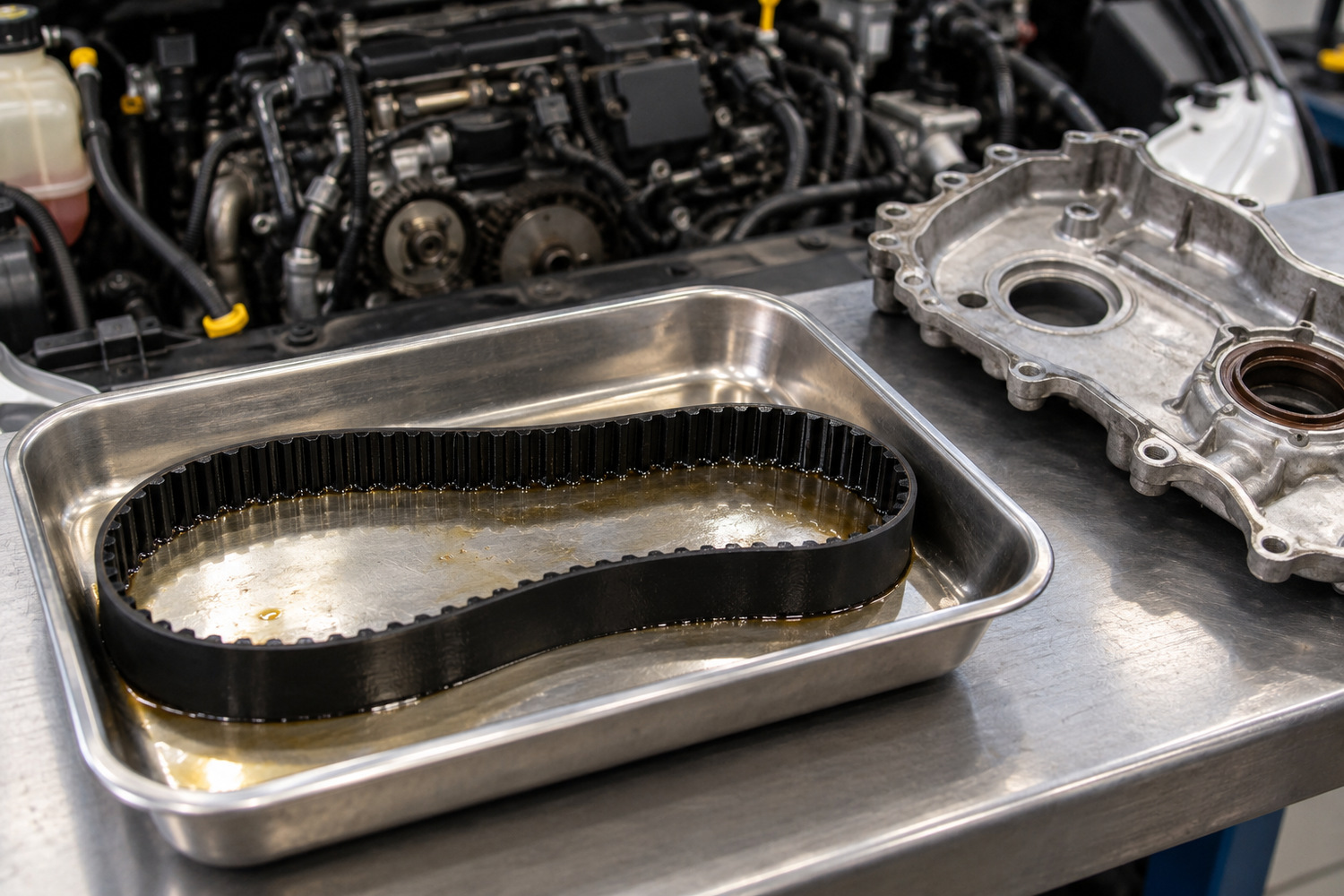
A timing belt keeps the top and the bottom of the engine turning in step. The crankshaft is the shaft the pistons turn. The camshafts are the shafts that open and close the valves. The belt ties them together. That way the valves open at the right moment, and close again before a piston arrives.
On a conventional engine the belt sits behind a cover, dry and away from the oil. That is a dry belt, and it is what most people picture. On these engines the belt sits inside the engine instead. It is bathed in the same oil that lubricates the bearings and the pistons.
Makers moved to the design for sound reasons. A belt that runs in oil can be narrower, so it takes less room. The oil damps vibration in the drive, which makes the engine smoother and quieter. It also loses less energy to friction than a dry belt. Which cars use a belt, which use a chain, and when a belt is due are set out elsewhere on this site. This article sits beside that one. On an engine whose belt lives in oil, the oil matters as well as the kilometres.
How do short trips change the engine oil?
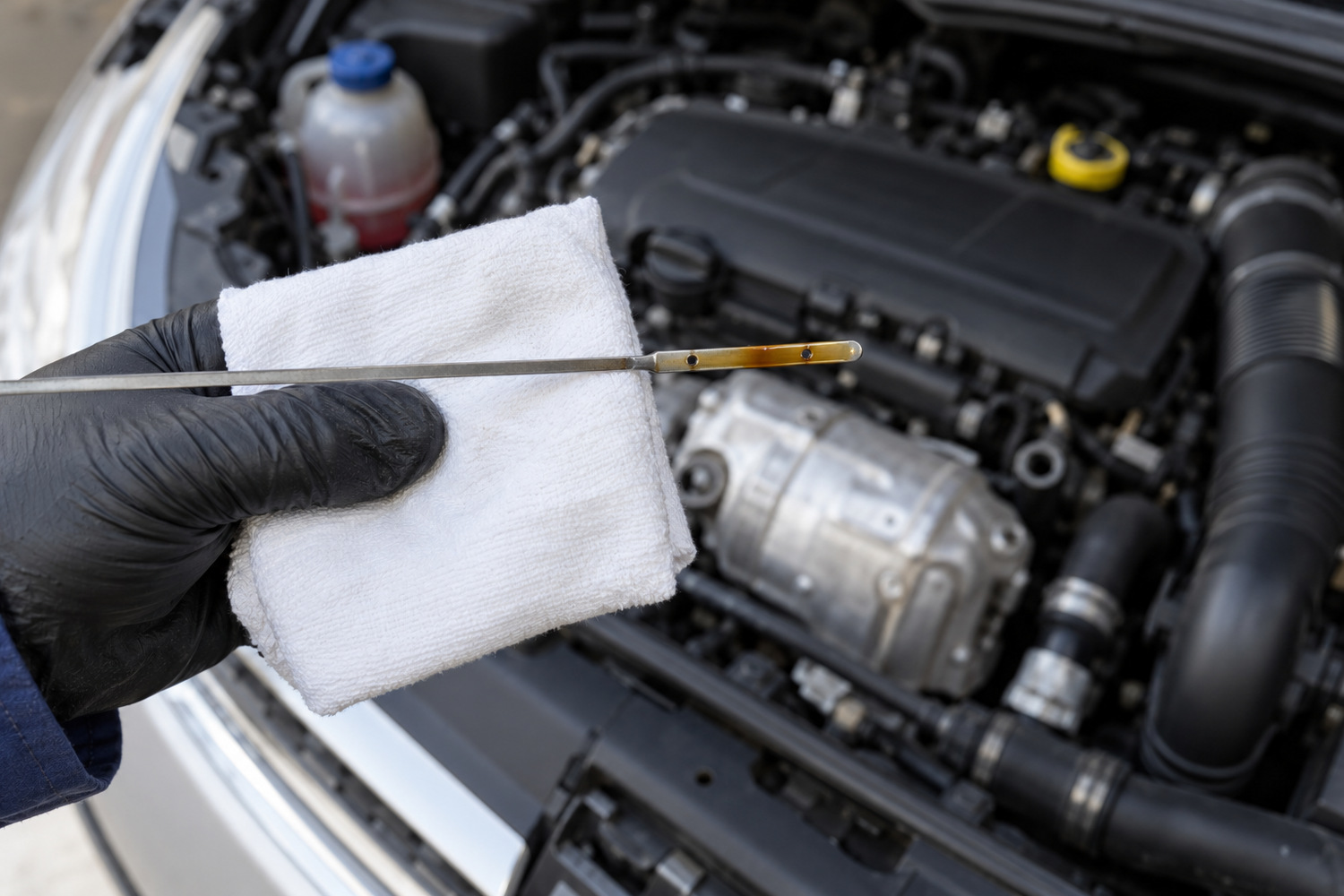
Oil dilution is fuel ending up in the engine oil and thinning it. It happens while an engine is cold. A car that does short trips spends most of its life cold.
A cold engine needs extra fuel to run smoothly. Not all of that fuel burns. Some condenses on the cold cylinder walls and slips past the pistons. It ends up in the sump, which is the oil reservoir at the bottom of the engine. None of that is a fault. It is how a petrol engine behaves before it warms up.
The fuel does leave again, but only once the oil is properly hot. One manufacturer’s technical bulletin, written for its own workshops, puts a figure on it. Injected fuel cannot fully evaporate on cold cylinder walls, so it gets into the oil. On short journeys the oil does not reach the temperature needed to drive that fuel out, which is at least 60 degrees. Ten minutes of driving does not get there. The oil level can even creep up, because the fuel is still in it.
On the lower North Shore that is a normal week for a lot of cars. A few kilometres to Chatswood station, a few back, a short run to the shops at the weekend. The oil never gets hot enough, for long enough, to shed what the cold starts put into it.
What does diluted oil do to a belt sitting in it?
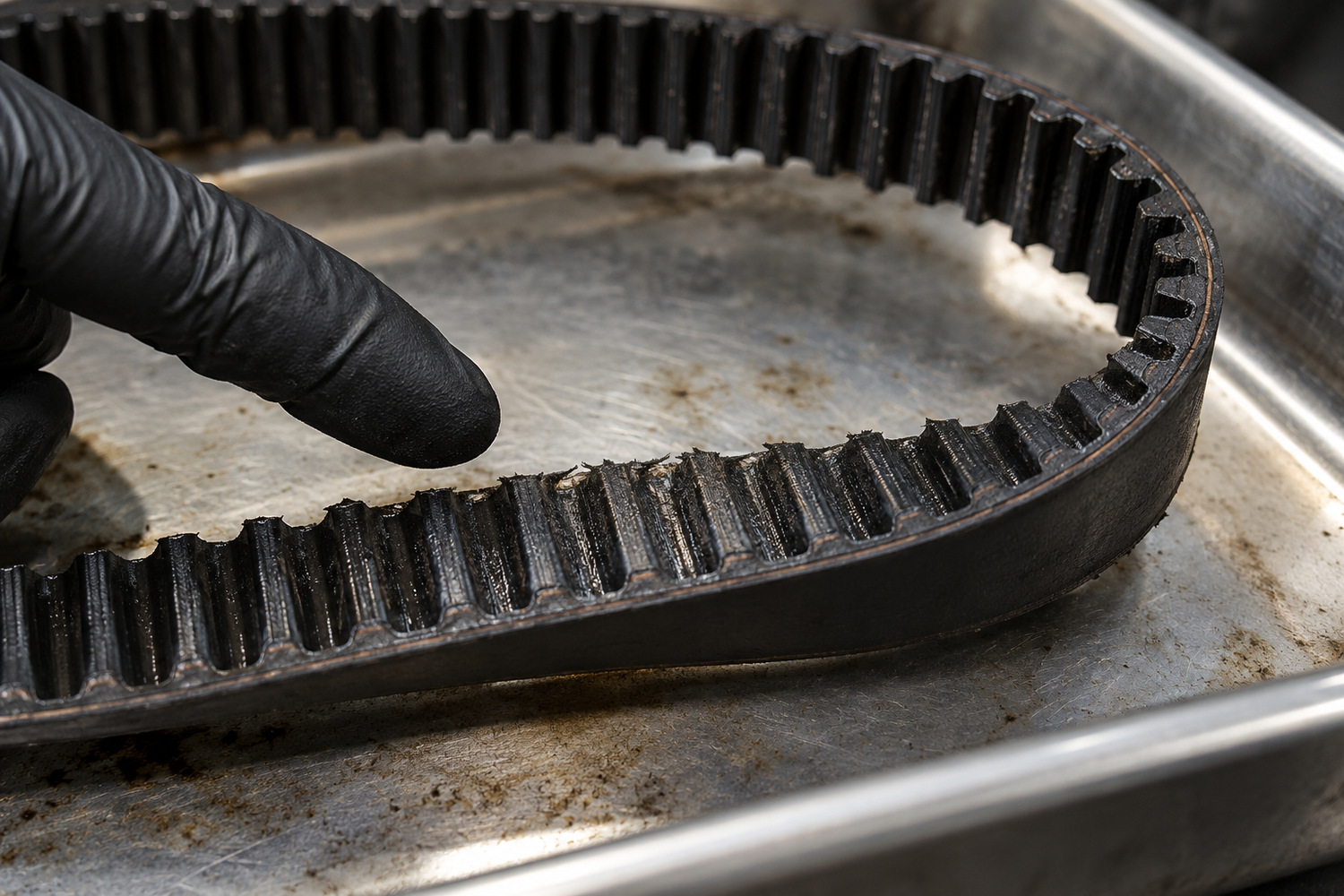
A belt made to live in oil is still made for clean oil. Oil with fuel in it is a different environment. The belt material wears in it, and can deteriorate.
The wear does not always look the way people expect. A parts manufacturer’s technical article on this engine describes a belt taken off a car at its first replacement. The belt had not thinned at all. The face that runs against the pulleys had started to break down. That is the useful detail. A belt can look sound and still be finished.
Then comes the part that matters more than the belt. Material shed by the belt mixes with the oil it sits in. The oil pump draws that oil through a strainer, a fine mesh on the pickup that keeps debris out. Belt material reaching the strainer restricts it, and oil pressure is what suffers. Peugeot and Citroën have both issued technical bulletins on this. They cover the belt material mixing with the oil and affecting the oil pump strainer. They also name the knock-on effects on the variable timing valves and the vacuum pump, once an engine has taken in enough of it.
So the problem shows up as oil pressure, not as a noise or a broken belt. On one of these engines, an oil pressure warning is worth taking straight to a workshop.
What to do if your car only does short trips
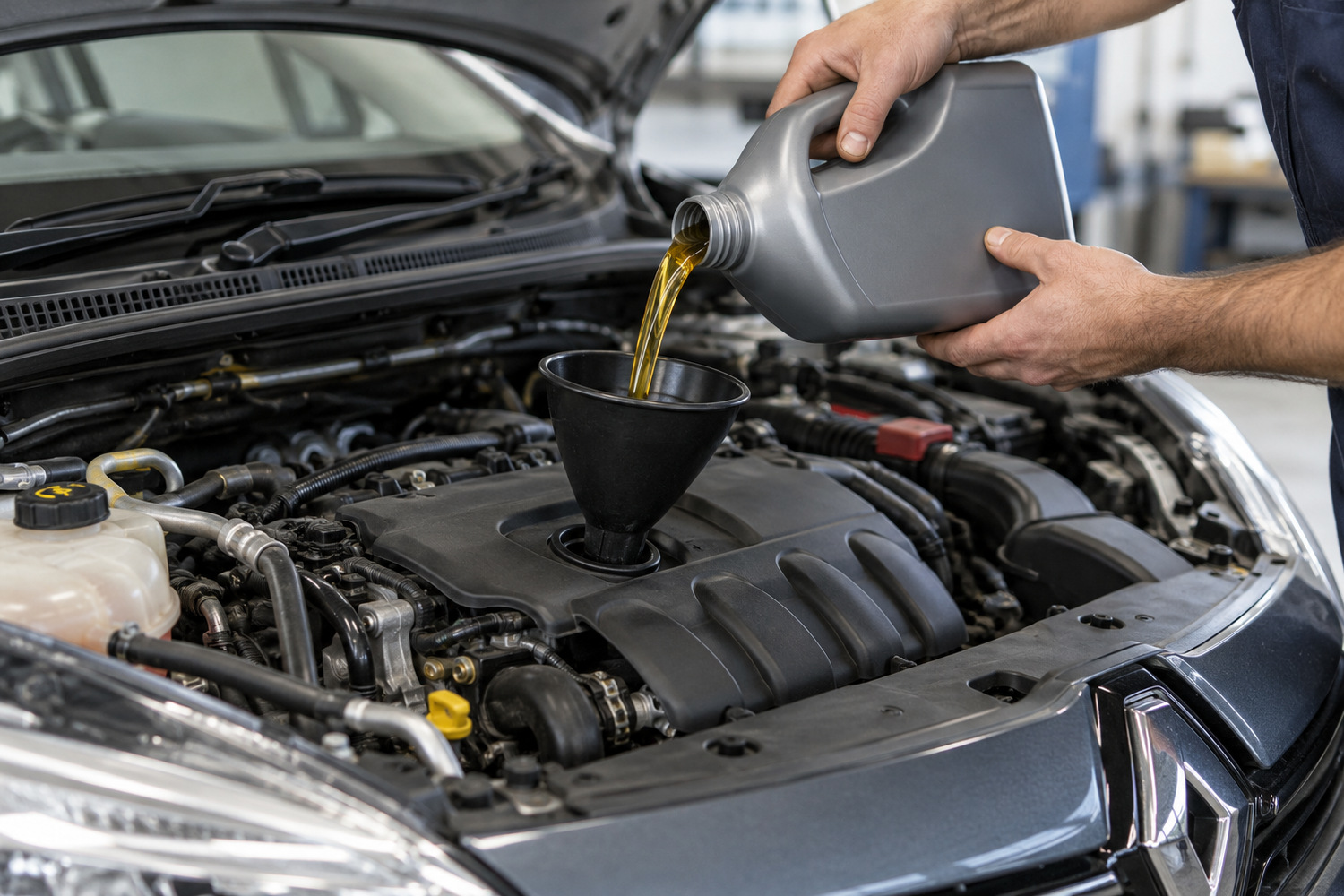
Three things change the odds, and none of them is dramatic.
The grade of oil matters too, and it is in the handbook. The technical article on this engine is clear about the pairing: the oil the maker recommends, and a visual check of the belt at each service. That is where a logbook service earns its place on these cars. The belt and the oil get read together, against the schedule for your own car rather than a general one.
- Service the car for the way you use it, not for the odometer. A car doing ten minute trips works harder than the distance suggests. The schedule that came with the car is the one to follow. On these engines, a service is the main thing putting fresh oil back around the belt.
- Look at the oil between services. Pull the dipstick and read the level as well as the colour. On an engine whose belt sits in oil, the oil is more than lubrication. It is the belt’s environment. A level that has crept above the mark, on a car nobody has topped up, is worth asking about.
- Say how the car is driven when you book it in. Short runs and a long commute are different work, and they do not call for the same oil discipline. A workshop that knows which one you do can match the schedule to it.
Which Peugeot and Citroën timing belts run in oil?
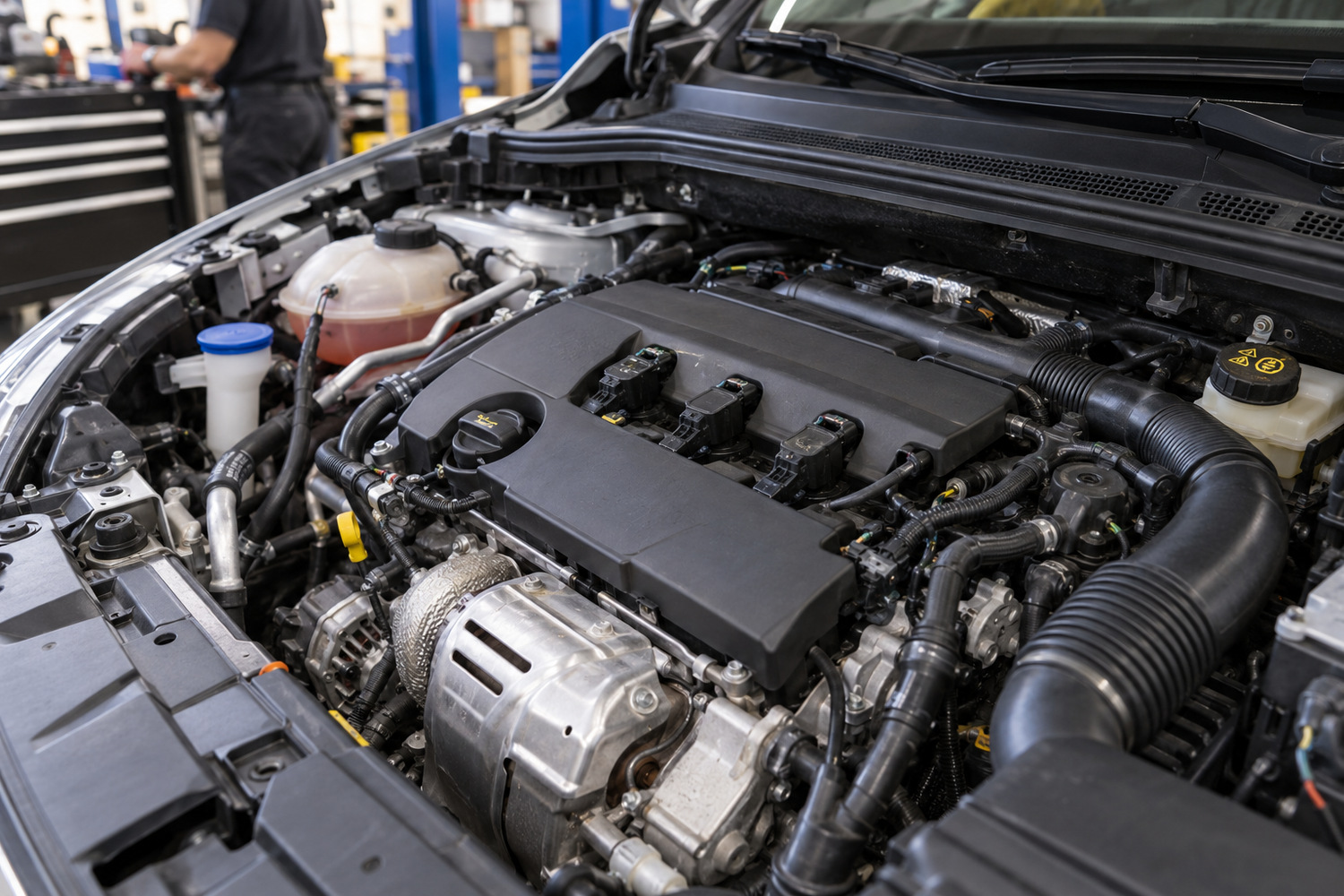
The design belongs to the small three-cylinder petrol engines that Peugeot, Citroën and DS have fitted for years. Three cylinders is fewer than most cars have, and these engines are small. These are the ones in the brands’ smaller hatchbacks and compact SUVs.
Not every Peugeot or Citroën has one. Plenty of engines drive the camshafts with a chain instead of a belt. The badge on the back of the car settles nothing, and the model name settles little more. Two cars wearing the same name can have different engines under the bonnet.
So the useful question is not which models have the design. It is what your own car has, and that has an answer.
How do you find out which one your car has?

There are three routes, and two of them are in the car with you.
The handbook names the engine and carries the service schedule for it. The service record shows what has been done, when, and what is due next. If neither is clear, the brand can tell you from the vehicle identification number, the VIN. That number is stamped on the car and printed in the service book.
The schedule for your own car and its build date is the one that counts. The technical article on this engine is blunt about why. The recommended belt replacement interval has been amended since the engine was introduced. What applies to your car depends on the make, the model and the assembly date range. So a number from a general guide is a starting point here, not an answer.
If you would rather have it settled than guess, have the belt and the oil looked at together. A workshop that handles Peugeot servicing can read the schedule for your build date and check the belt while the oil is out. Karl Knudsen Automotive does the same for Citroën timing belt work. Those two checks sit inside an ordinary logbook service, not a repair of their own.
When you book a service, say how the car is used. A car that only does short runs is not on the same oil schedule as one doing steady kilometres.
Frequently asked questions
Does my Peugeot or Citroën have a belt that runs in oil?
Not every car from either brand does. The design sits with the small three-cylinder petrol engines, so the name on the boot decides nothing. Your handbook, your service record, or the brand quoting your VIN will settle it.
How can I tell if the oil has fuel in it?
The level gives it away sooner than the colour. Fuel stays in a cold engine’s oil until the oil runs hot, so the dipstick can read high when nothing has been added. Oil that smells of petrol points the same way.
Is it enough to change the oil more often?
Fresh oil helps, because it is what the belt sits in. It does not replace the schedule written for your car and its build date. A service also puts eyes on the belt, which an oil change does not.
What happens if the belt starts to break up?
Worn material leaves the belt and circulates in the oil. The oil pump’s strainer is where it collects, and a restricted strainer shows up as an oil pressure warning rather than a noise. That is why a service reads the oil and the belt together.

