
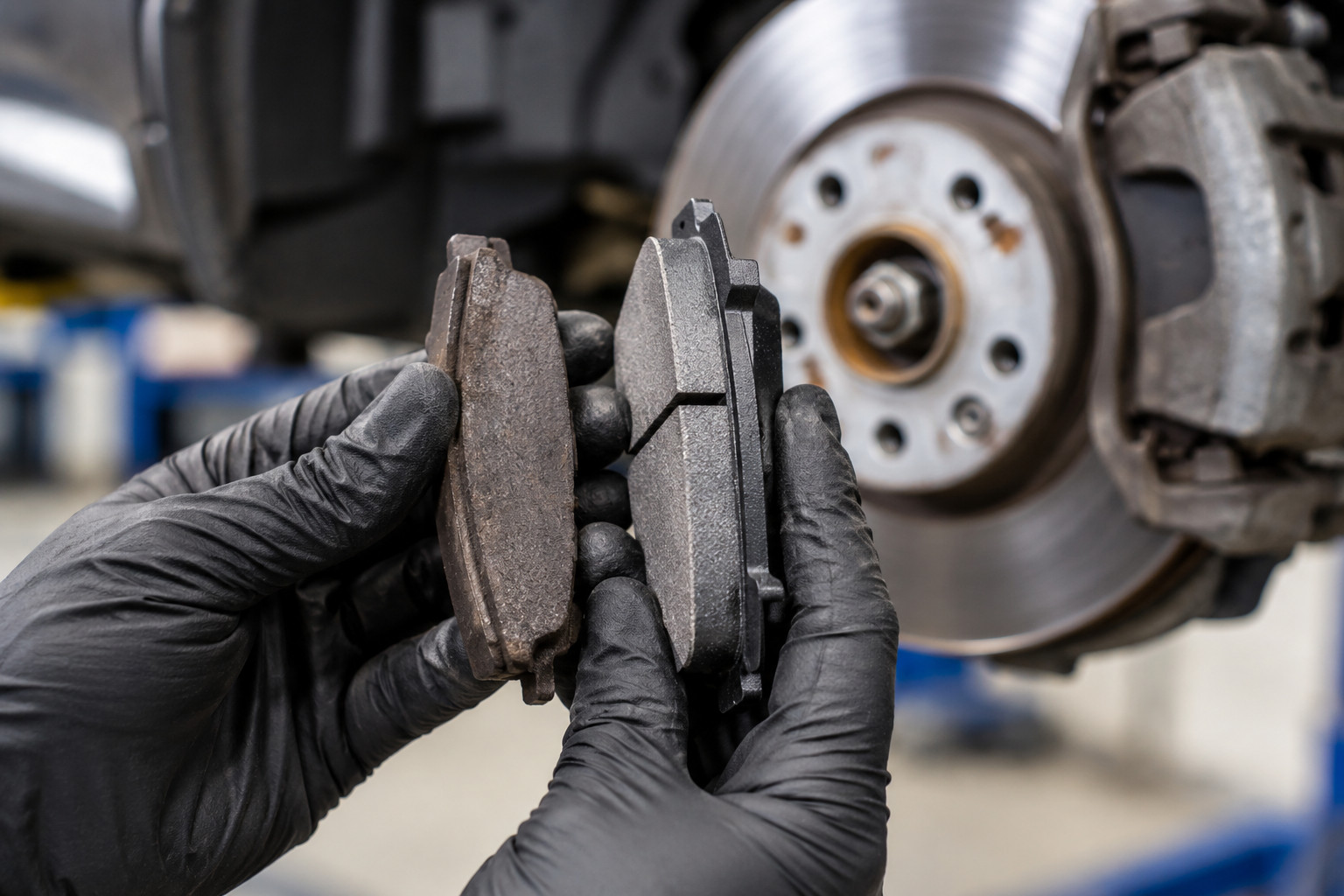
How long brake pads last has no single answer, and any workshop that gives you a number without looking at the car is guessing. Published Australian pad-life ranges vary with the vehicle and how it is driven; the two sources below give different upper and lower limits. European cars usually sit towards the shorter end of that. They carry more weight than their size suggests, and their pads use softer, higher friction material chosen for stopping power and pedal feel. Where you land inside that range comes down to how you drive, far more than what the odometer says.
How long do brake pads last, and why is the range so wide?
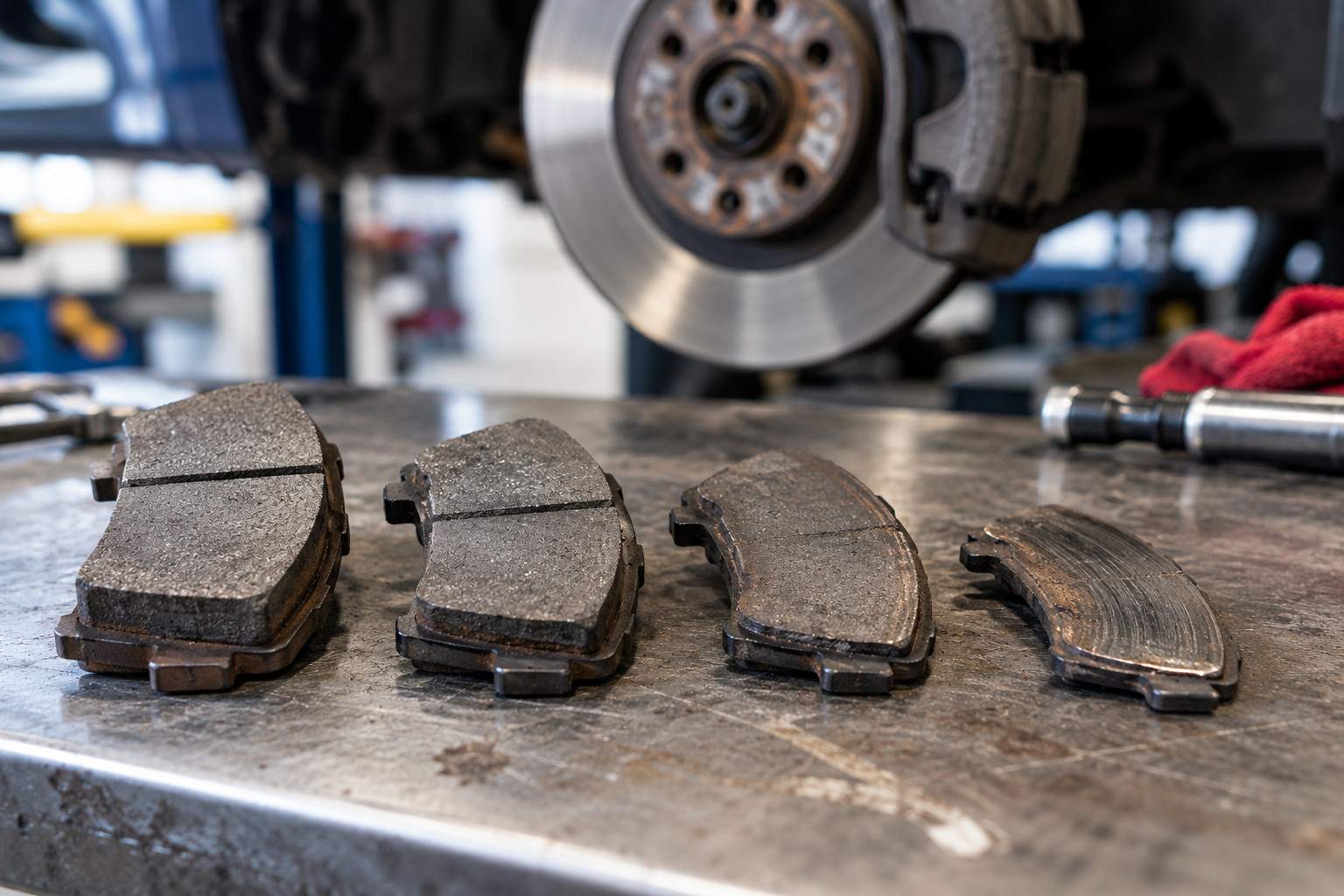
A brake pad is a block of friction material pressed against a spinning metal disc to slow the car. Every stop shaves a little of that material away. A pad is a consumable, and what uses it up is braking work rather than distance.
That is why the published ranges are so wide, and why they disagree. Bendix, an Australian brake manufacturer, puts pad life at 15,000 to 70,000 kilometres depending on the application. Haynes, the workshop manual publisher, gives 40,000 to 100,000 kilometres. Both are honest. They describe different cars being driven in different ways.
Distance is a poor unit for this. Two identical cars can cover 50,000 kilometres and need pads at completely different points, because one did far more braking to get there. So the useful question is not how many kilometres you have covered, but how much material is left on the pad today.
Pads are also only one of the consumable parts in a braking system. Brake fluid has a service life of its own, and it is counted in years rather than kilometres.
Why do European brake pads wear faster?
Two things work against pad life on a European car, and both are deliberate.
The first is the friction material. European manufacturers generally specify a softer, higher friction pad. It grips harder, especially when cold, and gives the firm, immediate pedal these cars are known for. A pad that grips harder gives up more of itself with every stop. You are buying shorter stopping distances and better pedal feel, and the pad pays for it.
The second is weight. Brakes work by turning movement into heat. The heavier the car, the more energy goes into heat at every stop, and the more friction material goes with it. European sedans and SUVs weigh more than they look, once you add the body structure, sound insulation and equipment. A car carrying an extra 200 kilograms is not braking that weight once. It does it at every set of lights, for the life of the pads.
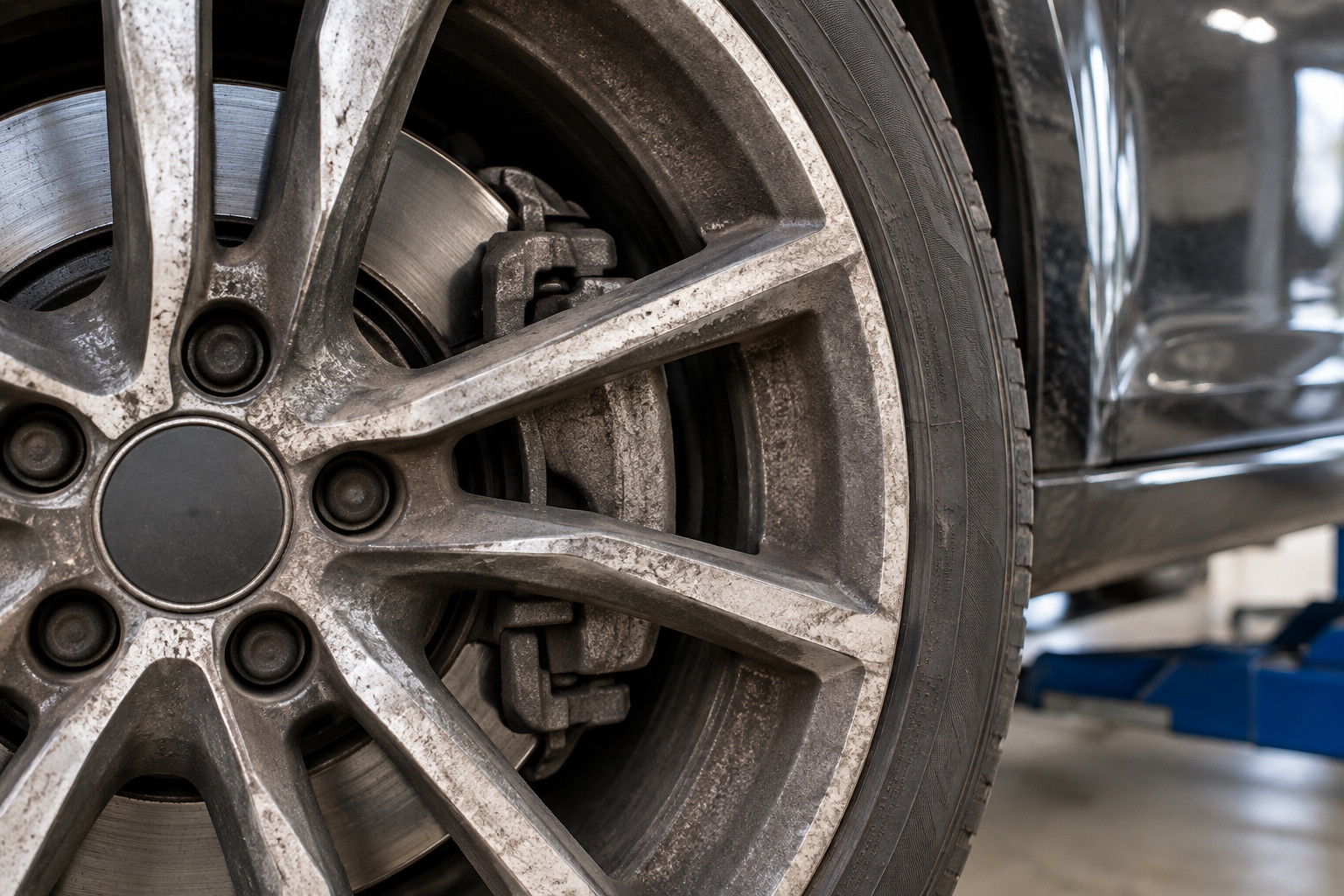
Brake dust is the visible result of both. That dark film on the front wheels of a European car is pad material being consumed and blown outward. It is normal, it is not a fault, and it is not a measurement. A clean wheel does not mean the pads are fine, and a filthy one does not mean they are finished.
Do front and rear brake pads wear at the same rate?
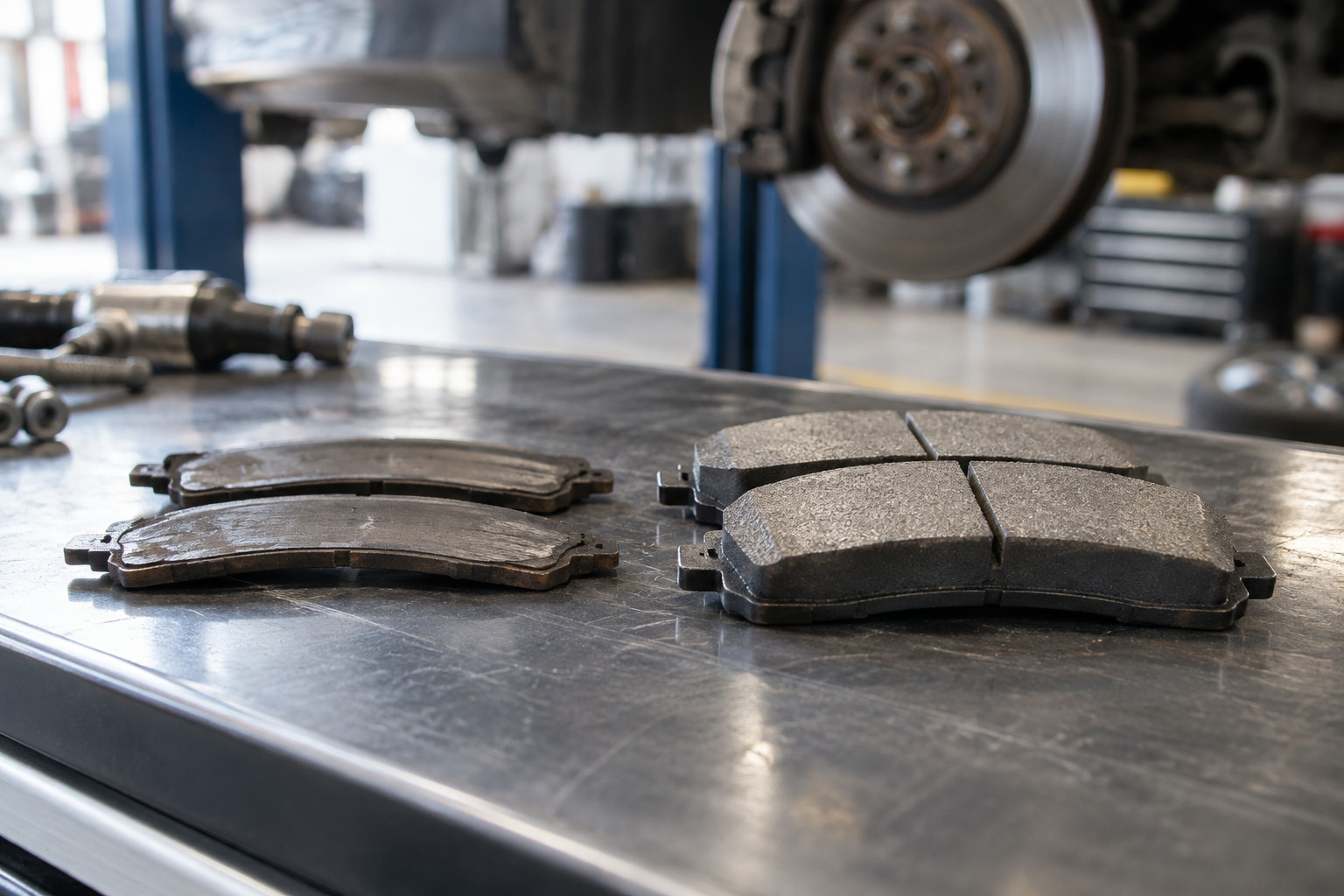
No, and the gap is a wide one. When you brake, the car’s weight shifts forward onto the front wheels. That gives the front tyres more grip to work with, so the front brakes do most of the stopping. Front pads reach their limit first on almost every car.
For an owner, that has a useful consequence. A quote for front pads only is normal, not a workshop leaving work behind to sell you later. Being told the rears still have material on them at the same visit is normal too.
What has changed is how far you can push that assumption. The old rule of thumb was that rear pads last twice as long as fronts. Bendix says that no longer holds on modern cars, and the reason is electronics. Electronic brake force distribution varies the pressure between front and rear as you brake. It uses the rears to stop the nose diving under initial pressure. Stability and traction control apply individual rear brakes on their own to keep the car pointed where you steered it.
None of that feels like braking from the driver’s seat, and the rear pads wear all the same. Electronic stability control has been required on every new passenger car sold in Australia since November 2013. That covers most cars on the road. The rears can reach their limit well before the old ratio predicts, so have both measured.
One more thing about the rears. On most modern European cars, rear brake work is no longer a driveway job.
What makes brake pads wear out faster?
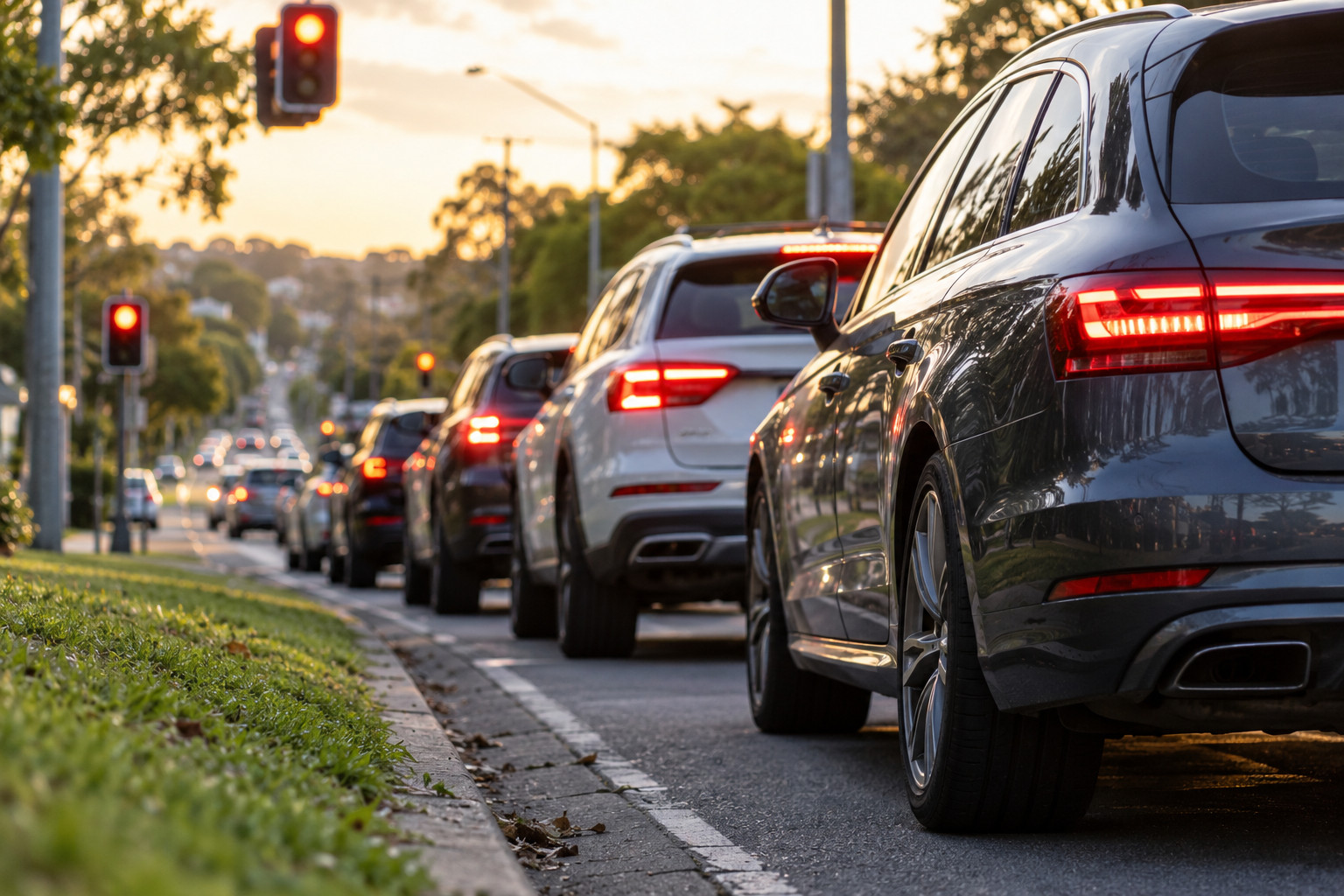
Pad life is decided by what your kilometres are made of. These patterns move the number most.
Trip shape matters more than most owners expect. Think of a lower North Shore commuter covering eight or ten kilometres each way. Traffic lights, a school drop-off and a shopping centre car park, twice a day. Then think of the same distance covered in one freeway run. Both odometers read the same at the end of the year. The number of stops behind those kilometres is nothing like the same, and neither is the wear on the pads. That is why the range in the first section is so wide.
| What you do | What it does to pad life | Why |
|---|---|---|
| Stop-start traffic and short trips | Shortens it the most | Every set of lights is another stop, and short trips pack more of them into fewer kilometres |
| Steady freeway running | Stretches it the furthest | Long stretches at a constant speed need almost no braking |
| Long hills and descents | Shortens it | The pads are held on for long stretches instead of brief stops |
| Towing or a loaded car | Shortens it | More weight means more energy to absorb at every stop |
| Braking late and hard | Shortens it | Hard braking makes more heat, and Bendix names high temperature as the main cause of early wear |
What do the millimetres on your brake quote mean?
A brake quote or service report gives pad thickness in millimetres. That figure is the friction material left on the pad, measured at its thinnest point. It is the only honest way to know where you are.
A new pad starts at around 10 millimetres, though it varies by vehicle. The usual replacement point is 3 millimetres. That leaves roughly seven millimetres of usable material across the pad’s whole life.
Put your own figure against that scale. At 4 millimetres you have about one millimetre of usable material left. That is a small slice of the pad’s life rather than of its thickness. That is a booking for the next few weeks rather than an emergency. It does not mean the car is unsafe today, only that the decision is close and you still get to choose when it happens.
Most European cars also carry a pad wear sensor, which lights the dash as the pad nears its limit. It is a late warning rather than a measurement, it says nothing about the disc, and it is one of the things that catches European cars out at pink slip time.
The discs are measured the same way. Every disc has a minimum thickness set by its manufacturer, usually stamped on the disc itself. The workshop measures the disc against that figure to decide whether it can be machined, left alone, or has to be replaced. That is a measurement, not an opinion, and you can ask to see it.
So ask for numbers. At your next service, ask for the pad and disc measurements in millimetres instead of a yes or no on the brakes. Written on the invoice, those figures let you watch the wear across two or three visits. You can then plan the work rather than wait for a noise.
Maybe your last invoice was close to 3 millimetres, or you cannot remember ever being given a figure. Either way, a brake inspection is the place to ask about the remaining pad thickness on both axles. Ask what the readings mean for the next check and whether any work is due now. From there you can book online for the work, or put a date in the diary for the next check.
Frequently asked questions
How do I know when my brake pads need replacing?
Ask for the thickness in millimetres and compare it with the 3 millimetre replacement point. That figure tells you more than a noise or a kilometre count. Get it for both axles, because they will not be at the same place.
Do European brake pads wear out faster than other cars?
Usually, yes. The extra weight and the harder gripping friction material both mean more of the pad is spent at every stop. It is the price of the braking performance, not a sign of a poorly built car.
Do rear brake pads need replacing at the same time as the fronts?
Often not. The fronts do more of the stopping and reach their limit first, so a front only job is a normal result. Do not assume the rears last twice as long, though, because a modern car’s electronics work them harder.
Is brake dust a sign my pads are wearing out too quickly?
No. Dust on the wheels is a by-product of the friction material doing its job, and European cars throw more of it than most. Only a thickness reading tells you how much pad is left.

