
A leaking radiator can sometimes be repaired. On most modern European cars it cannot. The tanks on each end are plastic, crimped onto a metal core, and once one splits, replacement is the honest answer. A pressure test settles which you have. It also catches the two cheaper faults mistaken for a dead radiator.
Radiator repair once meant a bench, a torch and a new core. On a modern car it usually means a new part. This is for the reader who already has a quote in hand. If the car is still running hot and nobody has looked at it, what to do when the gauge climbs is a different question.
Can a radiator be repaired, or does it need replacing?
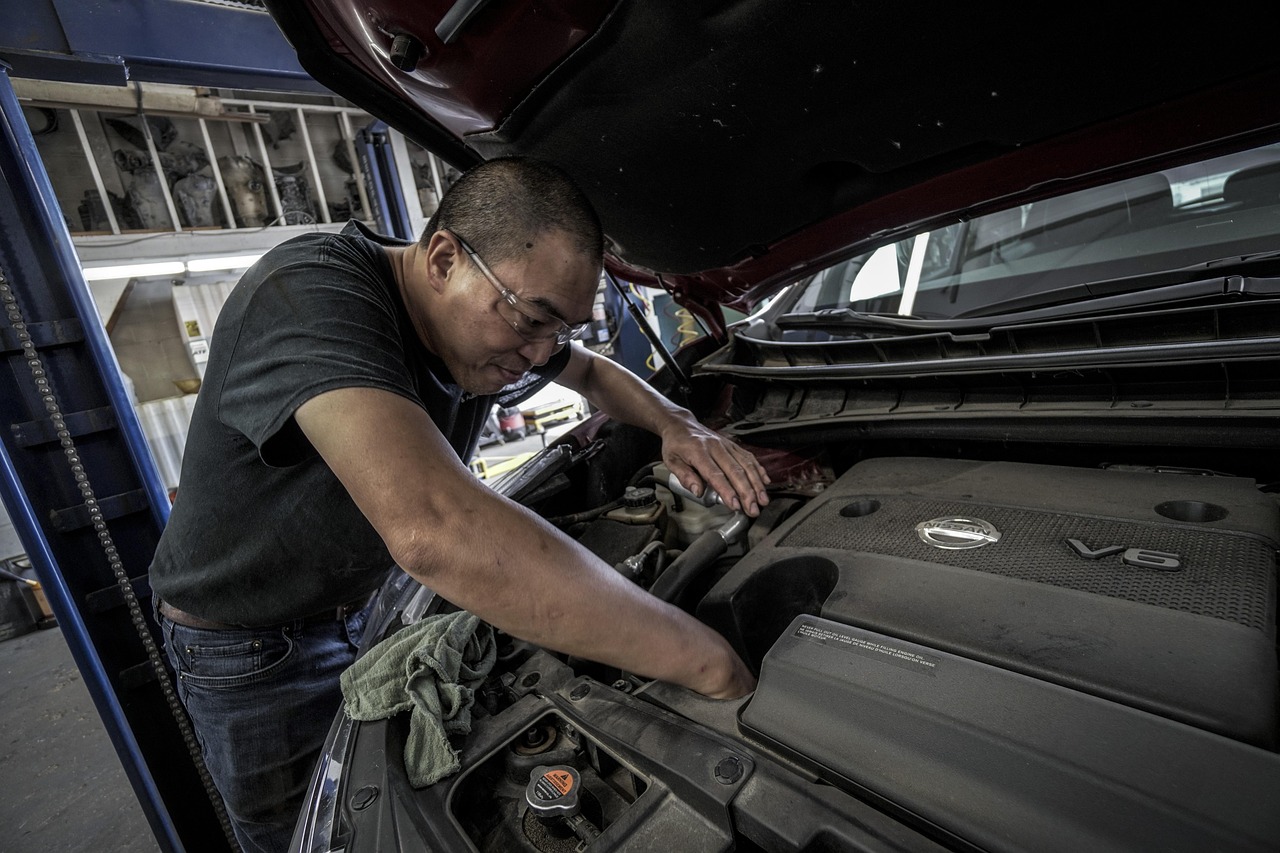
A radiator is a metal grid at the front of the car. Coolant carries engine heat into it, and air passing through the fins takes that heat away. A tank at each end feeds the coolant in and collects it on the way out.
Whether radiator repair is possible comes down to those two tanks. On most modern cars they are moulded plastic, crimped onto the metal core by a row of small tabs. That joint is the weak point, and it is what makes the part hard to mend. Opening the crimp bends the tabs, and bent tabs rarely seal again. Re-crimping needs a press and the right tooling, and a new radiator with a warranty often costs less.
So where the leak sits matters more than how big it looks.
One question gets skipped: has the car already been run hot? Plastic that has been through an overheating episode is heat cycled well past its design. The visible leak may be small, but the seam beside it took the same punishment, so a patch there tends to come back. European systems work harder in Sydney heat as well.
Here is how the common findings sort out.
| What the test shows | What it points to | Repair or replace |
|---|---|---|
| Coolant weeping from the seam where the plastic tank meets the core | The crimped joint has let go | Replace |
| A crack in the plastic top or side tank | The plastic has gone brittle | Replace |
| A pinhole or weeping joint in an older all-metal core | The core is otherwise sound | Repair is worth quoting |
| A small leak on a car that has already been run hot | The whole part has been cooked | Replace |
| The system holds pressure but the cap will not | The cap seal has failed | Replace the cap on its own |
| The gauge reads hot while the top hose stays cold | The thermostat is stuck shut | Replace the thermostat |
| Pressure falls with nothing showing outside | Coolant is going somewhere internal | Neither yet, it needs more work |
Why a pressure test comes before a quote
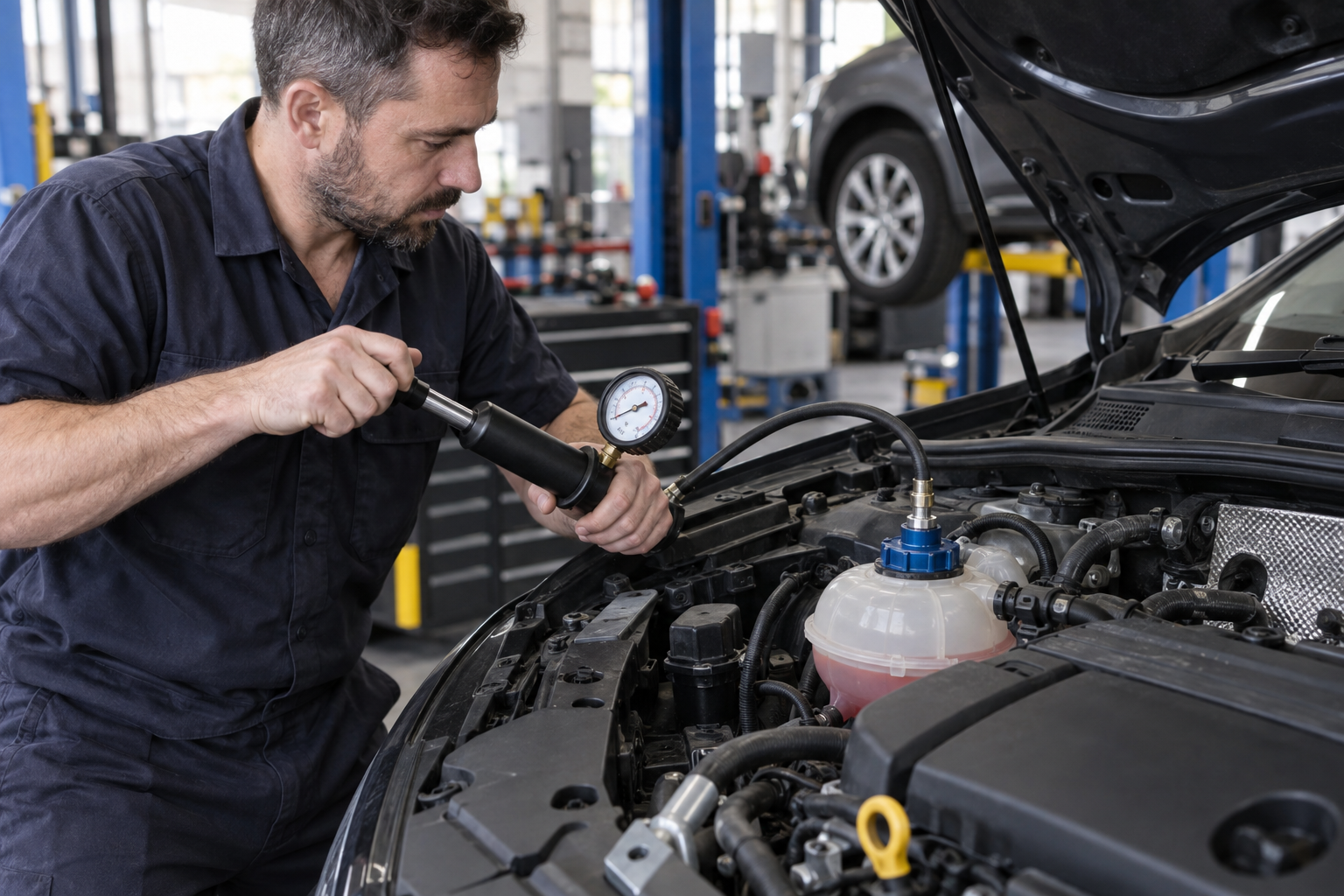
Nobody can price a cooling job before they know which part failed. A puddle on the driveway, or a level that keeps dropping, comes from four parts at four prices. A quote written from the symptom is a guess.
A pressure test separates them. A hand pump fits where the cap goes and raises the cold system to its rated pressure. Then everyone waits. If the gauge holds, the system is sealed. If it falls, coolant is escaping, and the leak shows itself while the pressure is still on. The cap gets tested on the same pump, because one that will not hold pressure lets coolant boil early and pushes it into the overflow.
Where nothing shows outside, leak dye is next. It goes into the coolant, the engine warms up, and an ultraviolet lamp picks out the trail. A flow check goes with it, because a radiator can be sealed and still be blocked.
This is a repair decision, not a service inspection. A cooling system check before summer is a different job.
The cheaper faults that get mistaken for a radiator problem
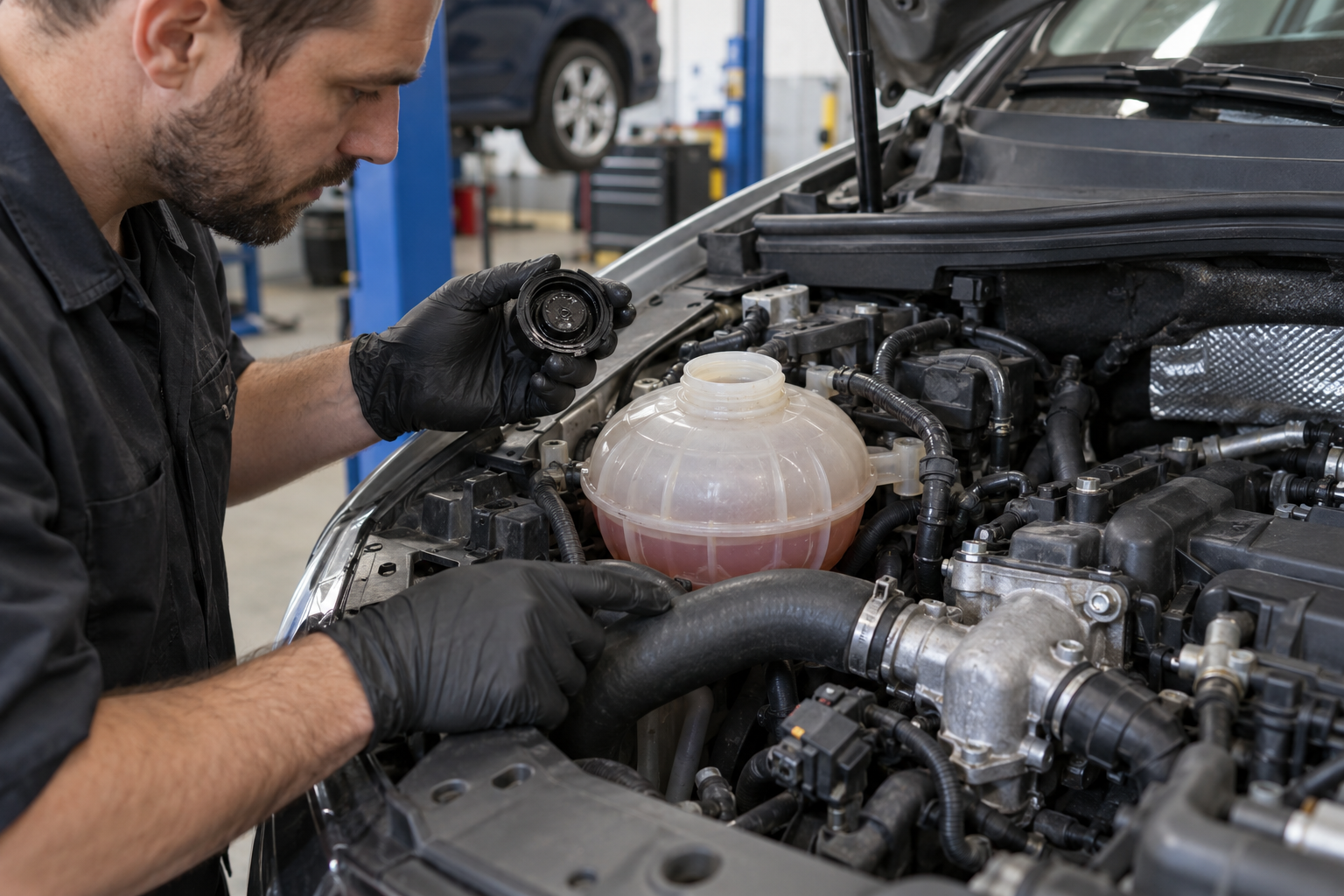
Two faults look like a dying radiator from the driver’s seat. Both cost a fraction of one to fix. Both are worth ruling out before a part is ordered.
So a quote for a new radiator is sometimes the wrong quote.
- A stuck thermostat. The thermostat is a valve. It holds coolant in the engine until it warms up, then lets it through to the radiator. Stuck shut, coolant never reaches the radiator. The gauge climbs while the radiator sits there doing nothing. The tell is the top radiator hose. On an engine reading hot, that hose should be hot too. If the needle is up and the hose is cool, nothing is getting out of the engine.
- A cracked expansion tank, or a tired cap. The expansion tank is the plastic bottle that takes coolant as it expands and hands it back as the engine cools. It is pressurised on most European cars and goes brittle with age. A hairline crack drips only when the system is hot and under pressure, which is why the driveway is dry each morning. When the seal in the cap gives up, pressure escapes, coolant boils sooner, and the level keeps falling with nothing to show for it. The cap is the cheapest part in the system and the one most often skipped.
How much does radiator repair cost?
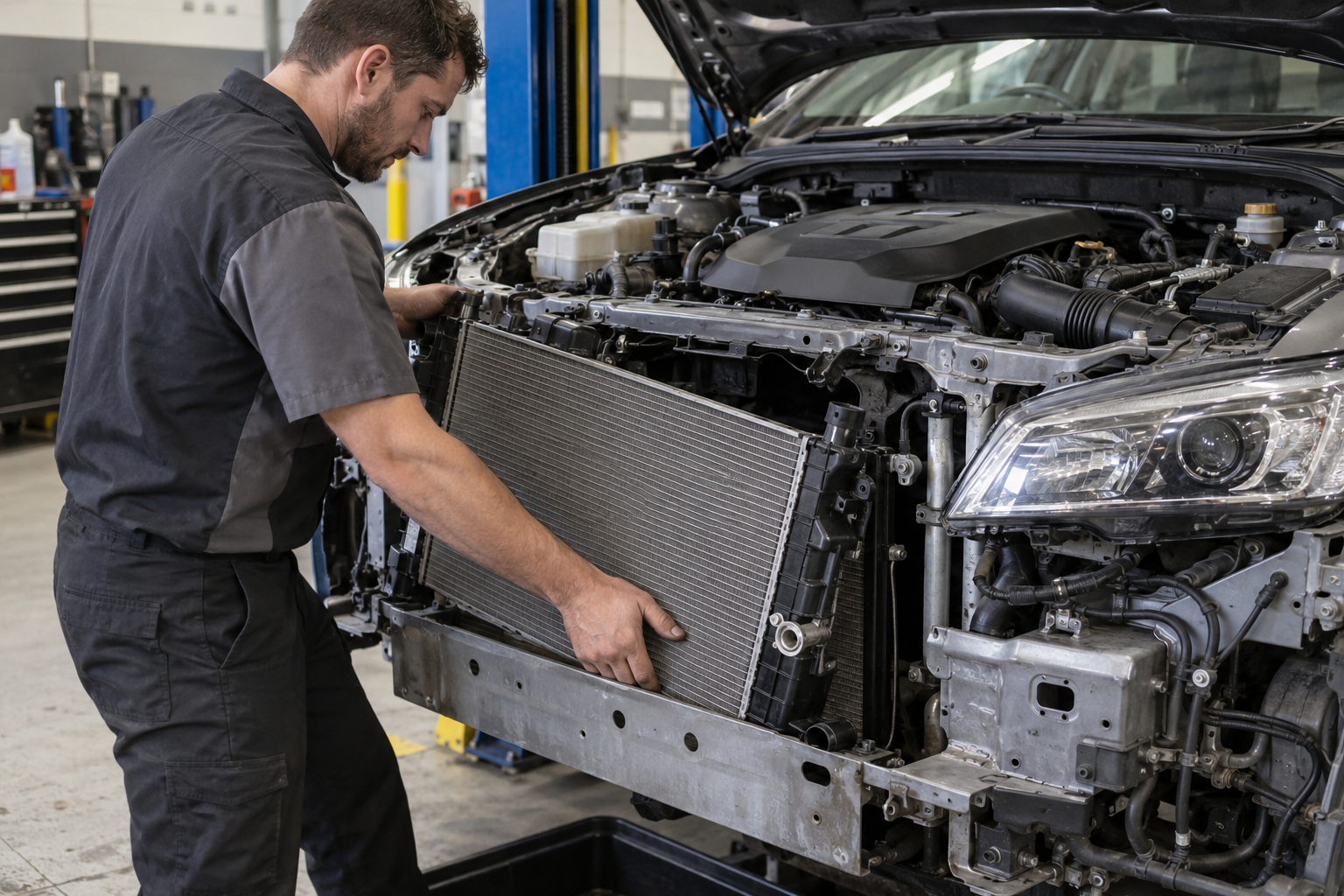
These are Australian market ranges, not one workshop’s prices. Each still needs checking against a written quote.
European parts sit towards the top of those ranges. They are made to fit one model rather than a range. Engine bays are tighter too, so the labour runs longer.
- A radiator replacement, fitted, runs about $400 to $1,000. The part is usually $300 to $600 on a common model. The rest is labour. Some radiators lift out in an hour. Others need the front of the car stripped back first.
- A thermostat is about $200 to $350 fitted. The valve is cheap. What moves the figure is how much has to come off to reach it.
- An expansion tank is about $150 to $350 fitted. A cap on its own starts at around $50.
- A coolant flush and refill runs about $100 to $250, and most of that spread is the fluid.
That gap is why a workshop offering radiator repair services wants the car in front of them first. The distance between a new cap and a new radiator is most of the bill.
What’s different about a European cooling system repair
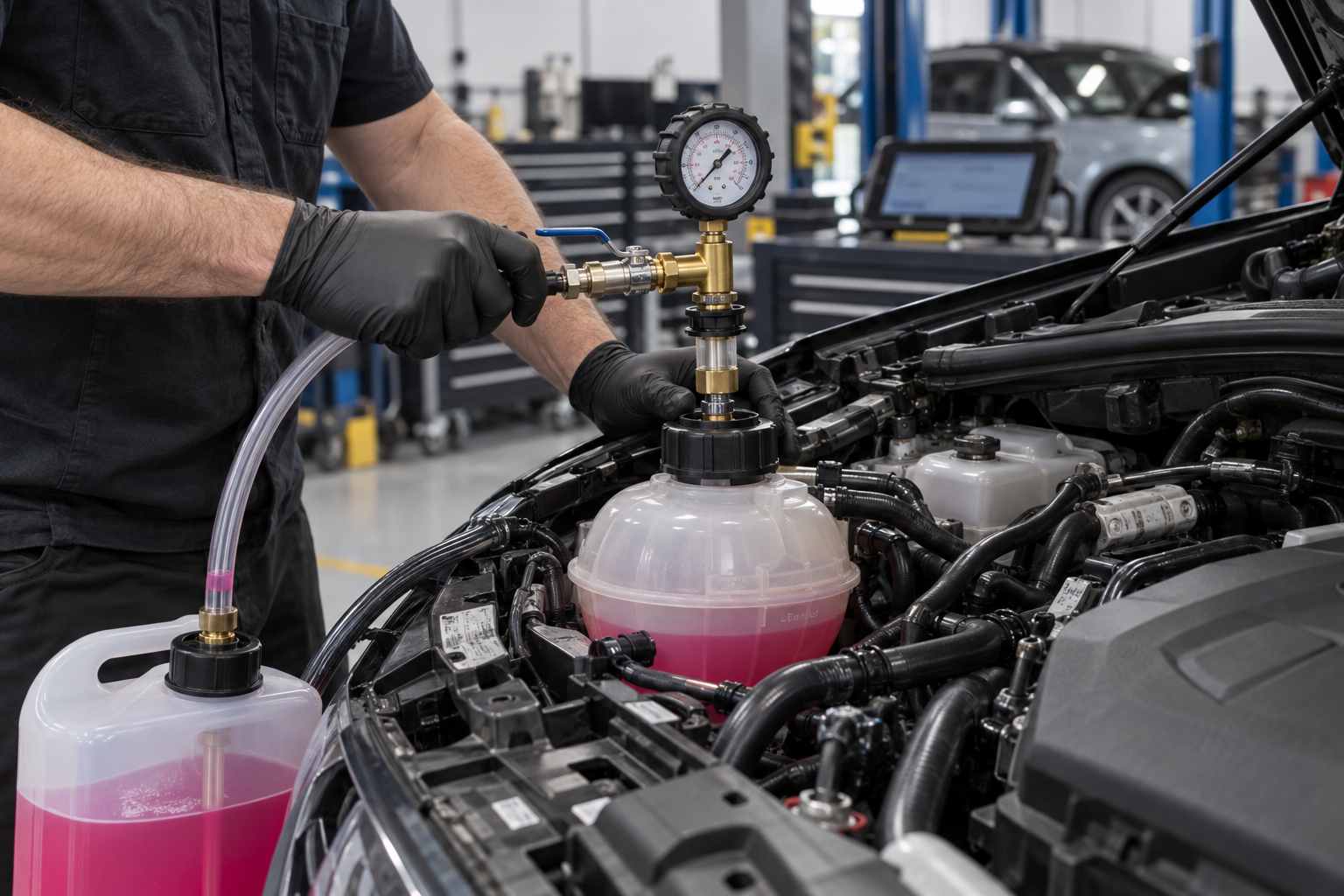
Two things change the job here, and both change what happens after it.
- The system has to be vacuum filled, not topped up. Air gets in whenever a cooling system is opened. Older engines pushed most of it out just by running. Modern European systems do not. Coolant travels through a heater matrix, bypass circuits and sometimes an electric pump, and air settles in those loops and stays. That is why a car can run hot a week after a repair that was done right. An air pocket against the thermostat makes it read air instead of coolant, so it holds shut. The fix is to draw the system down with a vacuum tool and let it pull the coolant in. Many makes then run a bleed routine through the car’s software.
- The coolant is specified, not generic. Each European make calls for a particular coolant, and the specification is about chemistry, not colour. Two types that were never meant to meet can strip the protection out of the fluid, or leave a deposit that blocks the heater matrix. Ask which coolant is going in. It is a fair question with a specific answer.
Should the water pump be done at the same time?
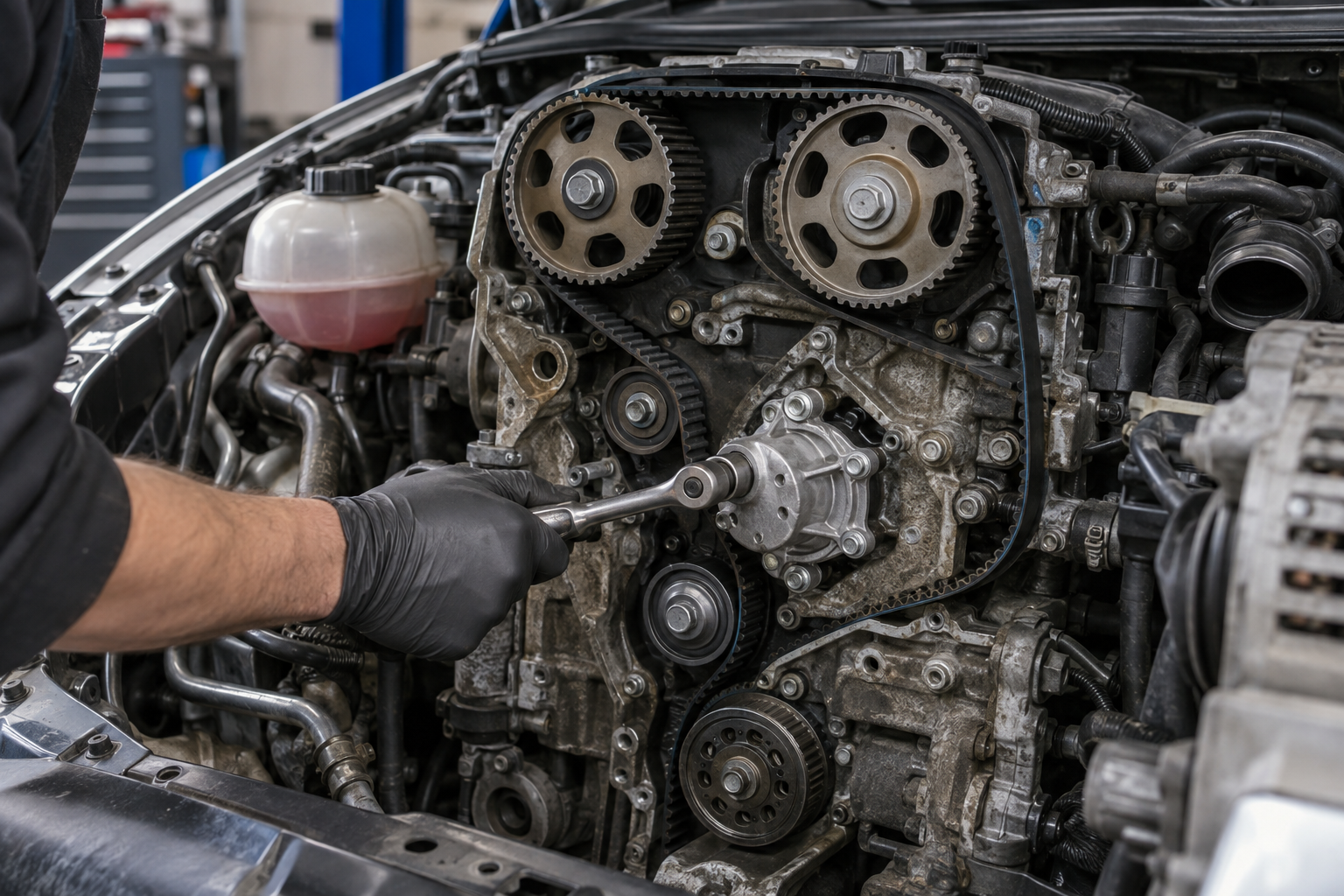
On many European engines the water pump is driven by the timing belt, so one lot of labour reaches both parts. If the belt is anywhere near due, doing the pump at the same time saves paying for that access twice.
That is a timing belt decision rather than a radiator one. The numbers behind it are set out in what a timing belt costs done early or left too late.
Get it pressure tested before you agree to a new radiator
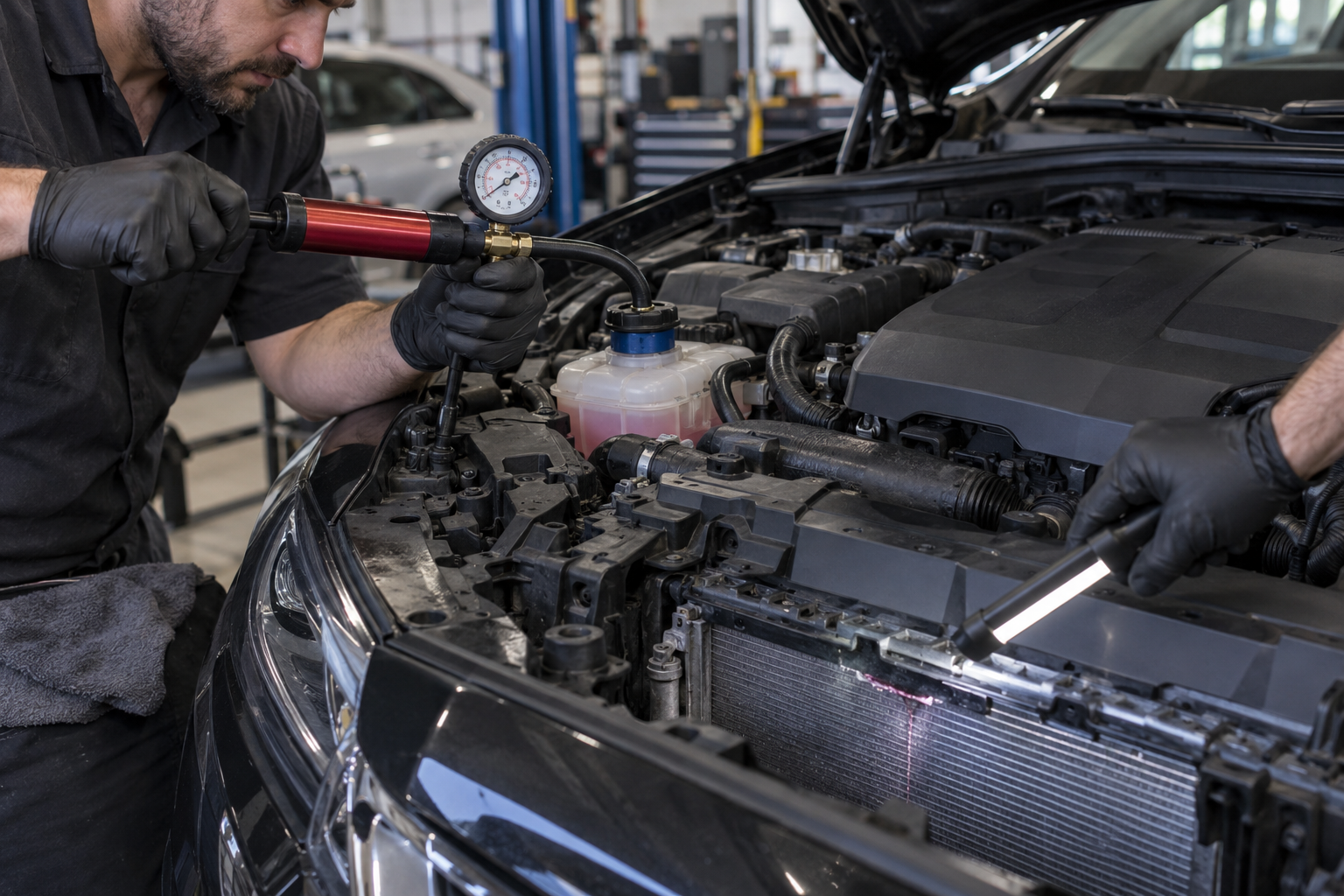
A radiator quote is worth one question: what did the test show? If the answer names the seam, the tank, or a cooked core, the quote is sound. If nothing has been tested, that test costs far less than the part. It might even find a cap.
Karl Knudsen Automotive is on Gibbes St in Chatswood, a few minutes off the Pacific Highway. You can book a cooling system test online. Bring the quote you already have with you.
Frequently asked questions
Can a leaking radiator be sealed instead of replaced?
Patching buys time rather than fixing the part. Plastic and a crimped seam take the same heat and pressure after a patch as before, so the leak returns or a new one opens beside it. Where the core is metal and the fault is a pinhole, a repair is worth pricing.
How do you know if it is the thermostat and not the radiator?
It comes down to the top radiator hose. An engine reading hot should be sending hot coolant to the radiator, so that hose should be warm. When the needle is up and the hose is not, the coolant is being held inside the engine, and the valve is the first suspect.
Does a European car need a specific coolant?
It does. Each make lists its coolant by a specification, and that is about the chemistry of the fluid, not the colour. Putting the wrong one in, or mixing two that were never meant to share a system, can do more harm than the original fault.
Why does the car still run hot after a new radiator?
Air, usually. Opening the system lets it in, and a modern European system will not clear it alone. A pocket in the wrong place stops the coolant moving, and it can hold the thermostat shut. The cure is a vacuum fill and the maker’s bleed routine, not another new part.

