
A car that has got louder over a few weeks usually has a leak. Most often it is the rear muffler, rusted through from the inside. A rattle that comes and goes within one rev range is different. That is usually a loose heat shield, and it is a small job. The sound tells you which part has gone, and how much of a hurry you are in.
Exhaust muffler repair covers both, and they are not the same size of job. One means cutting out a section of pipe and welding in a new one. The other is a clamp and a few minutes on a hoist.
What does a loud exhaust usually mean?
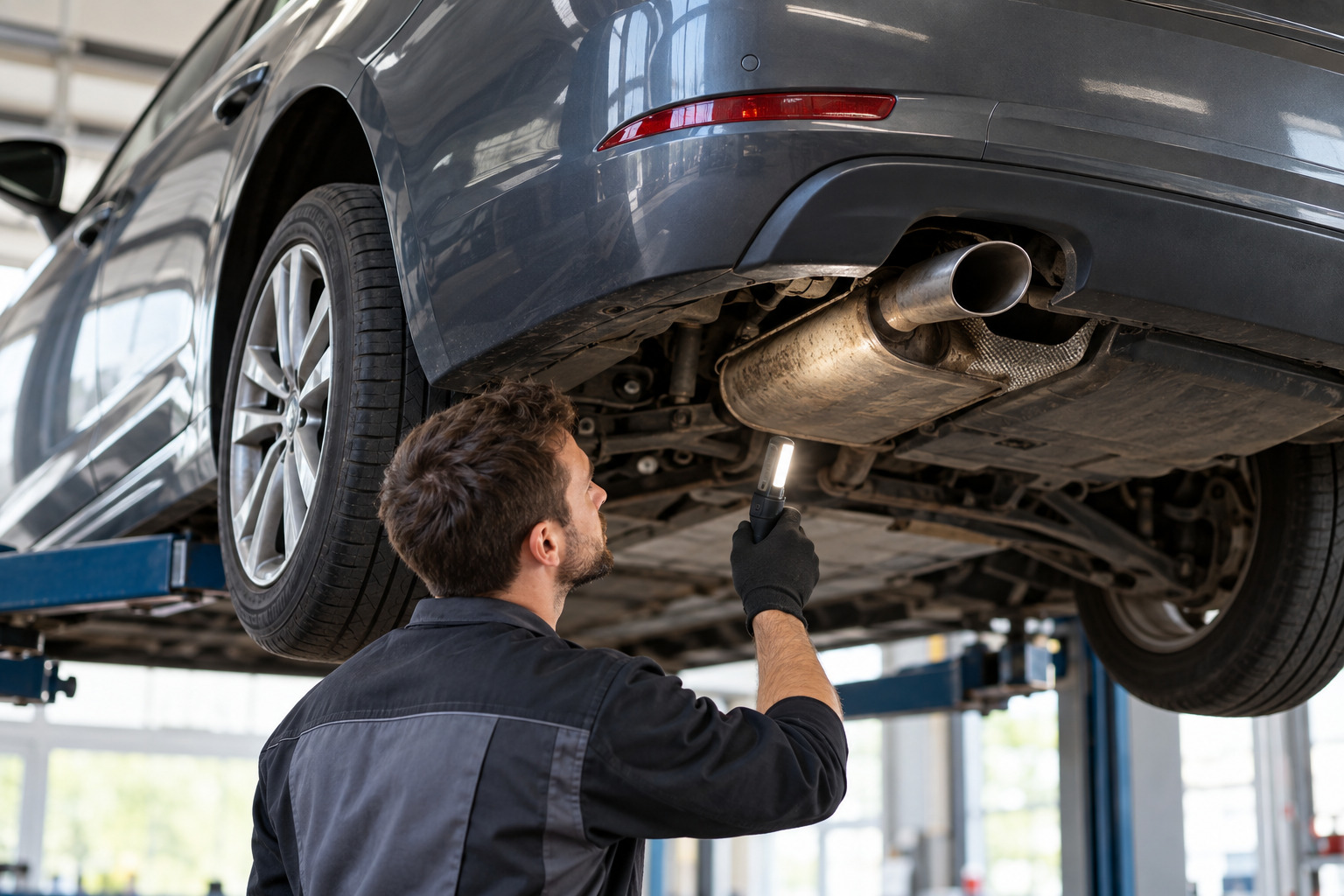
The exhaust is a run of pipes and boxes. It carries burnt gas from the engine to the back of the car. On the way it cleans the gas, cools it and makes it quieter. A new noise means gas is escaping somewhere it should not, or a part has come loose.
Here is what the common noises point to.
| What you hear | What it usually is | How soon to act |
|---|---|---|
| A deep drone or boom that has grown over a few weeks | A hole in the rear muffler, or a rusted length of pipe | Book it in. It gets worse, not better |
| A tinny rattle that only happens in one rev range | A loose heat shield | Not urgent, and cheap while it is only the shield |
| A hollow clunk over bumps and speed humps | A torn rubber mount letting the system swing | Within a week or two, before the movement cracks a joint |
| A hiss or tick that rises and falls with the revs | A blown gasket at a joint, often near the engine | Soon, and straight away if you can smell it inside |
| A loud roar with exhaust fumes in the cabin | A leak forward of the cabin | Stop driving and ring the workshop |
| A rattle on start-up, a rotten egg smell and less power | The catalytic converter breaking up inside | Get it checked before it blocks the pipe |
Two things cause most of that list.
The first is rust, and it starts on the inside. Burning fuel makes water, which leaves the engine as steam. The rear muffler sits furthest from the engine and runs coolest, so some of that steam turns back to water and settles in the box. Short trips make it worse, because the system never gets hot enough for long enough to dry itself out. A car that only does the Chatswood school run can rust a muffler out while the pipework still looks sound. Closer to the water, salt in the air works on the outside at the same time.
The second is heat and movement. Gaskets seal the joints, and the ones nearest the engine take the most heat. Rubber mounts hold the system up under the floor. Neither part is dear on its own. Both get worse if the system is left to move about, because a swinging pipe works on every joint it is bolted to.
Exhaust muffler repair: what the job involves
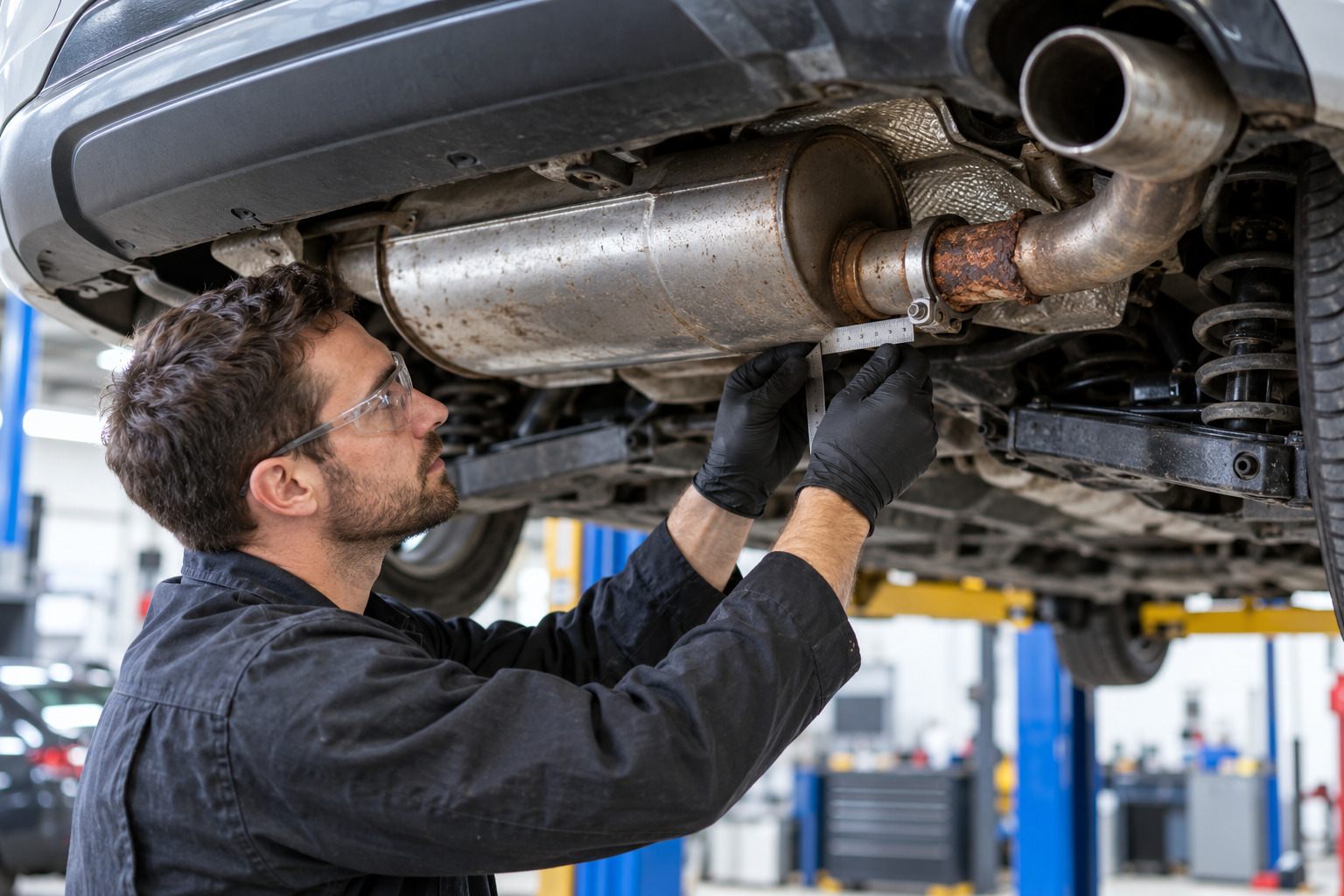
Exhaust muffler repair splits into two jobs. Where the fault sits decides which one you get.
A section repair means cutting out the bad piece and welding a new length of pipe in. It works where the pipe has rusted or split and there is sound metal either side. It is the cheaper answer, and often the right one.
A replacement means the part comes off whole and a new one goes on. A muffler and a catalytic converter are sealed units. A hole in either cannot be patched and left.
One failed section rarely means a whole new system, because exhausts are built in pieces that bolt or clamp together. The exception is a system that has gone at several points at once, common on a car that has lived near the coast.
Australian prices give you a rough shape. An oxygen sensor runs about $225 to $500. An exhaust manifold gasket sits around $250 to $500. A catalytic converter is the expensive one, quoted from $300 to $3,000, with an average near $1,275. A full system front to back falls between $300 and $2,000. European parts often land near the top of these ranges, because they are built to fit one model rather than a range of cars. There is no reliable Australian figure for a muffler fitted on its own, so we have not invented one.
A workshop that handles exhaust and muffler repairs will find the leak on a hoist before quoting. The noise by itself does not tell anyone how far the rust has spread.
When a rattle isn’t the exhaust
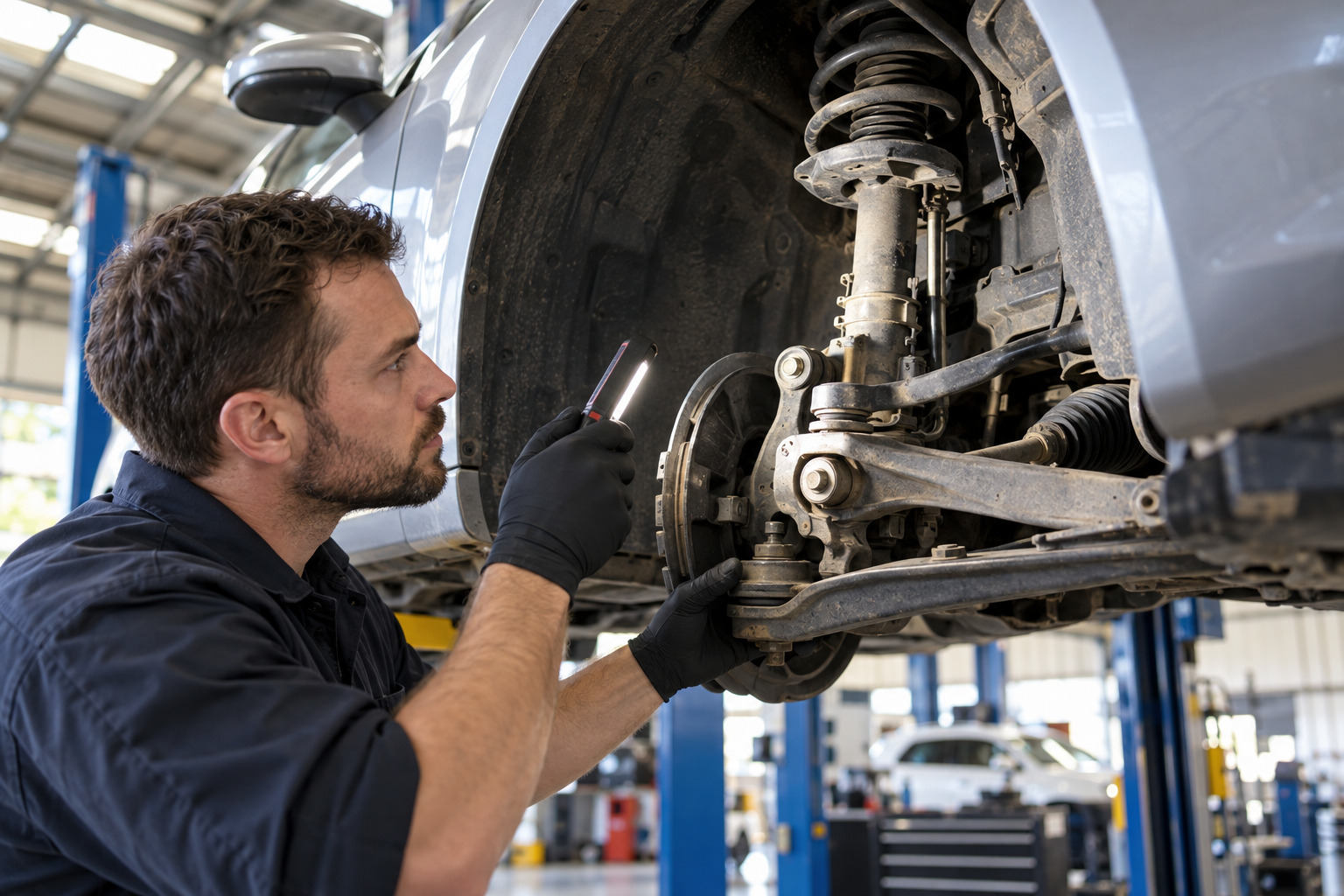
Not every rattle under a car is the exhaust.
A rattle from the engine itself on a cold start is a different problem. It points at the timing side of the engine. That one is worth reading about on its own, because leaving it is the expensive choice.
A knock that only turns up over bumps is usually the suspension. Worn bushes and tired shock absorbers make a similar sound from a similar place. If it happens over a speed hump and never on smooth road, the question is whether the suspension needs repair or replacement instead.
Is it safe to keep driving?

Usually yes. Where the leak sits matters far more than how loud it is.
Behind the rear axle, a leak is a noise problem. The gas is already past the cabin and on its way out. Book it in, drive on in the meantime, and expect the noise to grow.
Forward of the cabin is a different matter. So is any exhaust smell inside the car. That means gas is getting in rather than going out the back. Exhaust carries carbon monoxide, which has no colour and no smell of its own. What you can smell is everything else in the exhaust. The smell is the warning, not the gas. Carbon monoxide takes the place of oxygen in your blood. Headache, dizziness, feeling sick and muddled thinking are the early signs. Every one of them is easy to blame on a long day.
If you can smell exhaust inside the car, stop driving it. Wind the windows down, get out, and have it looked at before it goes anywhere.
What’s different about a European exhaust

Three things change what you do about the noise.
On a diesel, the particulate filter also sits in the exhaust line. A filter or AdBlue fault is a separate problem from a muffler problem.
- Parts are made for one model. A fitted-to-suit muffler off a shelf is often not an option. The part is matched to the car instead. Fit matters here, because a system sitting a few millimetres out will knock against the floor.
- A fault can show as a light before you hear it. Sensors sit in the exhaust line on any modern car and read what comes past. A leak in front of one lets fresh air in. The sensor reads the mixture as lean, and the engine adds fuel to fix something that was never wrong. When it runs out of adjustment, the engine light comes on.
- Some performance models have a valve in the exhaust. It stays shut for quiet running and opens under load. The spring or the actuator that moves it can break. It then rattles or buzzes from the rear of the car, loudest at a cold idle and fading as the engine warms. It sounds far worse than it is.
Will a loud exhaust fail a pink slip?
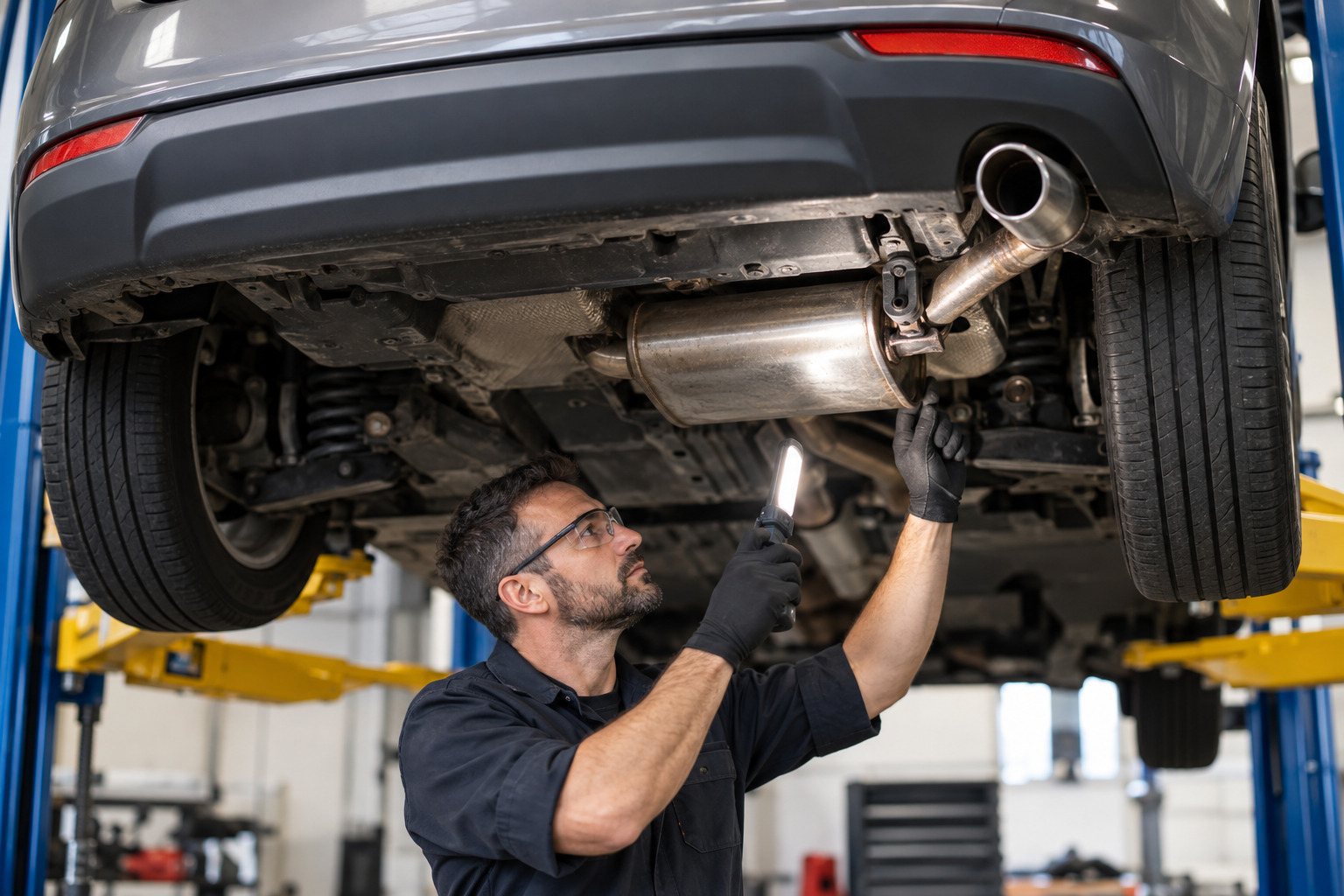
A pink slip is the safety check a NSW car over five years old needs before its registration is renewed. On the exhaust, the examiner looks for leaks, for excessive smoke, and for a system that is secure and not excessively noisy.
In practice those come as a set. A car gets loud because a gasket has let go or a section has rusted through. That hole is the leak on the examiner’s list. Fix the leak and the noise goes with it. The article on what a pink slip covers walks through the rest of the inspection.
Get the noise looked at before it spreads
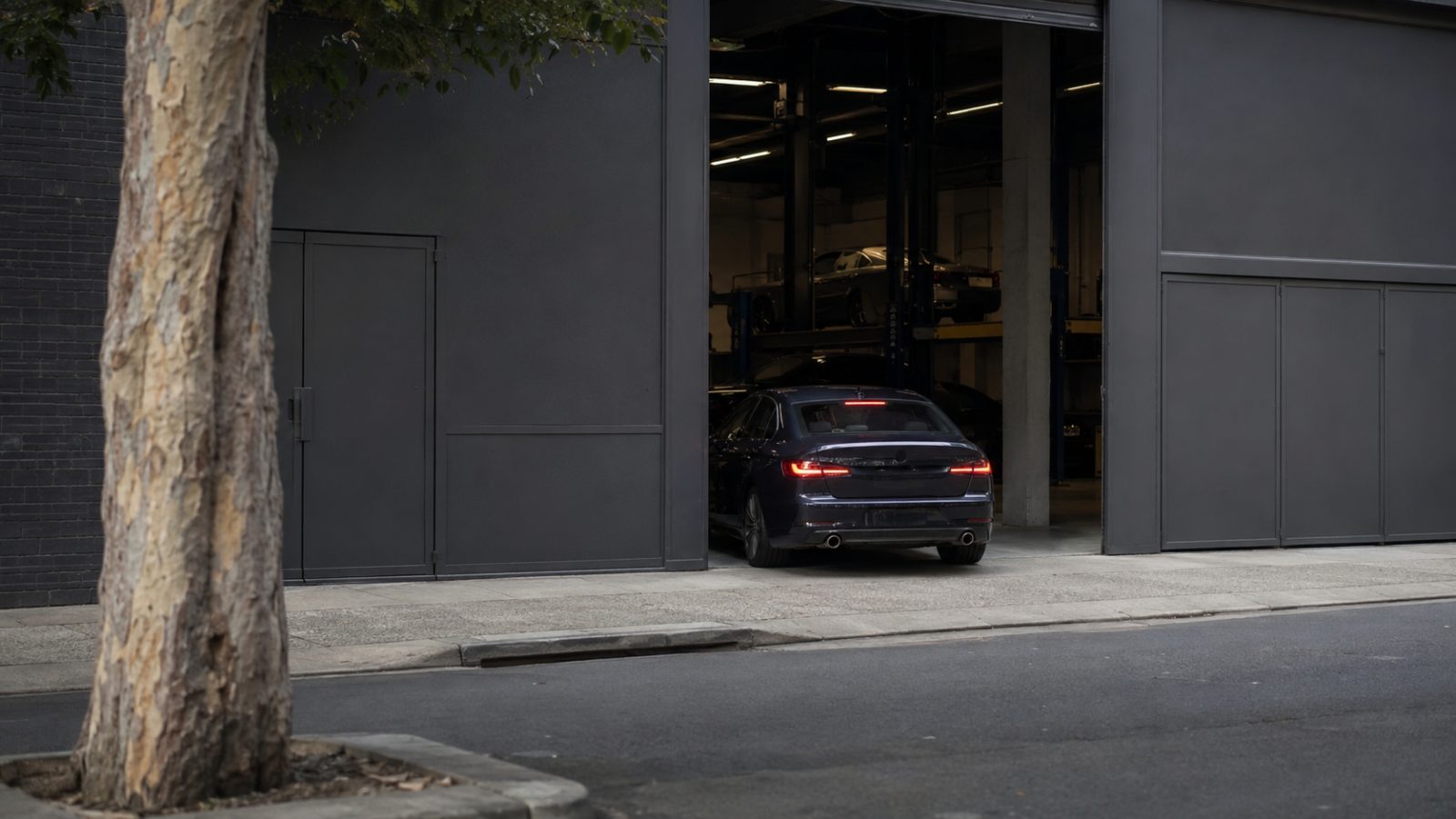
A drone on the way home is worth a look while it is still one section of pipe. Left alone, water and salt work along the system from the hole outwards. A job that was a weld becomes a job that is a part.
Karl Knudsen Automotive is on Gibbes St in Chatswood, a few minutes off the Pacific Highway. You can book the car in online. It helps to describe the noise and when it happens.
Frequently asked questions
Can a muffler be repaired, or does it have to be replaced?
Both happen, and the metal decides which. Where sound pipe sits either side of the damage, a welded repair holds up. Where the damage is in the box itself, that part comes off. A sealed unit cannot be patched and trusted.
How long can you drive with a small exhaust leak?
There is no set number of weeks. Position counts for more than size. A leak at the tail end can wait for the next booking that suits you. One further forward, or one you can smell from the driver’s seat, should not be driven on.
Why does the rattle stop when I accelerate?
A loose shield only shakes when something is shaking it at the right speed. Hold the engine somewhere else and the shaking stops. That is why the noise seems to come and go for no reason. It points at something loose rather than something broken.
Can an exhaust problem trigger a warning light?
Yes, and sometimes before you notice any sound. The engine decides how much fuel to use partly from what it reads in the exhaust. A leak feeds it a wrong number, and the correction eventually runs out of room. The light is the correction giving up.

