
You pull out of a tight car park and the wheel suddenly feels heavy, like the car is fighting you. Or there’s a low groan every time you turn at walking pace. Both are signs your power steering is on the way out, and the fix depends on two things: which type of power steering your car has, and which part has worn. Power steering repair can be as small as a fluid and hose job, or as big as a new steering rack. On many older European cars, reconditioning the rack you already have costs far less than fitting a new one.
If your main worry is a wheel that shakes or wobbles at speed, that’s a different problem with a different cause, and it’s covered separately. The same goes for a wheel that is physically hard to turn, where a worn belt or tired suspension is often behind it. This article is about heavy, noisy or leaking steering, and what repairing it involves.
Hydraulic or electric: which power steering do you have?
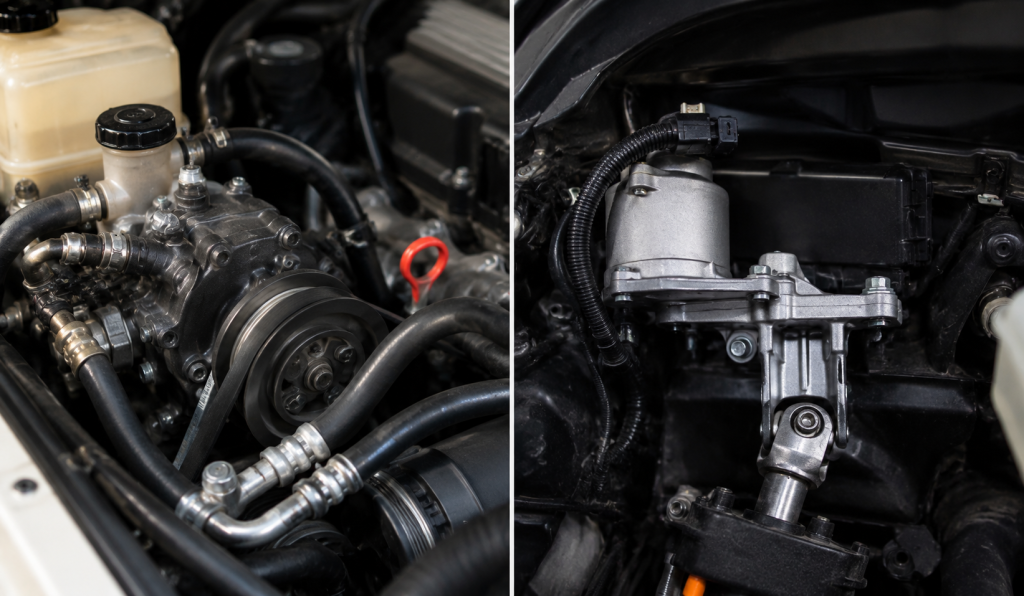
Power steering does one job: it takes the effort out of turning the wheel. There are two ways cars do it, and the difference changes how a repair works.
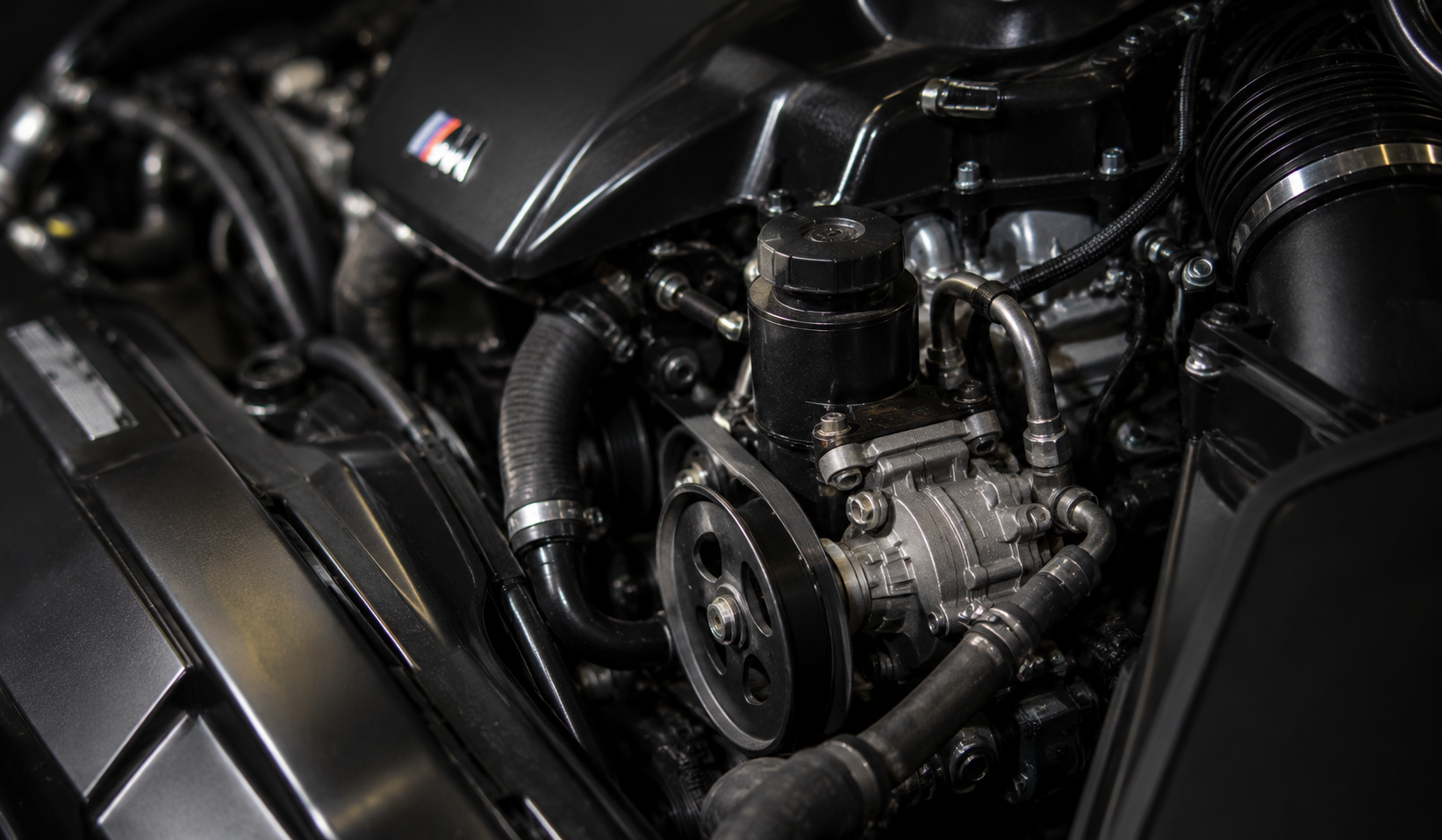
A hydraulic system uses a pump driven by the engine. The pump pushes fluid through hoses to the steering rack, and that pressure does the hard work. Most cars built up to the last decade or so use this setup. When something goes wrong, it’s usually the fluid, a hose, the pump, or the rack.
An electric system, often called EPS, uses a motor instead of a pump and fluid. There’s no pump belt and no fluid to leak. When it fails, the fault is usually in the motor, a sensor, or the control unit, and finding it needs a scan tool rather than a spanner. Most newer European cars use electric steering.
Not sure which you have? A hydraulic system has a fluid reservoir under the bonnet and a belt-driven pump. An electric one has neither. If you’re not certain, the workshop will know as soon as they look.
What power steering repair involves
On a hydraulic system, repair usually means one of these:
- Fluid and hoses. Low or dirty fluid, or a leaking hose, is the cheapest fix. The system is checked for leaks, worn seals and hoses are replaced, and the fluid is flushed and topped up.
- The pump. A whining pump that has lost pressure is either reconditioned or replaced. Pump replacement often runs around $400 to $900, and European cars tend to sit at the higher end.
- The rack. A leaking or worn rack is the bigger job, and it’s covered in the next section.
On an electric system, repair works differently. There’s no fluid to flush. The fault is read with a scan tool first, then the motor, sensor or control unit is repaired or replaced, and the system is recalibrated afterwards so the car steers straight and the warning light clears.
Reconditioning or replacing your steering rack
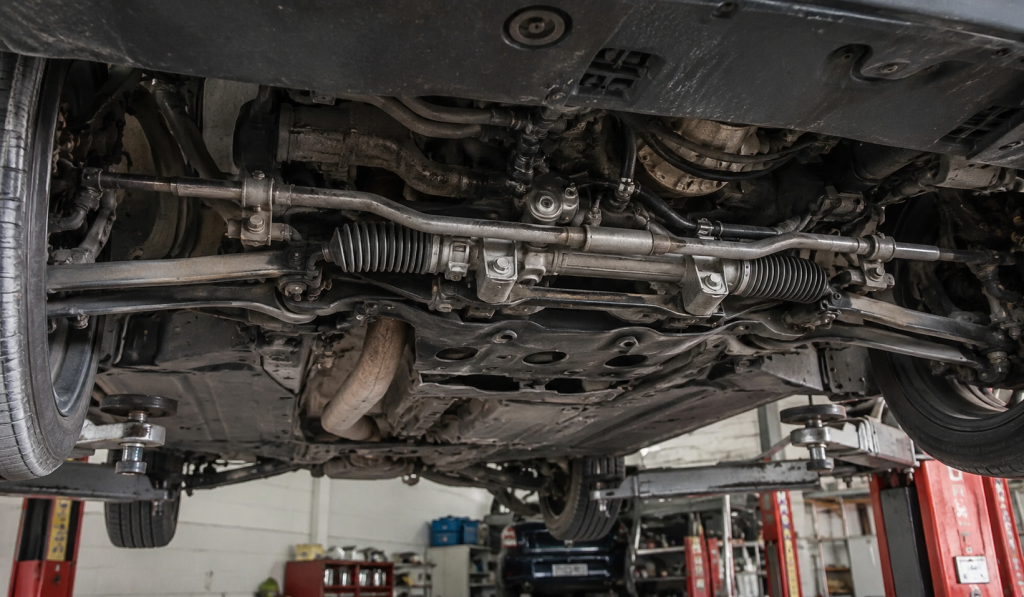
The steering rack turns your wheel input into the wheels moving. It’s in constant use, so on higher-mileage cars the seals wear and it can start to leak or feel stiff. When that happens, you have three options, and the right one depends on the car.
A brand new rack from the carmaker is the most expensive route. On European cars, a new rack can run well past $1,500, and sometimes far more.
A reconditioned rack, sometimes called remanufactured, is a rack stripped down and rebuilt with new seals and worn parts. It does the same job as new, usually for a good deal less. Because it’s rebuilt rather than bought new, it’s often the most cost-effective fix on an older European car that’s otherwise sound.
A used rack is the cheapest, but you’re buying someone else’s wear, so it’s the least predictable of the three.
As a rough guide, replacing a rack outright often lands between $750 and $1,500, and higher on European models. Reconditioning the rack you already have usually comes in well under the price of a new one. Replacement makes more sense when the rack is damaged beyond a rebuild, or the car is near the end of its life anyway. If the car is worth keeping, reconditioning is normally the better value.
| Part that’s failed | Usual repair | What it involves |
|---|---|---|
| Fluid or hose leak | Repair | Flush fluid, replace seals or hose |
| Whining pump | Recondition or replace | Rebuild or fit a new pump |
| Worn or leaking rack | Recondition or replace | Rebuild your rack, or fit a reconditioned or new one |
| Electric (EPS) fault | Diagnose, then repair | Scan tool, then motor or sensor, then recalibrate |
Why European power steering repair is different
Two things set European cars apart here. The first is parts. A new rack or pump for an Audi, BMW, Mercedes or Volkswagen usually costs more than the same part for a common local car. That’s exactly why reconditioning the original often makes more sense on these makes.
The second is calibration. Many European cars with electric steering need the system coded or recalibrated after a repair, using the right diagnostic tool. Skip that step and the steering can pull, the warning light can stay on, or the assistance can feel wrong. This is where a power steering specialist who knows the make matters more than the cheapest line on a quote.
When to get it looked at
Heavy steering, a groan or whine when you turn, or a fluid leak under the front of the car are all worth checking sooner rather than later. A small seal leak is cheap. Left alone, low fluid can starve and kill the pump, which turns a hose job into a much bigger bill. Tight North Shore streets and kerbside parking are hard on racks and pumps, because full-lock, low-speed turns put the most load through the system.
If your steering has gone heavy or noisy, or you’re holding a quote to replace the rack and want to know whether reconditioning is an option, book a steering inspection at Karl Knudsen in Chatswood. You’ll get told which repair the car really needs, not just the most expensive one.
Common questions about power steering repair
How much does power steering repair cost?
Budget roughly $400 to $900 for a pump, or $750 to $1,500 for a rack swap, with European makes landing near the top of both ranges. Rebuilding the rack you have costs noticeably less than buying a new one. Which figure applies to your car comes down to the part that has given up, and that takes an inspection to pin down.
Can you drive with a power steering leak?
Don’t leave it long. Once the fluid drops far enough, the pump runs dry and burns out, so a cheap hose or seal job turns into a pump bill as well. Trace the leak early and it stays a small repair.
Is a reconditioned rack as good as new?
For most cars, yes. The rack comes apart, the tired seals and parts are swapped for fresh ones, and it goes back in working the way it should, for less money than a factory replacement. The exception is a rack too far gone to rebuild, and then a new one is the right call.
Does electric power steering always need coding after a repair?
Not on every car, though plenty of European models do, and it takes the correct scan tool. Leave it out and you can end up with a car that drifts to one side, a dash light that won’t clear, or steering that just feels off.

