
A burning smell after a hill start on the North Shore, a soft pedal in Chatswood traffic, or a gear lever that suddenly fights you on a parking ramp can all lead to the same question: is this a brake problem or a clutch problem?
The first question is not how much the repair will cost. It is whether the car is safe to keep driving.
Brake symptoms should be treated as urgent because they affect stopping. Clutch symptoms can sometimes wait for a booked inspection, but not if the car is slipping badly, losing drive, leaking fluid, or becoming hard to control.
At Karl Knudsen Automotive in Chatswood, brake and clutch checks on European cars often need both a mechanical inspection and electronic diagnosis. Wear sensors, electronic park brakes, hydraulic clutch systems, and dual-clutch gearboxes can all change what the symptom means.
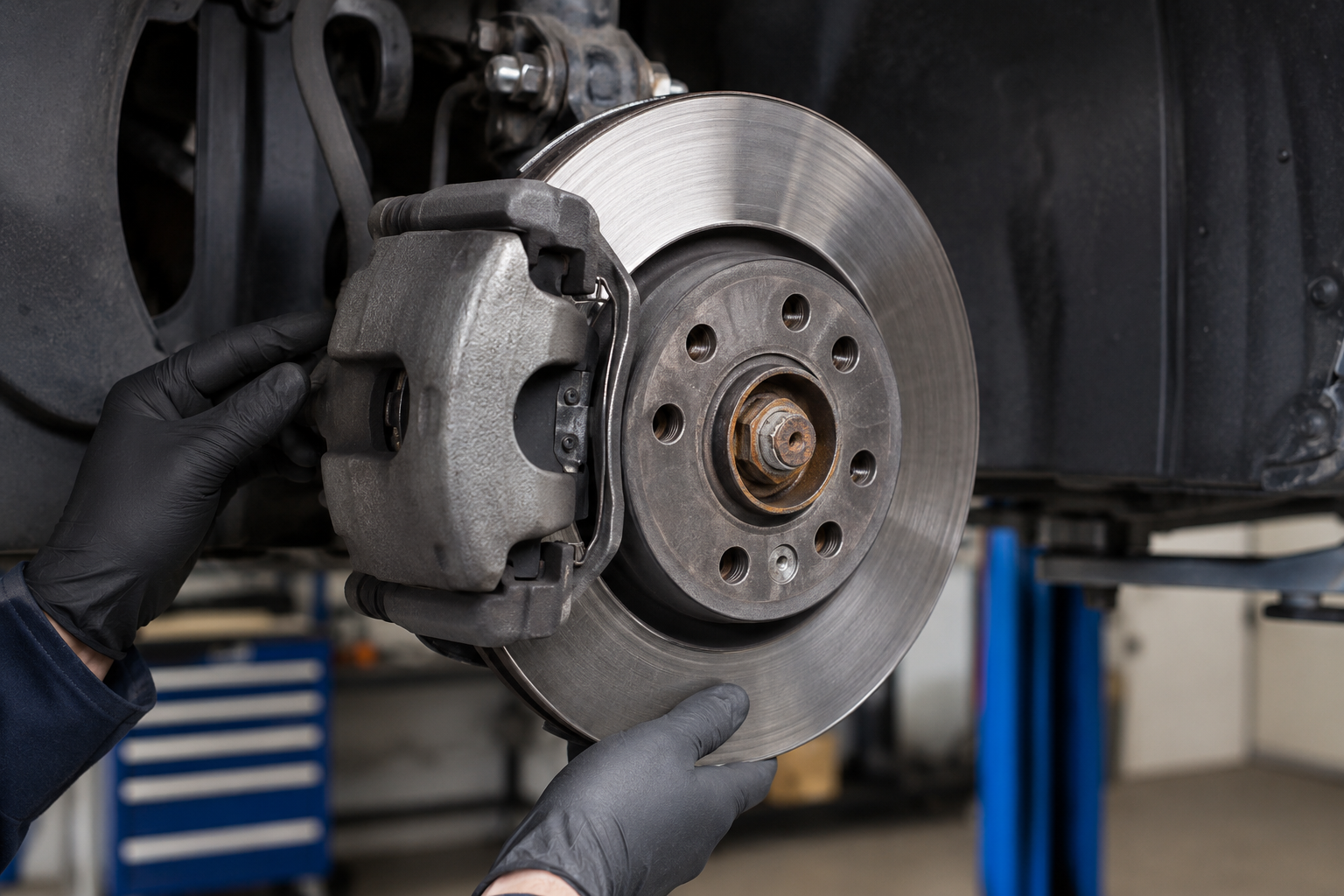
When is it likely to be a brake problem?
A brake problem usually shows up when the car is slowing down, stopping, or holding still on a slope. The warning signs can be noisy, subtle, or sudden.
Common brake symptoms include:
- Grinding when braking
- Squealing or scraping from the wheels
- Vibration through the brake pedal or steering wheel
- A soft or sinking brake pedal
- Pulling to one side under braking
- A burning smell after heavy braking
- Brake, ABS, or stability warning lights
- A handbrake or electronic park brake that does not hold properly
A grinding noise is one of the clearest danger signs. It can mean the brake pad material has worn down and metal is contacting metal. Once that happens, the repair can move from pads only to pads, rotors, calipers, or other damaged parts.
A soft pedal is also serious. Brakes rely on hydraulic pressure. If the pedal feels spongy, sinks slowly, or needs pumping before it works, the system may have air, a leak, old fluid, or another hydraulic fault.
When is it likely to be a clutch problem?
A clutch problem usually shows up when taking off, changing gears, or accelerating under load. It is most obvious in manual cars, but some European dual-clutch gearboxes can create symptoms that feel similar.
Common clutch symptoms include:
- Engine revs rise but the car does not accelerate properly
- The biting point feels unusually high
- The clutch pedal feels sticky, heavy, or weak
- The car shudders when taking off
- There is a burning smell after hill starts or parking manoeuvres
- Gears are hard to select
- The car will not go into gear
- The car loses drive
A slipping clutch is the classic warning sign. The engine sounds busy, but the car does not move with the same force. This is often worse on hills, under acceleration, or with passengers and luggage on board.
A burning smell can come from the clutch if it is slipping or being overheated. One short smell after a difficult hill start is not always a failure. A repeated smell during normal driving needs inspection.
Which symptoms mean you should not keep driving?
Some brake or clutch symptoms should stop the trip. The safest choice is to pull over where safe and arrange help if the car no longer stops, moves, or responds normally.
| Symptom | Likely brake cause | Likely clutch cause | Urgency | Can you drive it? |
|---|---|---|---|---|
| Brake pedal sinks to the floor | Fluid leak, master cylinder fault, or air in the system | Not usually clutch-related | Immediate | No |
| Grinding when braking | Pads worn through or rotor damage | Not usually clutch-related | Immediate | Avoid driving |
| Burning smell after braking | Overheated brakes or sticking caliper | Possible clutch smell if it happens during take-off | High | Only if mild and brief |
| Revs rise without speed | Not usually brake-related | Slipping clutch | High | Book soon and avoid heavy driving |
| Car will not select gear | Not usually brake-related | Clutch hydraulic or gearbox fault | Immediate | No |
| Car pulls under braking | Caliper, tyre, suspension, or brake imbalance | Not usually clutch-related | High | Book urgently |
| Warning light stays on | ABS, brake fluid, sensor, or park brake fault | Gearbox or clutch warning on some cars | High | Check before driving |
| Pedal feels soft or spongy | Hydraulic issue or fluid problem | Clutch hydraulic issue if it is the clutch pedal | High | Avoid driving if braking is affected |
If the symptom affects stopping, treat it as urgent. If the symptom affects moving off, gear selection, or drive, do not push the car through it. A short drive to a workshop can become a tow if the clutch or gearbox loses drive completely.
What do European systems add to the diagnosis?
European cars often add electronic and hydraulic systems that make diagnosis less obvious from the driver seat.
Brake wear sensors are common on many European vehicles. These sensors can warn when pads are near the end of their service life, but they do not replace a proper inspection of pad thickness, rotor condition, fluid, hoses, and calipers.
Electronic park brakes can also change the repair process. Rear brake work on some vehicles needs the park brake placed into service mode before parts are removed or pistons are retracted.
Dual-clutch gearboxes need a different line of thinking. In Volkswagen, Audi, BMW, Mercedes and other European models, a shudder, delayed take-off, warning message, or gear-selection fault may involve clutch packs, hydraulic pressure, fluid condition, software adaptation, or mechatronic control.
That is why a European car service should not rely on a quick road test alone. A proper check may need a scan tool, live data, fault-code history, and a mechanical inspection.
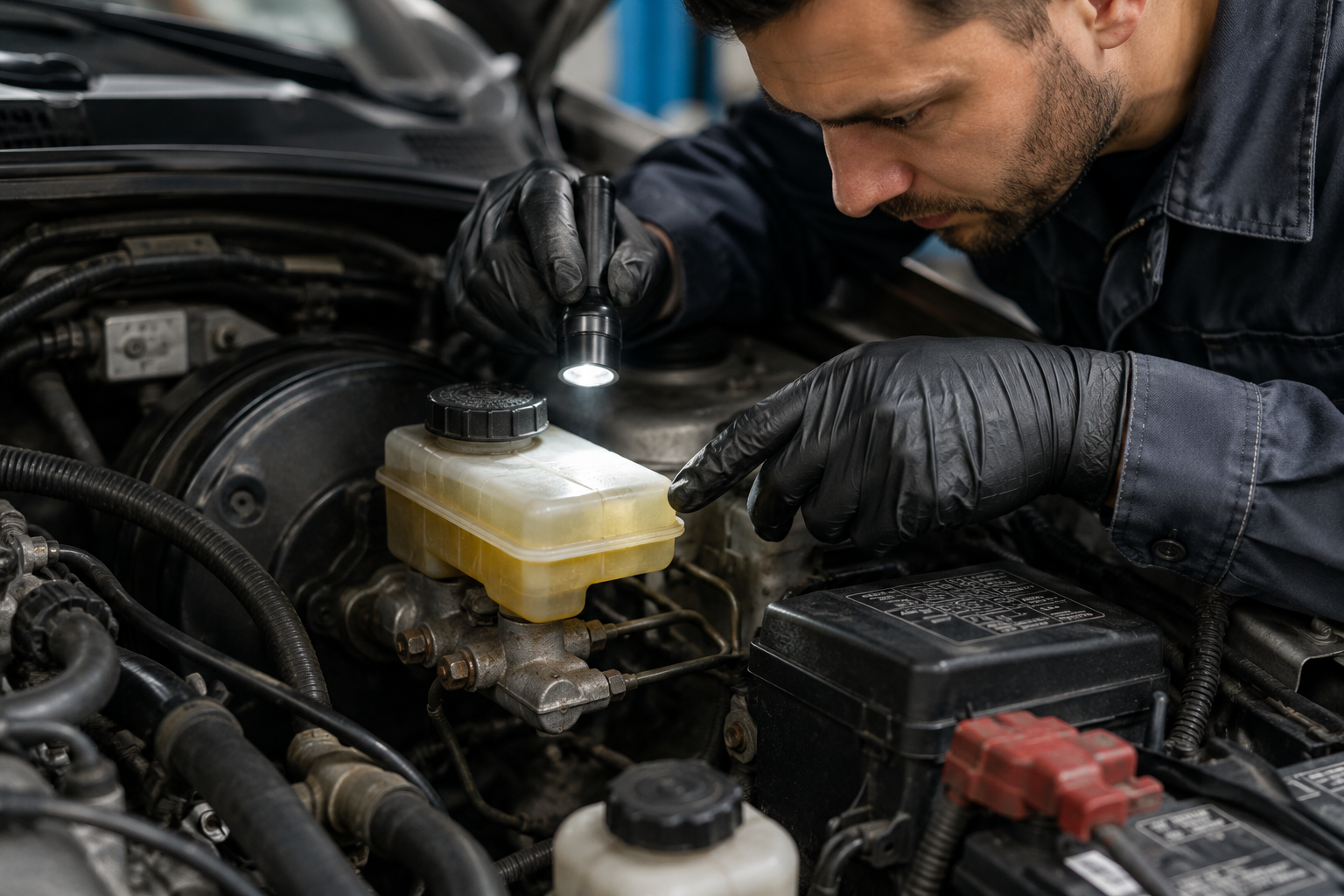
What should a brake and clutch inspection check first?
A brake and clutch inspection should start with the safety items before moving into deeper diagnosis. The goal is to find the cause, not just name the symptom.
For brake repairs in Chatswood, a mechanic may check:
- Brake pad thickness
- Rotor condition and thickness
- Brake fluid level and condition
- Fluid leaks at hoses, calipers, and master cylinder
- Brake pedal feel
- ABS and brake warning lights
- Caliper movement
- Electronic park brake operation
- A controlled road test, only where safe
For clutch repairs in Chatswood, a mechanic may check:
- Pedal feel and biting point
- Clutch fluid level where hydraulic
- Leaks at master and slave cylinders
- Gear selection when cold and warm
- Slipping under load
- Shudder on take-off
- Gearbox fault codes
- Dual-clutch adaptation and live data where relevant
A good diagnosis should also ask when the symptom happens. A brake vibration only at higher speed means something different from a vibration only while braking down a steep ramp. A clutch smell after one difficult hill start means something different from slipping every time the car accelerates.
What are the usual solutions? timing belt estimate show?
The right solution depends on the fault, not just the symptom. The same smell, vibration, or pedal change can come from more than one system.
Common brake solutions may include replacing worn pads, machining or replacing rotors, flushing old brake fluid, repairing a leak, freeing a sticking caliper, or diagnosing ABS and electronic park brake faults.
Common clutch solutions may include adjusting or repairing clutch hydraulics, replacing a worn clutch, checking the flywheel, repairing a slave or master cylinder, or diagnosing a gearbox or dual-clutch control issue.
The important point is to avoid guessing. Replacing parts without checking the cause can leave the original fault in the car.
How should you describe the symptom when booking?
Clear symptom notes help the workshop test the car properly. You do not need technical language. Plain observations are more useful.
Before booking, note:
- When the symptom happens
- Whether the car was hot or cold
- Whether it happens while braking, taking off, turning, or changing gears
- Whether there is a warning light
- What the pedal feels like
- Whether the smell is sharp, burnt, or chemical
- Whether the noise comes from the front, rear, left, or right
- Whether it changes with speed
- Whether it started after rain, a long drive, a steep hill, or heavy traffic
For example, "the brake pedal sinks slowly at traffic lights" is more useful than "the brakes feel bad". "The revs flare in third gear going up a hill" is more useful than "the clutch is noisy".

Can a brake smell and clutch smell be confused?
A brake smell and a clutch smell can be confused because both can smell hot, sharp, and burnt. The situation usually gives the clue.
A brake smell is more likely after repeated braking, a long downhill run, or stop-start traffic where the brakes have been used heavily. A clutch smell is more likely after hill starts, reversing up a driveway, parking ramps, towing, or repeated take-offs.
The location of the smell can help, but it is not always clear. If one wheel is much hotter than the others, a brake may be dragging. If the smell appears when taking off and the engine revs rise without strong movement, the clutch may be slipping.
What should you do next?
If the issue involves grinding, brake fluid loss, a sinking brake pedal, warning lights, severe slipping, or loss of drive, do not keep driving. Arrange an inspection before the car becomes unsafe or stranded.
For less severe symptoms, book a brake or clutch inspection and describe the problem clearly. Karl Knudsen Automotive can check the mechanical parts, scan the relevant systems, and explain whether the fault is brake-related, clutch-related, gearbox-related, or something else.

