
It’s one of the most critical items included in a proper European car service, even though it’s often out of sight. It doesn’t make a noise. It doesn’t flash a warning light. And when it’s due, your car still drives fine. But if you miss it and the timing belt snaps, you’re looking at a repair bill that jumps from around $800 to $5,000–$8,000 or more.
That job is a timing belt replacement.
What a timing belt does
Your engine has two main rotating parts that need to work in perfect sync: the crankshaft (which moves the pistons up and down) and the camshaft (which opens and closes the valves that let fuel in and exhaust out). The timing belt is a reinforced rubber belt that connects them and keeps everything moving in time.
If the belt snaps, the pistons and valves collide inside the engine. On most European cars, this causes catastrophic damage – bent valves, cracked pistons, and sometimes a destroyed cylinder head. At that point, you’re not replacing a belt. You’re rebuilding or replacing the engine.
When is it due? A brand-by-brand guide
Timing belt intervals vary by brand and engine. Some European cars don’t use a belt at all – they use a metal timing chain instead. Here’s how the major brands stack up.
| Brand | Belt or chain? | Typical interval |
|---|---|---|
| Audi | Belt on most 4-cylinder models (1.8T, 2.0T). Chain on some V6 and newer engines | 120,000 km or 5–7 years |
| Volkswagen | Belt on most models (Golf, Tiguan, Passat with 4-cyl engines). Chain on some newer engines | 90,000–150,000 km depending on engine |
| BMW | Almost exclusively timing chains | No scheduled interval – but chains can stretch (see below) |
| Mercedes-Benz | Mixed – belt on many 4-cylinder engines, chain on V6 and V8 | 100,000–150,000 km for belt-driven models |
| Volvo | Belt on most models up to recent years | Up to 180,000 km or 10 years on some models |
| Alfa Romeo / Fiat | Belt on most models | As short as 60,000 km or 4 years on some Alfa engines |
| Peugeot / Citroën / Renault | Belt on most models | 100,000–160,000 km depending on engine |
| Porsche | Chain on most models | No scheduled interval |
These are general guides. Your engine’s exact interval is in your logbook or service schedule. If you’re unsure how timing belt replacement fits into overall maintenance, see what a European car service includes for a full breakdown.
What about timing chains?
BMW owners sometimes assume they don’t need to worry because their car uses a chain instead of a belt. Chains are more durable than belts and don’t have a scheduled replacement interval, but they’re not maintenance-free.
Over time, chains stretch. When they do, the engine’s timing drifts out of alignment. The classic warning sign is a metallic rattle from the engine on cold starts that fades once the engine warms up. If you hear that, get it checked. A stretched chain caught early is a $1,200–$2,500 repair. A chain that snaps or jumps teeth can cause the same catastrophic engine damage as a broken belt – and because chains sit inside the engine, the labour to replace them is significantly more involved.
Some BMW engines have a known history of premature chain wear. The N47 diesel (found in many 1 Series and 3 Series models from 2007–2014) is the most documented example, but the N20 petrol four-cylinder has also had tensioner issues. Regular oil changes with the correct specification oil are the single best thing you can do to extend chain life.
What’s included in a timing belt replacement?
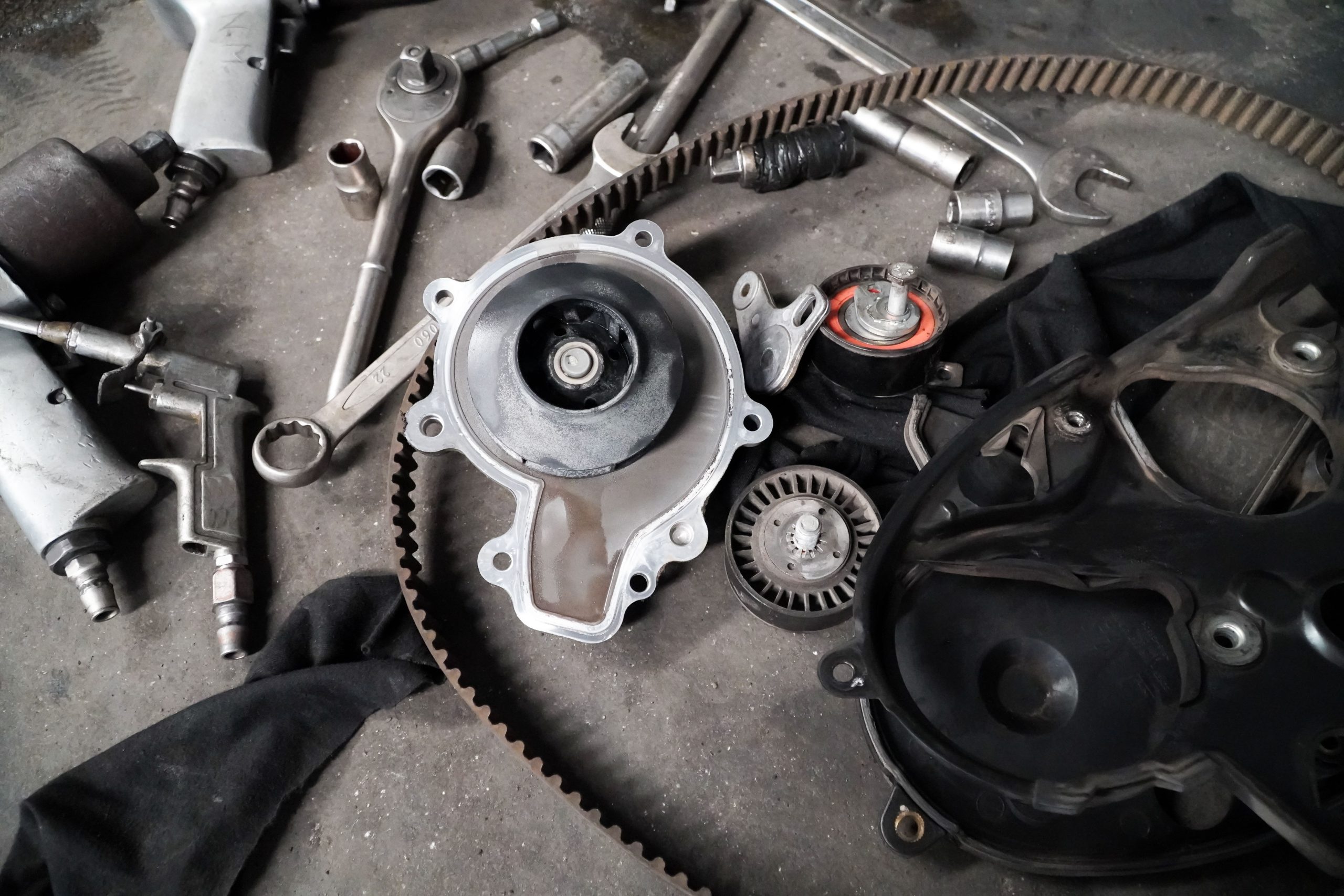
A timing belt job isn’t just swapping the belt. A good mechanic will replace the full kit:
- Timing belt – the belt itself
- Tensioner and idler pulleys – the components that keep the belt tight and running true
- Water pump – on most European engines, the water pump sits behind the timing belt. Replacing it at the same time costs little extra in labour because the mechanic is already in there. Skipping it means paying for the same labour again when the pump fails a year or two later
On some engines, the thermostat, front crankshaft seal, or auxiliary belt are also worth doing at the same time for the same reason – the access is already there.
What does it cost?
For most European cars, a timing belt replacement including the water pump, tensioner, and idler pulleys costs between $800 and $1,800. Where your car falls in that range depends on the engine and how difficult the belt is to access.
| Job | Typical cost range |
|---|---|
| Standard timing belt kit replacement (belt, tensioner, idlers, water pump) | $800–$1,800 |
| Belt replacement on V6 or difficult-access engines | $1,500–$2,500+ |
| Timing chain replacement (BMW, some Audi/VW, Mercedes) | $1,200–$2,500 |
| Engine repair after a snapped belt or failed chain | $5,000–$8,000+ |
European cars tend to sit at the higher end of belt replacement costs compared to Japanese or Korean models. The parts are more expensive and the engines are often more tightly packaged, which means more labour hours. But compared to the cost of engine damage from a snapped belt, it’s one of the most worthwhile scheduled maintenance items you’ll ever pay for.
How do you know if yours is overdue?
Your logbook will list the timing belt interval. If you bought the car second-hand and don’t have a full service history, there may be no record of when (or whether) the belt was last replaced. In that case, it’s worth having a mechanic inspect the belt’s condition and check the vehicle’s service records.
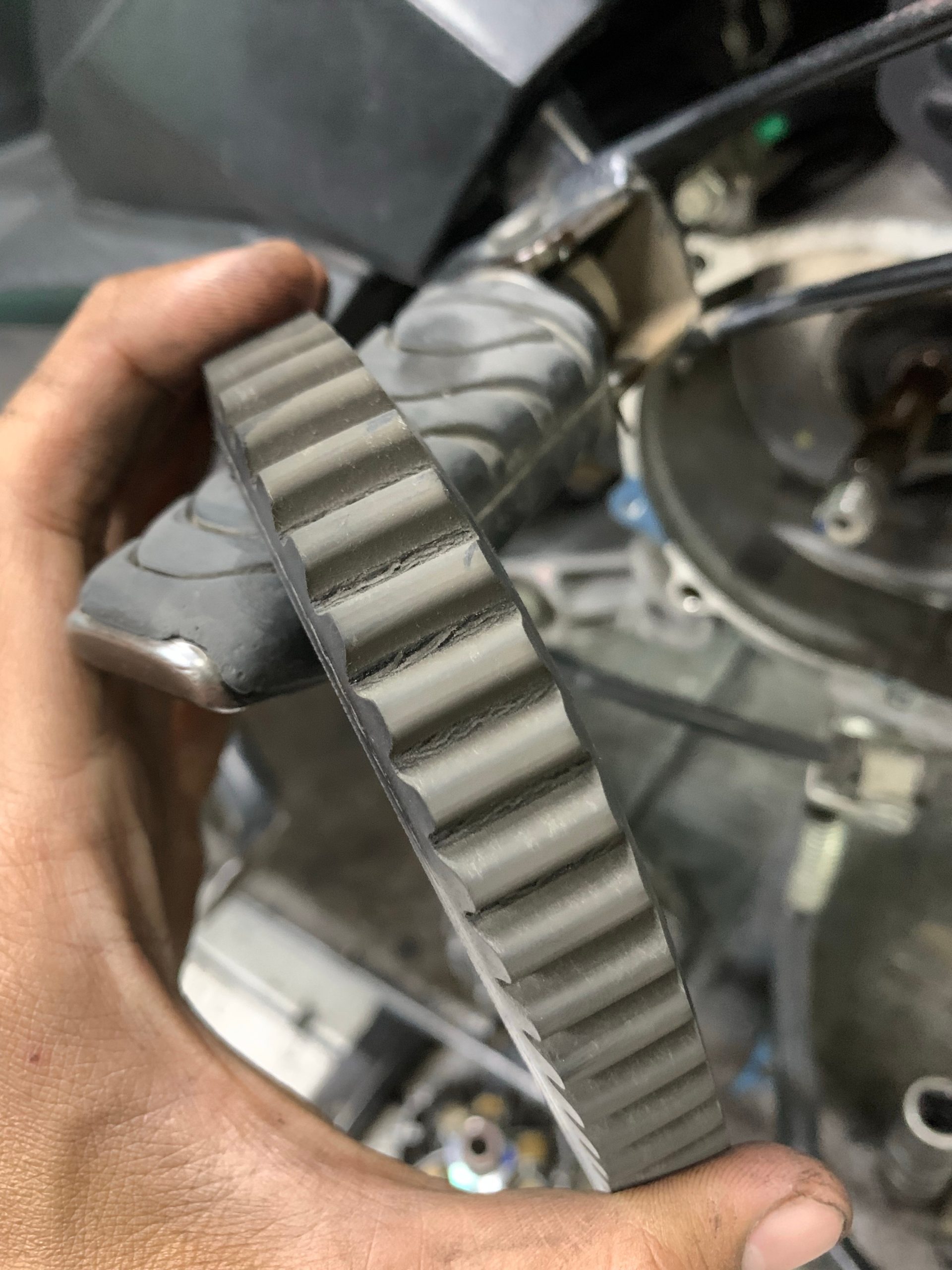
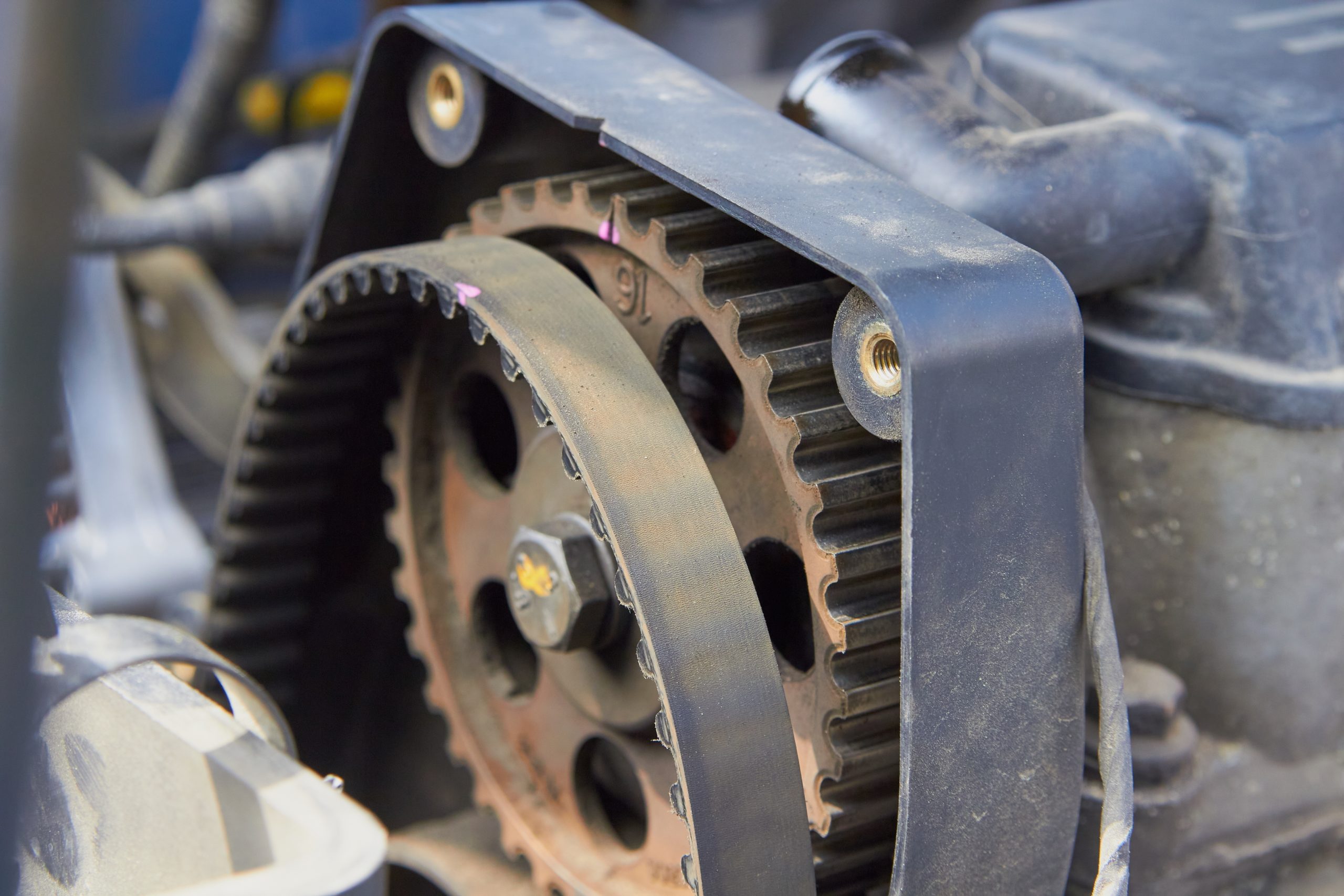
Signs that a timing belt may be nearing the end of its life include a faint ticking or slapping noise from the front of the engine, or visible cracking and fraying if the belt cover is removed during an inspection. But timing belts can also fail without any warning at all – which is why the scheduled replacement interval exists.
If your car is within 10,000 km or 12 months of the recommended interval, it’s time to book the job. Pushing it further is a gamble with poor odds.
Frequently asked questions
Yes. A worn timing belt rarely gives obvious warning signs before it fails. The replacement interval isn’t a suggestion – it’s based on the expected lifespan of the belt material. On European engines, which are almost all interference designs, a snapped belt causes internal engine damage every time.
No. Under Australian Consumer Law, you can have your car serviced or repaired at any qualified mechanic without affecting your manufacturer’s warranty. This includes timing belt replacements, as long as the work is done to the manufacturer’s specifications and genuine or equivalent-quality parts are used.
Chains don’t have a scheduled replacement interval, but they can stretch or develop tensioner faults over time. If you hear a metallic rattle on cold starts, have it inspected. Regular oil changes with the correct oil specification are the most important thing you can do to keep a timing chain healthy.
Technically yes, but every kilometre past the recommended interval increases the risk of failure. If your belt snaps while driving, the engine stops immediately and internal damage is almost certain. The repair bill will be many times the cost of a scheduled replacement.
On most European engines, the water pump is driven by the timing belt and sits behind it. Replacing the pump while the belt is off adds minimal labour cost. If you skip it and the pump fails later, a mechanic has to do the same hours of disassembly again just to access it – effectively paying for the labour twice.

