
Your aircon was fine a few months ago. Now it’s 32 degrees, you’re crawling down Warringah Road, and the vents are blowing lukewarm air. You know it probably needs a regas. You just want to know how much before you call anyone.
Here’s the short answer: a standard aircon regas costs between $120 and $250 for most cars. But if you drive a newer European car, you could pay $300 to $550, and there’s a straightforward reason why.
If you’re comparing options, it helps to understand what’s included in a proper car air conditioning service before booking.
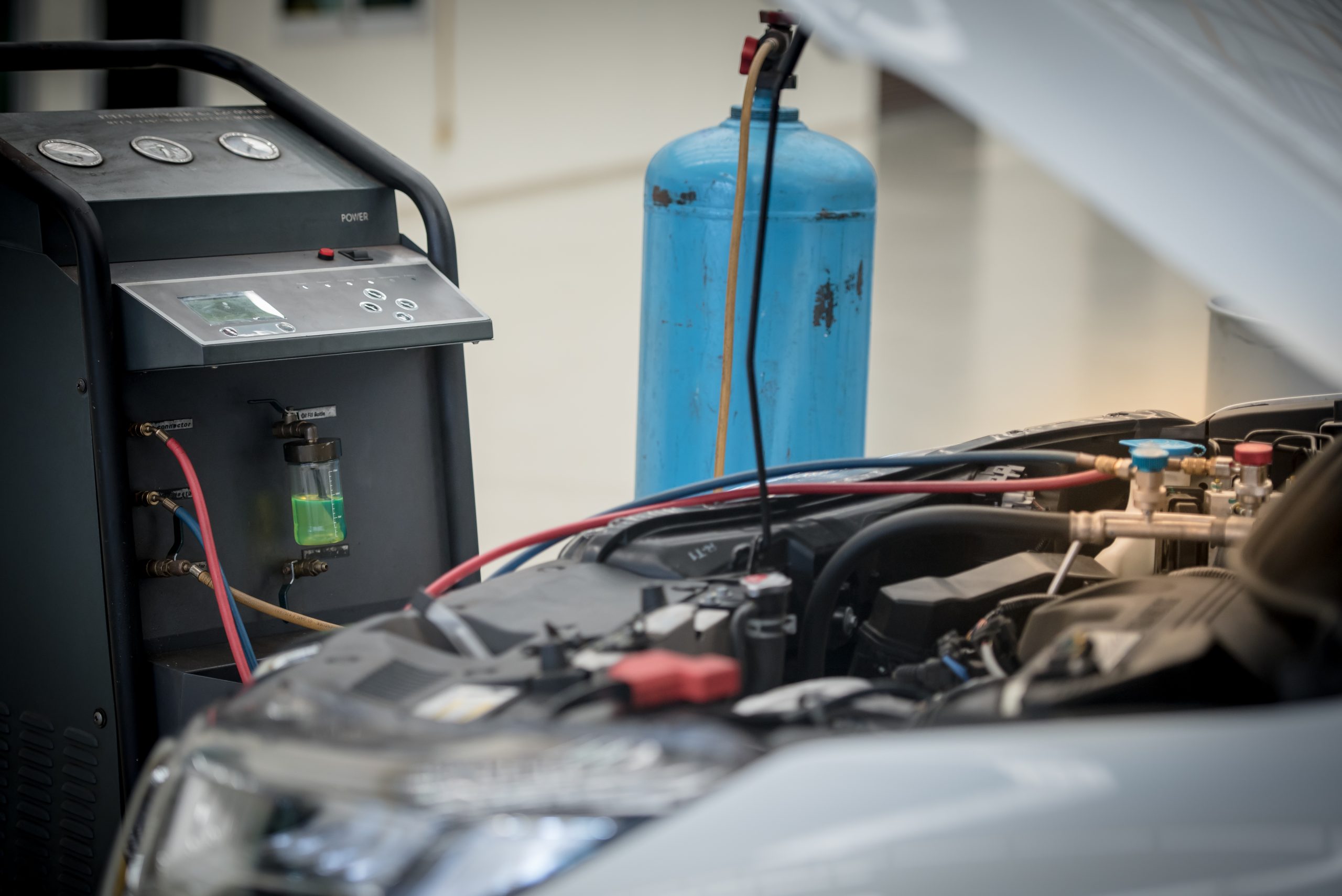
What’s included in a regas
A proper aircon regas isn’t just topping up gas. Your mechanic recovers whatever refrigerant is left in the system, vacuums it to remove air and moisture, checks for obvious leaks, and refills to the manufacturer’s specification with fresh refrigerant and compressor oil. Most shops also add UV dye so any future leaks show up under inspection.
The whole process takes 30 to 60 minutes.
Why European cars cost more to regas
Most cars built before 2017 use a refrigerant called R134a. It’s widely available and relatively cheap, which is why a standard regas sits in the $120 to $250 range.
Since 2017, European manufacturers have switched to a newer refrigerant called R1234yf. It has a much lower environmental impact, which is why the EU mandated the change. The catch is that R1234yf costs significantly more than R134a, and it requires different equipment to handle safely.
If you drive an Audi, BMW, Mercedes-Benz, Volkswagen, Volvo, or most other European cars built after 2017, your system almost certainly uses R1234yf. Expect to pay $300 to $550 for a regas.
This isn’t a markup. The gas itself costs more. Any workshop quoting you a R1234yf regas at the same price as R134a is either using the wrong refrigerant or cutting corners elsewhere.
Quick cost reference
| Service | Typical cost range |
|---|---|
| Standard regas (R134a) | $120 – $250 |
| European car regas (R1234yf) | $300 – $550 |
| Leak detection | $150 – $400 |
| Condenser replacement | $500 – $1,000 |
| Compressor replacement | $800 – $1,500+ |
| Evaporator replacement | $600 – $1,200+ |
When a regas won’t fix the problem
A regas tops up refrigerant that’s leaked out slowly over time. If your system is otherwise healthy, a regas will restore full cooling and should last two to three years.
But if the aircon loses its cooling again within a few weeks of a regas, you have a leak. Topping up gas without finding and fixing the leak is a waste of money, and it’s also against Australian regulations. Refrigerant must be handled by a licensed technician, and releasing it into the atmosphere is illegal.
Signs your system has a leak rather than just low gas:
- Cooling fades within weeks of a regas. A healthy system holds its charge for years, not weeks.
- You can see oily residue around AC fittings. Refrigerant carries compressor oil, so a leak often leaves a greasy film.
- The compressor cycles on and off rapidly. Low refrigerant triggers the system’s pressure switch, which shuts the compressor down to protect it.
If you’ve had your car regassed more than once in the past two years and the cooling keeps fading, the next step is a leak detection test rather than another regas.
How the Northern Beaches climate affects your aircon
Coastal conditions on the Northern Beaches add an extra layer of wear to your car’s AC system. Salt air accelerates corrosion on the condenser, which sits at the front of the car behind the grille, fully exposed to the elements. Stone chips from Pittwater Road or the Pacific Highway can puncture the condenser’s thin aluminium fins, creating leak points that let refrigerant escape gradually.
Sydney’s summer heat also makes your AC compressor work harder and for longer periods than it would in milder climates. This doesn’t mean your system will fail sooner, but it does mean that a system running on low refrigerant is under more stress than the same system in a cooler city.
Having your aircon checked as part of your regular service helps catch small leaks before they become expensive compressor or condenser repairs.
How often should you regas your aircon?
Every two to three years is a reasonable guideline for most cars, but it’s not a fixed rule. A well-sealed system can go longer without losing noticeable cooling. If your aircon isn’t performing like it should, the safest next step is a proper inspection. book an ac inspection with a qualified technician to diagnose the issue before it turns into a costly repair.
The better approach is to pay attention to how the system performs. If the air coming from your vents is noticeably less cold than it used to be, or if it takes much longer to cool the cabin on a hot day, it’s worth getting it checked.
Frequently asked questions
No. A musty or mouldy smell usually comes from bacteria growing on the evaporator core inside the dashboard, not from low refrigerant. An antibacterial treatment of the evaporator fixes this. Some workshops include it as part of a full AC service, but it’s a separate job from a regas.
In Australia, you need an ARCtick licence to legally handle automotive refrigerant. DIY regas kits sold overseas are not legal here, and using the wrong refrigerant type or overfilling the system can damage the compressor. A compressor replacement costs $800 to $1,500 or more, so it’s not worth the risk.
No. Under Australian Consumer Law, you can have your car serviced at any qualified independent mechanic without affecting your manufacturer’s warranty. The workshop just needs to use parts that meet the manufacturer’s specifications and follow the service schedule.
Your AC system works by removing heat from cabin air. On extremely hot days, there’s more heat to remove, so the system works harder and the output feels less cold by comparison. If the difference is dramatic, it could indicate low refrigerant, but a small variation between a 25-degree day and a 40-degree day is normal.
Yes, even briefly. Running your aircon for 10 to 15 minutes once a week during winter keeps the compressor seals lubricated and prevents them from drying out and cracking. Dry seals are one of the most common causes of slow refrigerant leaks.

